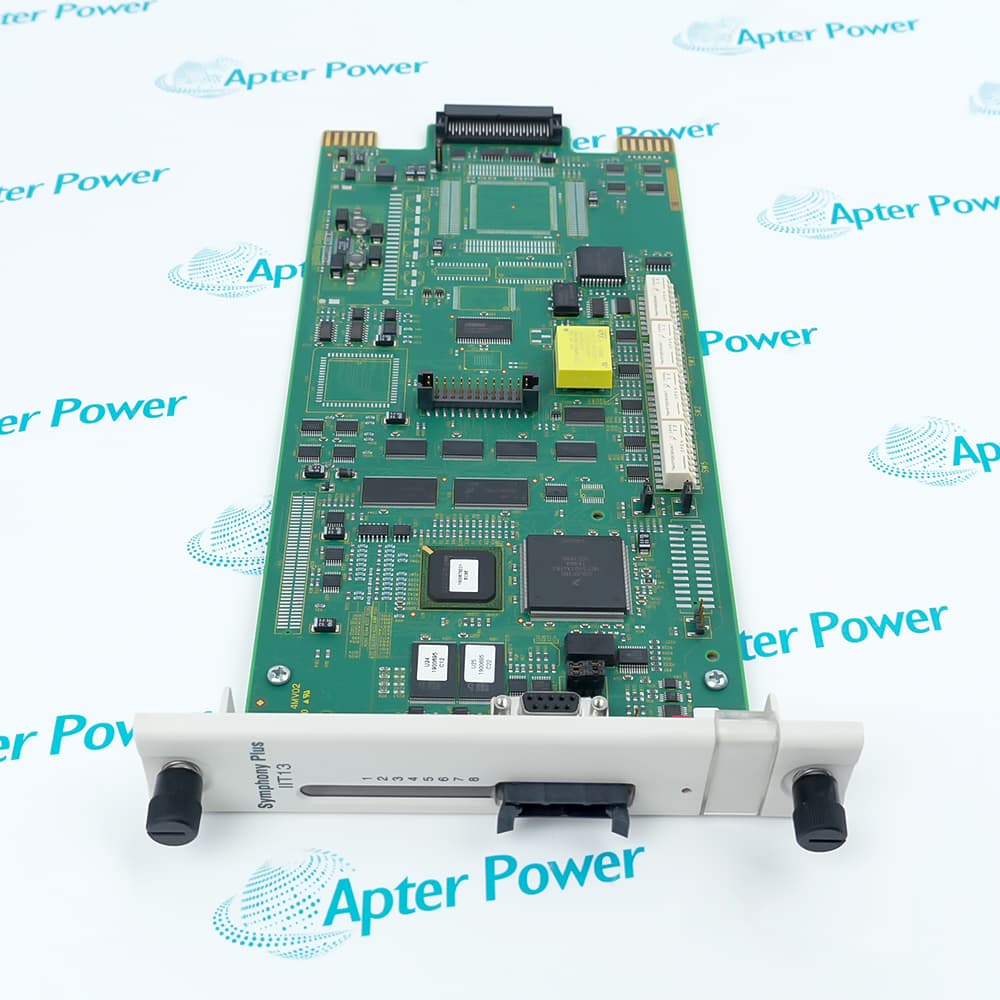
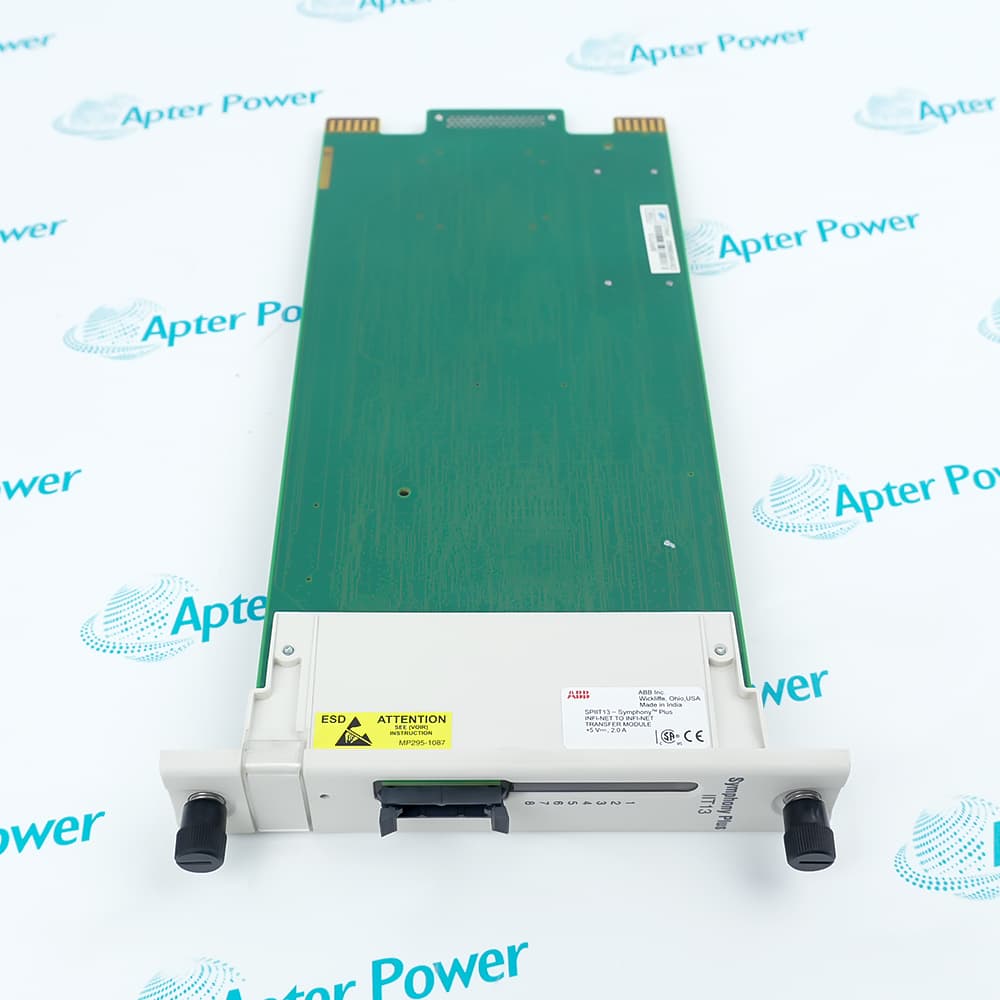
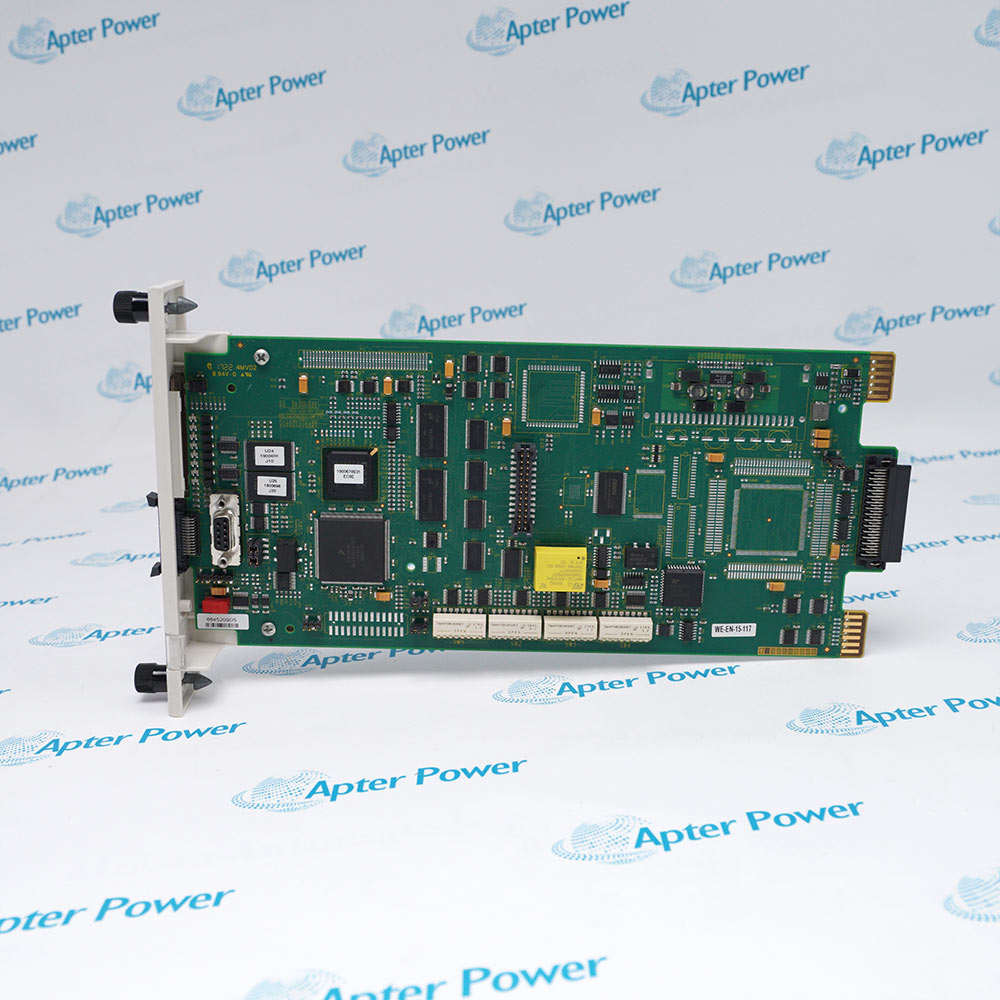
Features:
- Local transfer between two Cnet communication networks
- DRAM, NVRAM, and flash memory resources onboard
- RS-232-C diagnostic access through port P4
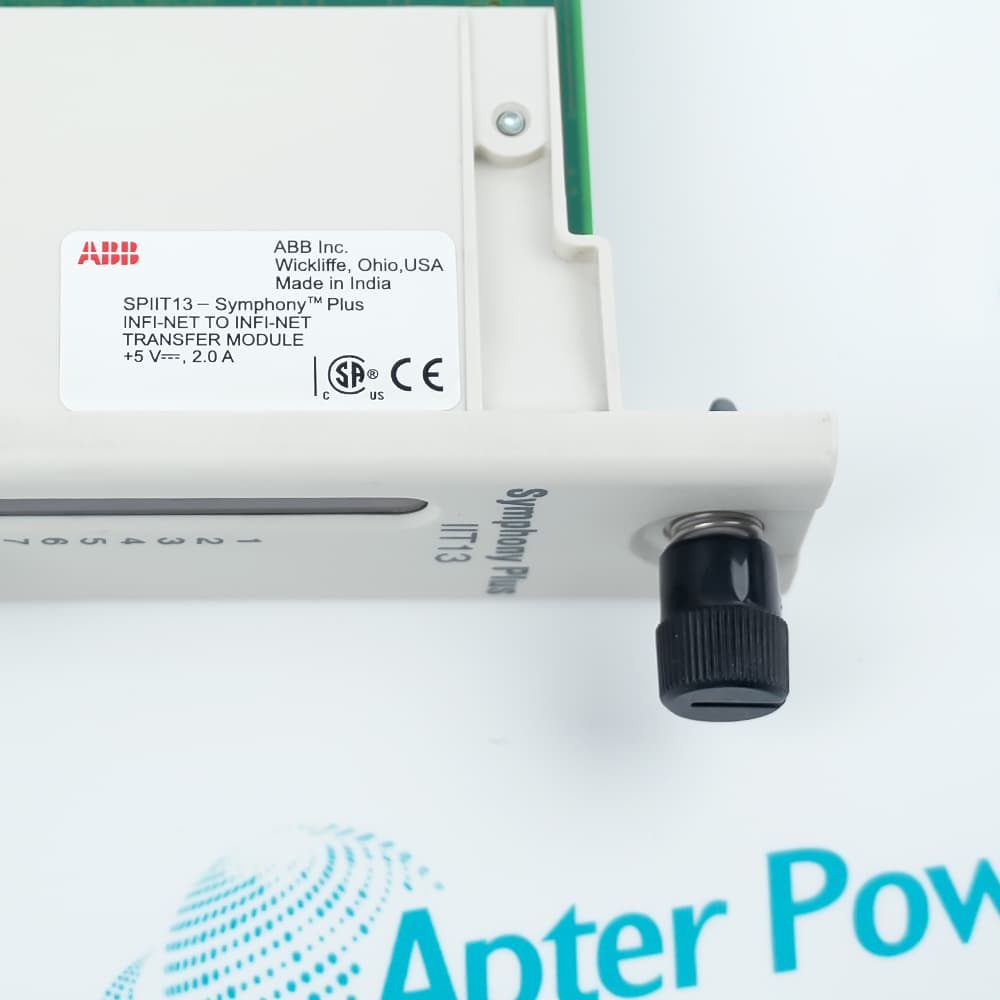
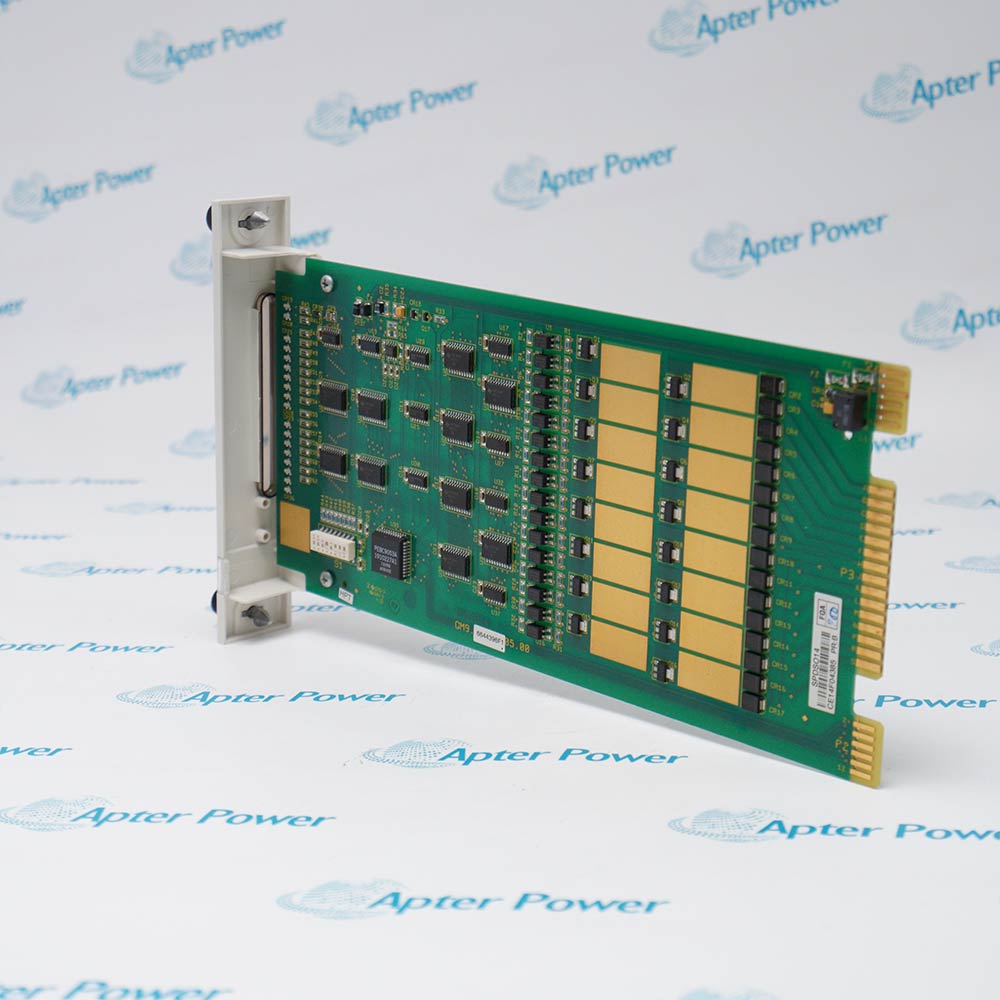
SPIIT13 supports an INFI-NET local interface by transferring communication between two local Cnet segments.
Its memory resources and dedicated diagnostics support the communication role within the HR Series architecture.
Correct operation also depends on companion modules, termination units, cables, mounting hardware, and the established Cnet topology.
The ABB SPIIT13 Local Transfer Module can be sourced with configuration review and applicable official ABB file support from Apter Power.
ABB SPIIT13 Local Transfer Module Manuals, Datasheets, Links
Important Notice: Other accessories, manuals, cables, calibration data, software, etc. are not included with this equipment unless listed in the above stock item description. All prices are shown in USD.
SPIIT13 Cnet connectivity
- Transfer role: The module facilitates communication between two local Cnet networks.
- System context: It operates inside the INFI-NET to INFI-NET local interface arrangement rather than as a standalone gateway.
- Path integrity: Companion modules, termination units, cables, and network topology must remain consistent during replacement.
SPIIT13 memory and diagnostics
- Working memory: The module includes 8 MB of DRAM for active operating functions.
- Retained resources: 512 kB NVRAM and 2 MB flash ROM support stored information and firmware.
- Service port: Port P4 provides the documented RS-232-C diagnostic interface.
SPIIT13 system integration
- Power budget: The module requires +5 V DC at 2 A and typically uses 10 W.
- Bundled hardware: ABB's related SPIIL02-L kit combines the transfer module with required network and termination components.
- Environment: Cabinet cooling and module placement must support the documented 0 to 70 °C ambient range.
Supported projects for SPIIT13
- Legacy network continuity: SPIIT13 can maintain communication between two local Cnets in installed Bailey or Symphony architectures.
- Interface restoration: SPIIT13 can replace the transfer-module element of a documented SPIIL02-L local interface assembly.
- Network segmentation: SPIIT13 can support control-system designs that exchange data across two defined local Cnet sections.