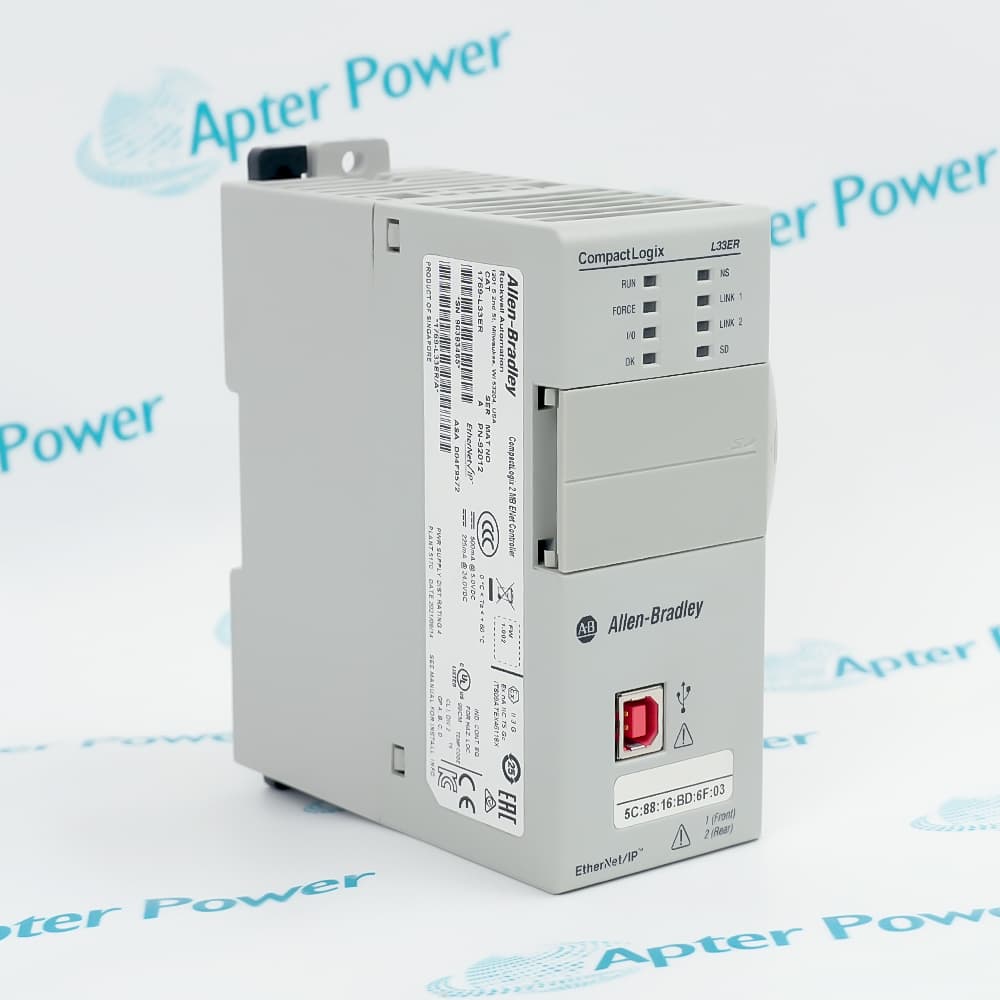
Features:
- 2 MB user memory: capacity for mid-size standard control projects
- Sixteen local modules: expanded Compact I/O bank planning
- 32-node EtherNet/IP limit: larger distributed-device architecture
1769-L33ER sits between the entry L30ER and the motion-capable L36ERM in controller capacity.
It expands memory, local I/O, and network-node scope while remaining a standard, non-motion controller.
Good maintenance preparation preserves the SD image, firmware, node map, bank arrangement, and evidence that L33ER—not L33ERM—is required.
Availability of 1769-L33ER is subject to Apter Power inventory and sourcing confirmation.
Verified resources for 1769-L33ER:
Important Notice: Other accessories, manuals, cables, calibration data, software, etc. are not included with this equipment unless listed in the above stock item description. All prices are shown in USD.
- Nodes: count every device added directly to the I/O tree.
- Connections: review produced tags, messages, HMIs, and module paths separately.
- Memory: reserve space for tags, logic, alarms, and future changes.
- Baseline: archive a verified project before network expansion.
- Bank layout: document controller, supplies, expansion cables, and end caps.
- Distance rating: keep every module within its power-supply limit.
- Current: total 5 V and 24 V demand for each bank.
- RPI: account for specialty-module effects on local update timing.
- Node count: include every directly configured EtherNet/IP device against the 32-node limit.
- Memory: compare the compiled 2 MB project demand with expansion and diagnostic needs.
- Connections: review messaging, produced and consumed tags, and device connection use.
- Change control: repeat the resource check when another adapter, drive, or communication module is added.
- Packaging lines: coordinate standard machine logic and distributed I/O.
- Material handling: integrate drives, sensors, and operator interfaces over EtherNet/IP.
- Process skids: control local Compact I/O with remote device communication.
- Cell upgrades: expand a standard Logix architecture without integrated motion.
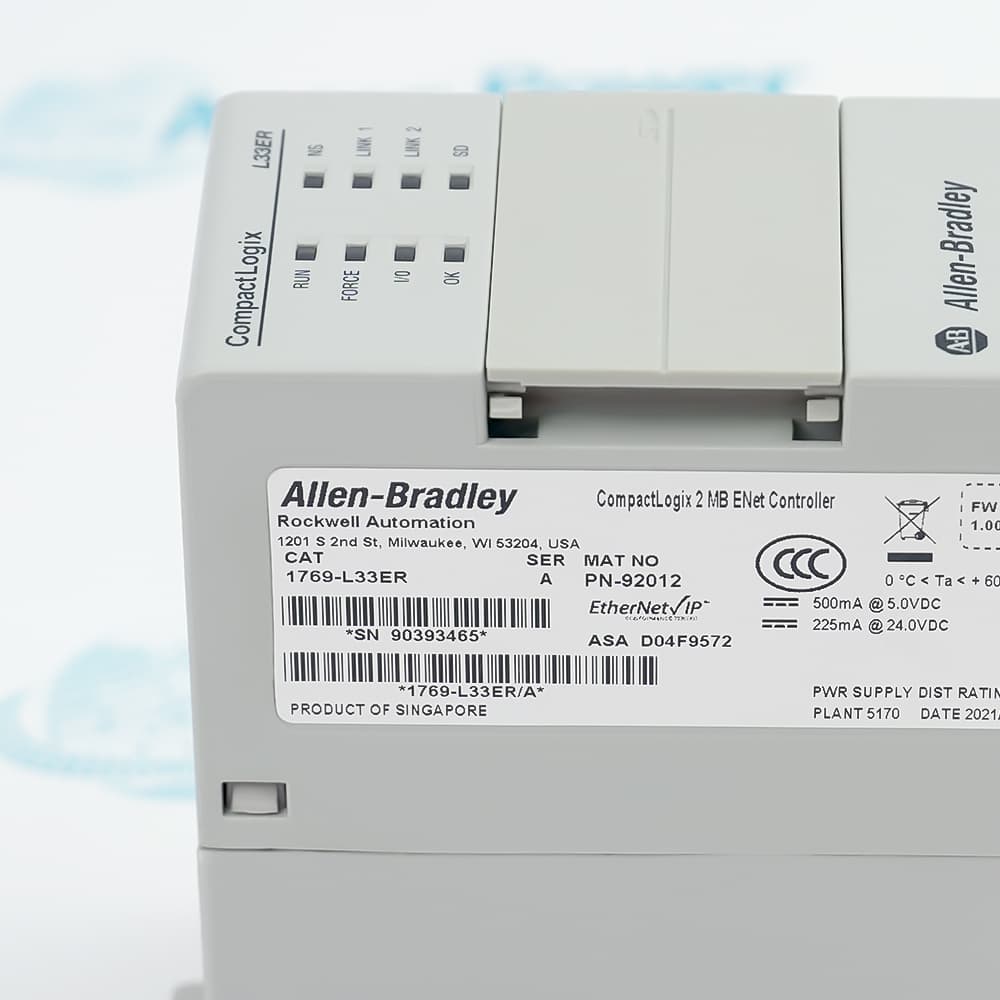

 1769-L33ER Datasheet