Emerson DeltaV and AMS Device Manager Predictive Maintenance in Deepwater Oil, Gas, and Chemical Plants
About the author
Written by May, Managing Director of Apter Power
May's Facebook:
May has been working at Apter Power for 10 years, where she turns complex power-automation challenges into clear, executable plans.
Drawing on deep product knowledge and field-proven methodologies, she has already supported 2 000+ customers in over 100 countries, maintaining a 96 % satisfaction score.
Deepwater platforms and chemical plants do not lose reliability for the same reasons, but they often face the same maintenance problems. Early warning signs exist, yet they sit in different places across the control system, valve diagnostics, instrument records, and maintenance history. Emerson DeltaV and AMS Device Manager are useful in this environment because they bring system health and device health into the same maintenance conversation. For high-risk operations, this supports earlier intervention, better outage planning, and tighter control over production risk.
The Role of DeltaV and AMS in High-Risk Deepwater and Chemical Operations
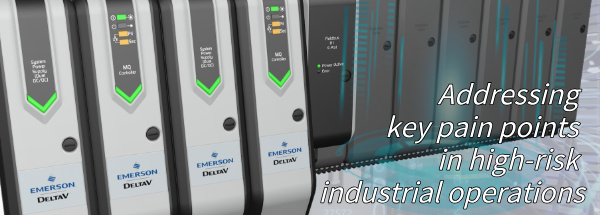
In high-risk facilities, DeltaV and AMS Device Manager support different parts of the maintenance workflow. DeltaV is closer to the control-system layer. It gives visibility into controllers, workstations, servers, SIS-related assets, network components, and other automation infrastructure that supports stable operation. AMS Device Manager works at the field level. It supports device configuration, calibration, diagnostics, and maintenance records for smart instruments and control valves.
This division is important in daily plant work. When a loop becomes unstable, engineers need to know whether the problem is coming from the control environment or from the field device itself. If those two issues are mixed together, troubleshooting gets slower, and maintenance decisions become less precise.
Chemical Plants
Chemical and petrochemical plants need a more controlled workflow than general asset monitoring alone can provide. Proof testing, device access, calibration history, and interlock verification all affect reliability in high-consequence services. Devices in corrosive lines, reactor feed loops, or critical trip functions should not be treated as if they carry the same risk as standard utility service instrumentation.
AMS Device Manager fits that requirement well. It gives instrumentation and reliability teams a structured way to manage diagnostics, documentation, and controlled device changes.
System Roles
A simple working model is enough here. DeltaV supports control execution and system-health visibility. AMS Device Manager supports field-device diagnostics and maintenance workflows. Together, they help operations, maintenance, and engineering teams work from the same asset context.
Building the Data Foundation for Predictive Maintenance With DeltaV and AMS
A predictive maintenance program becomes useful only when the data behind it is organized well enough to support action. Plants need a clear asset hierarchy, reliable tag relationships, trusted baselines, alert ownership, and change control that does not depend on local spreadsheets or technician memory.
The foundation usually includes:
Asset criticality based on production impact, safety consequence, and access difficulty
Device baselines captured after commissioning, calibration, or overhaul
Loop context linking field devices to control strategies and operating priorities
Alert rules that separate watch conditions from work triggers
Calibration, proof-test, and maintenance history in one controlled workflow
This is especially important in deepwater oil and gas. Diagnostics only help when they are tied to consequence, location, and ownership. Offshore teams need to know which findings can wait, which belong in campaign work, and which should be moved into the next shutdown plan.
Chemical plants depend on the same discipline for a different reason. If the current device condition cannot be compared against a trusted baseline, repeated alerts quickly lose value. Teams start seeing more notifications without gaining better decisions.
For plants integrating the AMS Device Manager with DeltaV DCS for asset health, the objective is straightforward. Every diagnostic signal should have context, ownership, and a defined maintenance response.
Core Predictive Maintenance Practices for Critical Valves, Instruments, and Asset Health
Most plants get the best results by starting with a limited group of bad actors. Critical control valves, SIS instruments, high-consequence transmitters, analyzers with drift history, and hard-to-access assets usually deliver the fastest operational return. Those assets influence process stability, maintenance labor, and outage scope at the same time.
Valves
Control valves are often the clearest place to prove value. Loop instability may appear in the control room long before maintenance has evidence of the mechanical cause. If teams rely only on operator complaints or process symptoms, they often remove valves too early or troubleshoot too slowly.
AMS Device Manager, used with valve diagnostics, helps teams distinguish between friction, actuator issues, calibration drift, air-supply problems, and mechanical wear. That makes maintenance planning more precise.
A common field setup includes digital valve controllers such as the DVC6200. In that environment, engineers can compare current behavior against baseline signatures and maintenance history rather than relying on a general impression that the loop is “not behaving well.”
Chevron’s El Segundo refinery is a strong example. The site used the AMS Device Manager with more than 100 control valves equipped with digital valve controllers. The reported results included savings from faster troubleshooting and from avoiding unnecessary valve maintenance.
Instruments
Instruments usually degrade more quietly. Drift, repeated alerts, slow response, recurring write events, and weak calibration history often tell the real story long before the device is treated as a maintenance priority.
AMS Device Manager is useful here because it keeps calibration status, audit trail, device history, and diagnostics inside one workflow. That helps instrumentation teams decide which devices can safely move to longer intervals and which need earlier intervention.
A practical screening model looks like this:
Asset Group
Leading Indicator
Likely Action
Plant Impact
Critical control valves
Signature drift, friction, recurring alerts
Recalibrate, repair in next window, or rebuild at turnaround
Interval change, targeted replacement, or field check
Less wasted PM effort
Remote assets
Trend deterioration plus communication issues
Planned field visit during campaign work
Better labor productivity
The goal is to focus engineering effort where diagnostic evidence can change maintenance scope.
How Are DeltaV and AMS Used in Deepwater Oil, Gas, and Chemical Plants?
The same technology stack is used differently in offshore and chemical operations. Deepwater production usually prioritizes integration across packages, startup speed, cabinet density, and remote visibility. Chemical and petrochemical plants usually prioritize loop stability, maintenance productivity, proof-test control, and rapid fault isolation.
Deepwater Production
Deepwater developments are difficult to manage when topsides, hull, and subsea systems are engineered in separate silos. Predictive maintenance becomes much more useful when the control environment is standardized and maintenance signals can be compared across assets without translation.
One deepwater case described topsides, hull, and subsea elements with different design requirements that still had to connect through a standardized integrated control and safety system based on DeltaV. Standard templates and aligned engineering rules helped reduce integration risk during commissioning and operation.
A separate FPSO project showed the device side at scale. The installation included 45,000 total I/O points and 12,000 HART I/O across more than 120 cabinets. AMS Device Manager was used with smartLink SW-HT to centralize HART diagnostics and device data. The reported results included lower cabinet-space demand, reduced wiring effort, and centralized visibility across topside and hull systems.
Chemical Plants
Chemical and petrochemical plants offer some of the clearest public examples of applied reliability improvement. At Yangzi Petrochemical-BASF, a large installed base of smart instruments and valves was supported through DeltaV systems and browser-based device-health visibility. The site used that visibility to identify unhealthy devices faster and support more targeted maintenance actions.
LyondellBasell’s Channelview complex used wireless monitoring with AMS Device Manager to watch 75 critical transmitters and valves for degradation. The site reduced routine maintenance frequency on those assets, eliminated 1,400 labor hours over three years, and saved $125,000 by reducing preventive work.
Refining shows the downtime side of the same approach. At BP’s Whiting refinery, diagnostics in the DeltaV system helped detect problems before an unintended loss of operation.
How Can Plants Implement DeltaV and AMS While Reducing Downtime and Lifecycle Risk?
The best implementation plans start narrow. Plants should choose one area with clear consequences, recurring maintenance pain, and a known list of bad actors. Good starting points include compressor anti-surge loops, critical feed control, flare service, steam letdown, and SIS device groups with heavy proof-test workload.
A practical rollout usually includes four steps:
Select 20 to 50 assets that already drive instability, trips, or expensive field work
Capture baselines after startup or maintenance
Review findings regularly with reliability, instrumentation, and operations together
Connect repeated degradation patterns to spare parts review and lifecycle planning
This is also where lifecycle planning needs to enter the discussion. If the same controllers, workstations, or I/O assets keep appearing in system-health findings, those signals should feed phased replacement planning. Predictive maintenance is not complete if it can identify degrading assets but cannot influence lifecycle decisions.
The same principle applies to spares. Spare parts inventory optimization using AMS predictive data is most effective when recurring patterns of degradation are used to decide which valve components, digital positioners, transmitters, or legacy control parts deserve higher stocking priority. Plants that handle this well reduce both emergency expediting and unnecessary overstock.
Build a More Resilient Predictive Maintenance Framework With DeltaV and AMS
In deepwater oil and gas and in chemical processing, predictive maintenance works best when system health and field-device health are managed together. DeltaV provides visibility into the control environment. AMS Device Manager provides the device evidence needed for maintenance timing, outage scope, and spares decisions. Plants that connect those two layers through clear baselines, targeted pilots, and defined ownership are better positioned to reduce downtime risk and improve maintenance productivity.
FAQs
Q1. Can DeltaV and AMS support a phased rollout in brownfield plants?
Yes. A phased rollout is often the safest option in brownfield facilities. Plants usually start with one unit, one asset class, or one reliability problem, then expand after alert quality, workflows, and user adoption are proven in daily operation.
Q2. What KPIs should plants track to measure predictive maintenance performance?
The most useful KPIs are bad-actor recurrence, mean time to diagnose, maintenance interval extension, avoided emergency work, nuisance alert reduction, valve pull avoidance, and percentage of findings converted into planned work rather than reactive intervention.
Q3. How is device diagnostic data different from alarm data in maintenance planning?
Alarm data shows that process behavior has crossed an operating threshold. Device diagnostic data shows the health of the asset itself. Maintenance planning should rely more on the second type when deciding inspection timing, replacement scope, and intervention priority.
Q4. Do wireless devices provide enough quality for predictive maintenance decisions?
Yes, in the right services. Wireless devices are well-suited for corrosion monitoring, remote pressure or temperature points, and low-frequency condition checks where hardwiring is difficult. They are less suitable when the application requires a fast closed-loop control response.
Q5. Should every device alert be sent directly into the CMMS?
No. Sending every alert into the CMMS usually overloads planners and weakens trust in the system. Plants should first classify alerts by consequence, persistence, and maintenance relevance, then convert only actionable findings into work orders.
An integrated application of Emerson DeltaV and AMS Device Manager.
Core Value Proposition
Emerson DeltaV and AMS Device Manager address a critical gap in high-risk industrial operations by unifying control system health visibility with field device diagnostics. DeltaV monitors the automation infrastructure—controllers, servers, networks, and SIS assets—while AMS Device Manager handles smart instruments and control valves through configuration, calibration, and diagnostic workflows. This integration matters because loop instability often originates from either the control environment or the field device itself; when these signals remain separated, troubleshooting slows and maintenance decisions lose precision.
Proven Applications
The technology stack delivers differentiated value across sectors. Deepwater developments prioritize integration across topsides, hull, and subsea systems. Chemical plants emphasize controlled workflows and compliance discipline. Implementation succeeds through a narrow start—20 to 50 assets already driving instability or expensive field work—baseline capture after maintenance, regular joint reviews across reliability and operations teams, and connecting degradation patterns to spare parts and lifecycle planning.
Strategic Extensions and Underlying Logic
The article's framework suggests deeper evolution beyond current practice. Technologically, edge computing can push AMS diagnostics to field nodes for bandwidth-constrained offshore environments, while AI/ML can evolve device baselines from static rules to adaptive signatures. .







Leave Your Comment