A turbine may remain mechanically serviceable for decades, even as the control layer around it becomes harder to support. In critical steam turbine applications, the first signs usually appear in spare parts availability, revision control, and outage recovery. Once a legacy Woodward system reaches that point, plants need a practical plan for upgrades, obsolete hardware, and long-term spare coverage.
What Role Woodward Systems Play in Turbine Control Applications
In turbine service, a Woodward system links speed sensing, control logic, actuator response, and valve movement. On a critical machine, that layer influences startup behavior, load stability, disturbance response, and communication with the wider plant control environment.
Core Control Functions in Turbine Service
At a basic level, the control package compares actual speed with the target operating point and sends a command to the actuator, which moves the final control element. In operating plants, that function usually extends beyond simple speed control. The same package may also handle load control, process limits, and key operating signals tied to pressure, frequency, generator output, or compressor conditions.
That is why control issues move quickly from the cabinet to the process. On a pump-drive turbine, a weak response can affect flow stability after an upset. On a generator-drive unit, it can affect frequency recovery and load sharing. On a compressor train, it can affect process stability during normal operation and during fast transients.
Keep Controller, Governor, and Actuator Separate
Plants often treat governor, controller, and actuator as interchangeable terms. They are closely connected, though they do not describe the same component. The controller handles logic and processing. The governor function determines the control response. The actuator converts that response into motion.
That distinction matters during troubleshooting. A noisy speed signal can look like poor tuning. Valve friction can look like a weak loop. A Woodward actuator repair will not solve an obsolete controller platform, and a cabinet refresh will not correct a slow hydraulic path. The maintenance action has to match the actual failure mode.
How Obsolescence in Turbine Control Hardware Affects Reliability and Risk
Obsolescence usually appears first as a maintenance problem, then grows into an operating risk. As support tools age and spare coverage becomes less certain, faults take longer to diagnose, changes become harder to validate, and outage recovery becomes less predictable.
How Obsolescence Changes Day-to-Day Reliability
The first impact is usually seen in routine maintenance. A fault that was once easy to isolate may now require more time because the software environment is outdated, documentation is incomplete, or spare modules need revision checks before use. On units that run long intervals between shutdowns, that loss of recoverability becomes a serious reliability issue.
The effect is often cumulative. Engineers delay nonessential logic changes because the tools are old or difficult to access. Purchasing starts searching by part number and revision instead of working from a stable, approved list. Technicians carry temporary fixes into the next outage because the site lacks confidence in the spare pool.
How Obsolescence Increases Event Risk
The impact does not stop at maintainability. Aging controls can also reduce response quality during breaker operations, load rejection, or sudden process swings. Slower execution, greater dead time, and weaker actuator response reduce operating margin and make the turbine harder to stabilize after a disturbance.
On a boiler feed pump turbine, compressor train, or essential generator, that can turn into a plant-level problem very quickly. The machine may still run, yet the margin for recovery gets smaller every year. That is often when a legacy Woodward system stops being a routine maintenance topic and becomes a lifecycle decision.
Warning Signs That Need Attention
Typical warning signs include:
- repeated troubleshooting around the same control cabinet
- uncertainty over firmware or revision matching
- temporary repairs that keep carrying into the next outage
- longer validation time for spare modules
- reluctance to adjust tuning or logic during operation
- growing concern over response quality during fast transients
When these signs begin to stack up, the control platform is no longer stable enough to be managed informally.
What Happens When Legacy Woodward Controllers Reach End of Life
End of life changes how much risk a plant can absorb during an outage. Once repair options shrink and spare compatibility becomes less certain, even a single failed module can create consequences well beyond the original fault.
Why End of Life Changes Outage Recovery
A board that was repairable last year may no longer be repairable when key electronic components disappear from the supply chain. A spare module may also fail to help if its firmware, revision, or I/O alignment does not match the live installation. At that stage, recovery time becomes harder to predict, and outage planning starts to depend on assumptions the site can no longer verify.
This is usually where operating teams feel the change most clearly. The spare is on site, but no one is fully confident it will load correctly. The module can be sourced, though the test record is incomplete. The part number looks right, yet the revision history is uncertain. That is how a legacy Woodward controller creates more risk than its outward condition suggests.
Why the Risk Extends Beyond the Controller
The controller is usually only one part of the problem. Once a platform reaches the end of life, the surrounding architecture often moves toward the same boundary. CPU family, software tools, communication cards, and field I/O may all become harder to support at roughly the same time.
That is why one failure can trigger a much larger scope than the plant originally budgeted. In some installations, a controlled module replacement is still feasible. In others, the real issue is platform age, not the failed board itself.
Module Change or Migration
| Situation |
Likely Response |
| Supported processor family, stable application, isolated module issue |
Controlled module replacement |
| Unclear firmware history, repeated spare mismatch, aging software tools |
Broader modernization review |
| Obsolete processor family, poor spare coverage, multiple support risks across the platform |
Planned migration |
A module change still makes sense when the installed architecture remains supportable, and the fault is limited in scope. Migration becomes the safer path when the platform can no longer be recovered with confidence after a single failure.
How to Evaluate Upgrade Paths for Legacy Woodward Governors and Control Systems
Upgrade scope should be based on the consequence of failure, the condition of the installed architecture, and the length of the next operating run. In practice, most plants end up choosing among three paths.
Common Upgrade Paths
| Upgrade Path |
Typical Trigger |
Main Benefit |
Main Constraint |
| Targeted module replacement |
Isolated fault in a still-supported architecture |
Lowest outage scope and least commissioning effort |
Lifecycle risk remains in place |
| Hybrid modernization |
Field devices remain serviceable but the control layer is aging |
Better diagnostics and support without a full cabinet replacement |
Integration and tuning still require discipline |
| Full migration |
Repeated faults, weak spare coverage, obsolete platform, major turnaround available |
Resets lifecycle risk and improves maintainability |
Highest engineering and commissioning burden |
The right path depends on the role of the machine in the plant. A utility unit with a defined turnaround plan can often absorb a wider upgrade scope. A process compressor train in continuous chemical service may need a staged path because the production impact of extended commissioning is too high. A boiler feed pump turbine may justify faster action if control uncertainty is starting to threaten startup confidence.
For example, some sites can extend service life on platforms such as the 505 with targeted work if the architecture is still supportable and spare validation is strong. On older distributed platforms, a MicroNet-era installation with weak documentation and poor spare traceability may already be past the point where isolated fixes remain economical.
Checks Before Scope Freeze
A scope review for a legacy Woodward system should cover six areas:
- CPU generation, I/O family, and firmware status
- speed sensing quality, wiring condition, and signal stability
- actuator stroke time, feedback health, and valve linkage condition
- DCS, ESD, and alarm interface requirements
- backup quality for drawings, configuration files, and tuning records
- independence of overspeed protection from the primary control layer
A useful plant rule is simple. If the site can no longer validate a spare quickly, cannot confirm revision alignment, and does not trust repair turnaround, the control package is already being managed as a risk item.
How Spare Parts Planning Supports Long-Term Operation of Woodward Systems
Spare parts planning has to match the consequences of losing the turbine. A small auxiliary machine can tolerate a leaner spare model. A turbine that supports a major process unit cannot. On a critical train, the question is whether the plant can restore function within the outage window it actually has.
Stock by Recovery Risk
A Woodward system should be stocked according to recoverability, not inventory count. A spare CPU with unclear firmware, weak storage records, or no validation history is not a dependable spare. The same applies to any module that takes too long to confirm during a turnaround. If the site cannot install and verify the part quickly, that spare is doing little to protect availability.
That is especially true in plants with long operating runs between shutdowns. A part may sit on the shelf for years, then fail its first real validation because revision status was never checked against the live system. In practical terms, an unverified spare is often only slightly better than no spare at all.
Prioritize Critical Spares
The exact list depends on the installation, but these items usually deserve tighter control:
- CPU, power supply, and core I/O modules
- speed pickups and related signal hardware
- actuator feedback devices such as LVDTs or position sensors
- communication modules required for DCS visibility
- approved copies of configuration files, firmware records, and cabinet drawings
Every critical spare should be logged by part number, revision, firmware level, storage condition, and last test date. That level of discipline is what turns spare inventory into usable outage protection.
What to Consider When Sourcing Obsolete or Discontinued Woodward Parts
The market for obsolete Woodward parts exists because many plants are still running legacy hardware. The main issue is consistency. Two modules with the same nameplate can have very different repair histories, test status, and traceability.
Check Fit and Traceability
An obsolete module should not enter service simply because the part number looks correct. The site needs confirmation that the revision matches, the firmware fits the live application, and the part has passed a usable test process. This becomes even more important when sourcing through secondary channels, where documentation quality can vary sharply from one supplier to another.
For critical turbines, incoming inspection should be treated as part of the reliability program, not as a receiving-room formality. The acceptance decision has to account for application fit, service history, and the plant’s tolerance for delay if validation fails.
Use a Clear Acceptance Checklist
Before an obsolete module is released to service, the site should confirm:
- exact part number and revision match
- firmware compatibility with the installed application
- powered or bench functional test record
- evidence of prior repair, connector wear, or heat damage
- burn-in history for refurbished units
- return and replacement process if site validation fails
The same logic applies to repair decisions. Woodward actuator repair can make sense when the actuator condition is known, the response remains within the acceptable range, and the broader control architecture is still supportable. It becomes a weak fix when the real problem lies in an obsolete controller family, failing communications hardware, or a platform with shrinking spare coverage.
Build a Structured Upgrade and Spare Parts Strategy to Support Long-Term Turbine Availability
Long-term turbine availability depends on planning before a failure forces the decision. Plants need a clear path for upgrades, spare validation, and obsolete parts risk while the machine is still recoverable on a predictable schedule. On critical turbines, a structured strategy gives the site a better chance to protect production, shorten outage recovery, and avoid repeated exposure to the same control-related problems.
FAQs
Q1. What is Woodward 9907-838 used for?
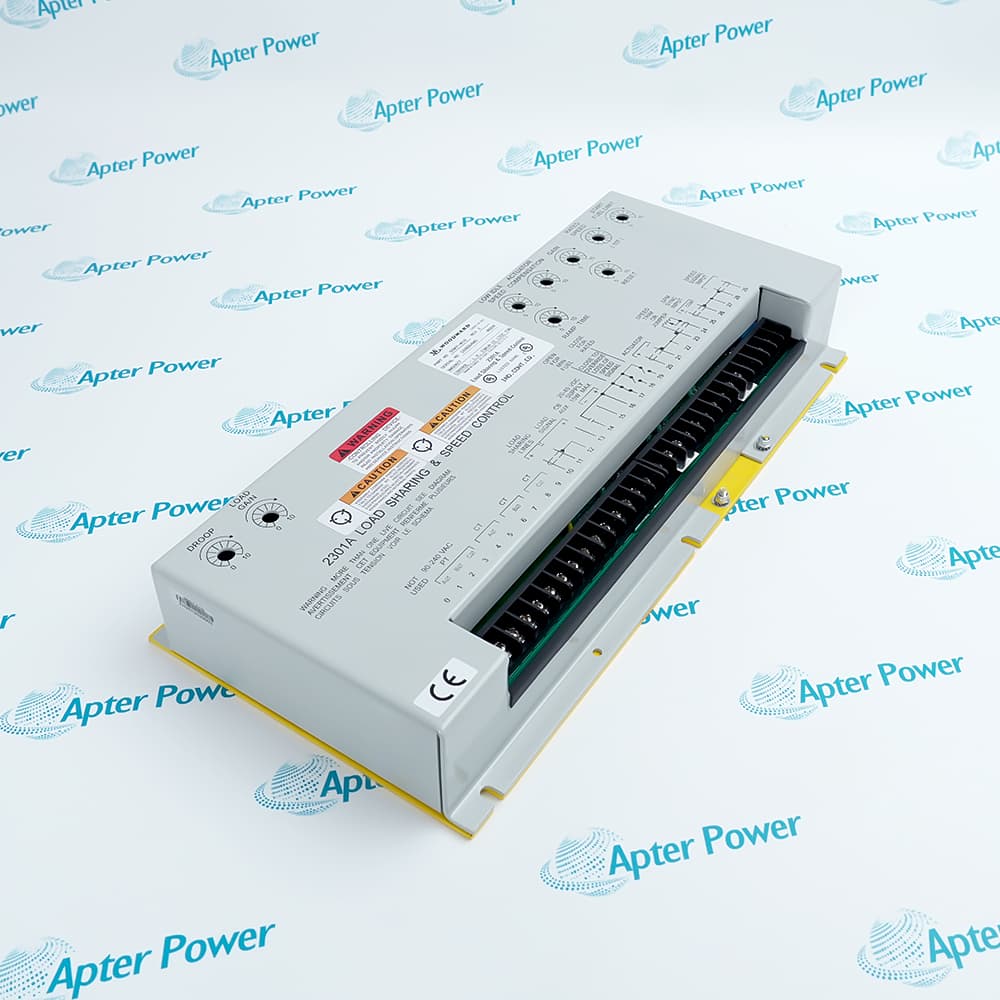
It is a 24 Vdc PWM Load Sharing Module in Woodward’s LSM family. In power-generation architectures, it supports isochronous and droop load sharing and works with related synchronizing and load-control accessories, so it is not a standalone turbine governor.
Q2. Is Woodward 9907-838 interchangeable with 9907-252 or 9907-173?
No. Woodward’s catalog lists 9907-173 as a 120 Vac analog Load Sharing Module, 9907-252 as a 24 Vdc 0–5 V version, and 9907-838 as a 24 Vdc PWM version. Family similarity does not make them drop-in substitutes.
Q3. What does the “-33” in 84661-33 mean?
It identifies cable length. In Bently Nevada’s 84661-AA ordering format, the suffix represents length in feet, and 33 ft is one of the published standard lengths. That makes 84661-33 a 33-foot standard armored interconnect cable.
Q4. Is 84661-33 a Woodward part number?
No. 84661-33 belongs to Bently Nevada’s armored interconnect cable family, not Woodward’s control portfolio. It may appear in the same project file as a Woodward 9907-838, but it serves machinery monitoring cabling, not turbine control logic.
Q5. Which documents should engineers request before approving a 9907-838 purchase?
Request the exact nameplate, the current Woodward documentation references, confirmation of the required PWM interface, 24 Vdc power requirements, and a functional test record. Woodward’s catalog links 9907-838 to Product Specification 82686 and Manual 02029, which are good baseline references.






Leave Your Comment