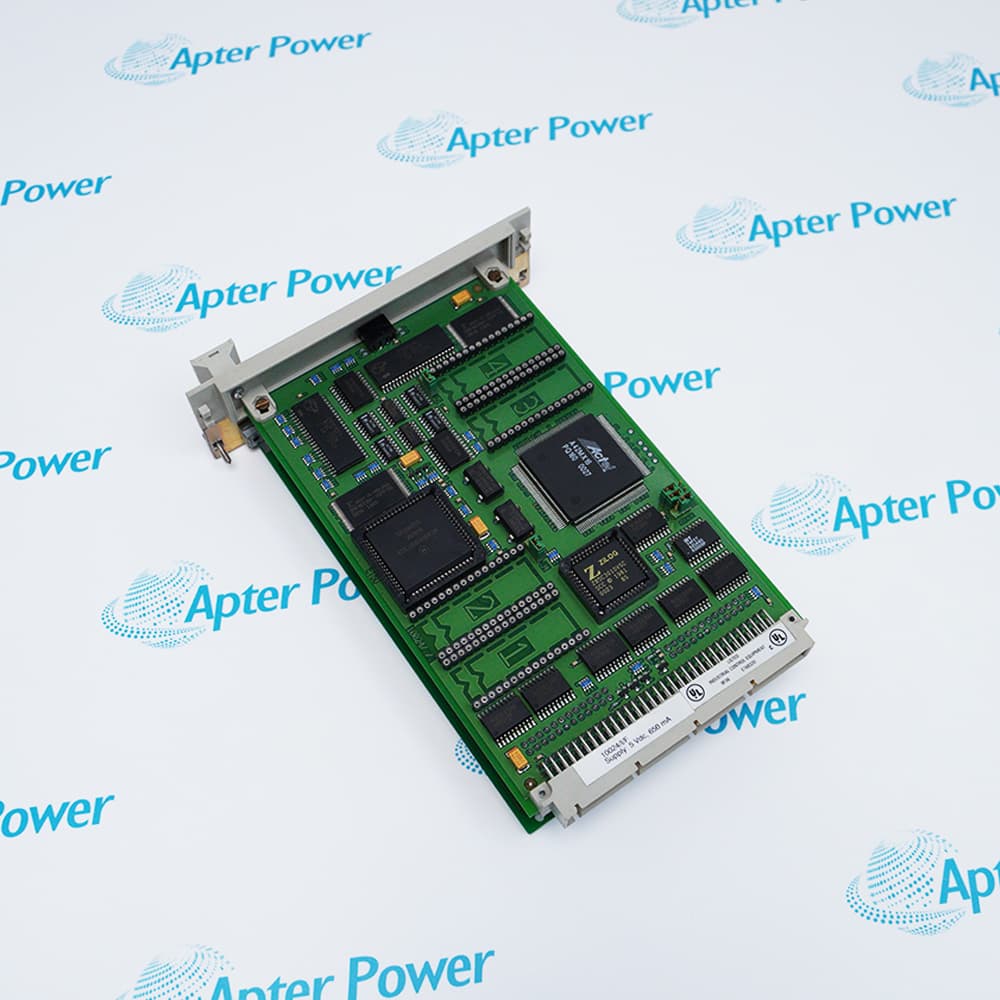
Features:
- Sequenced burner control: Purge, ignition and fuel release proceed through one supervised program.
- Selectable flame monitoring: The amplifier arrangement supports the documented ionization, UV or IR detector path.
- Visible diagnostics: Program position and flame-signal indication narrow the point of an interrupted start.
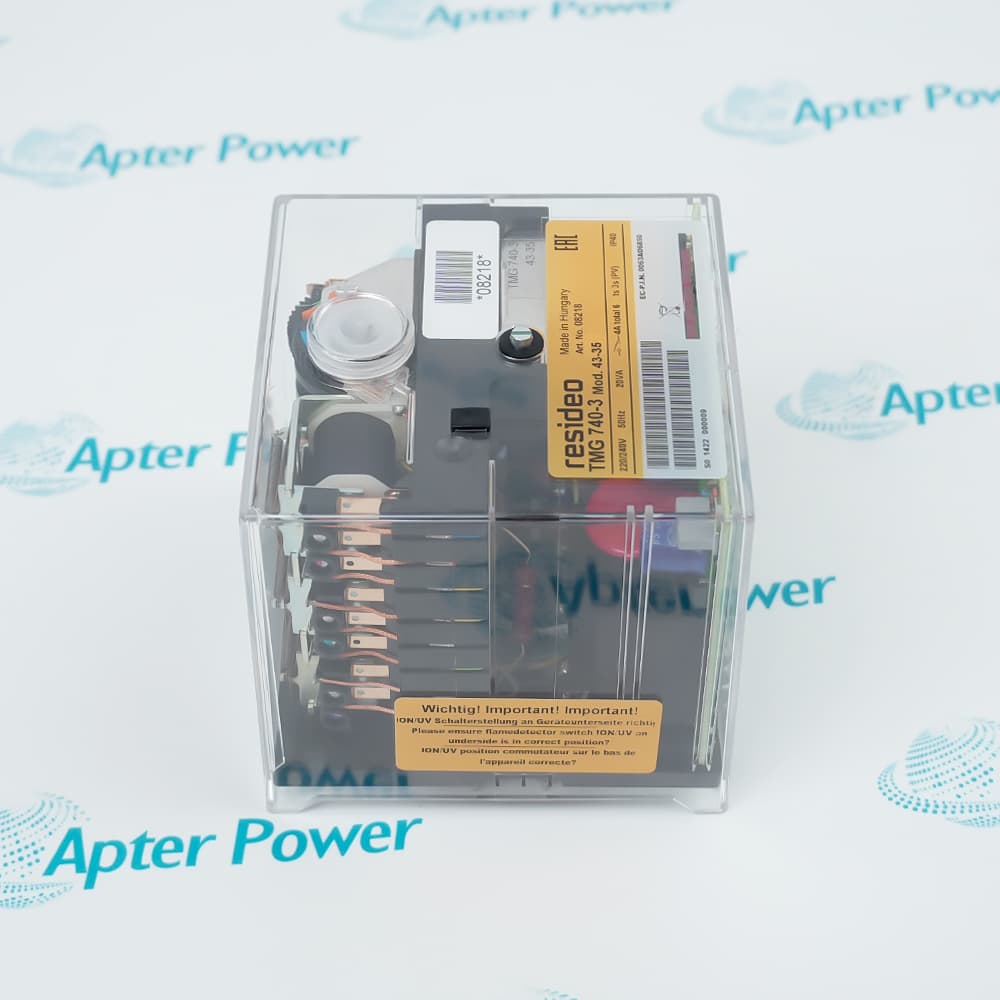
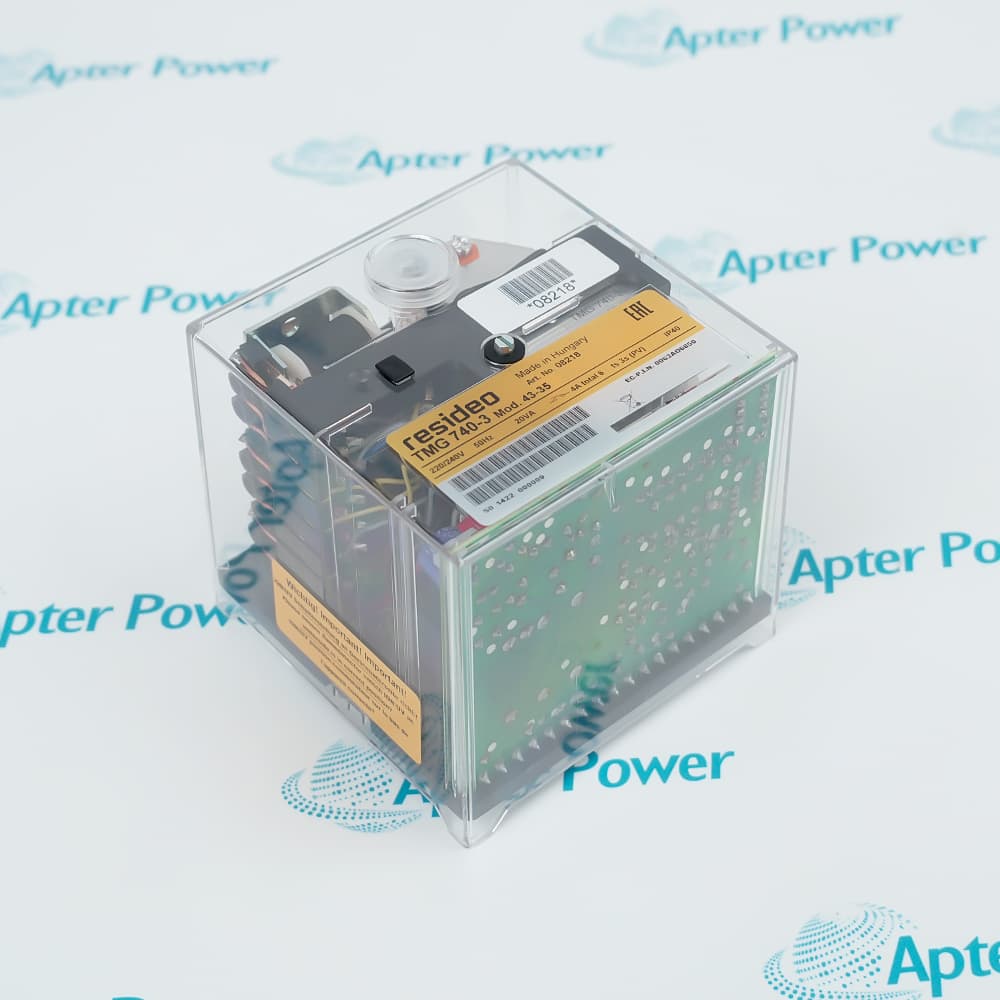
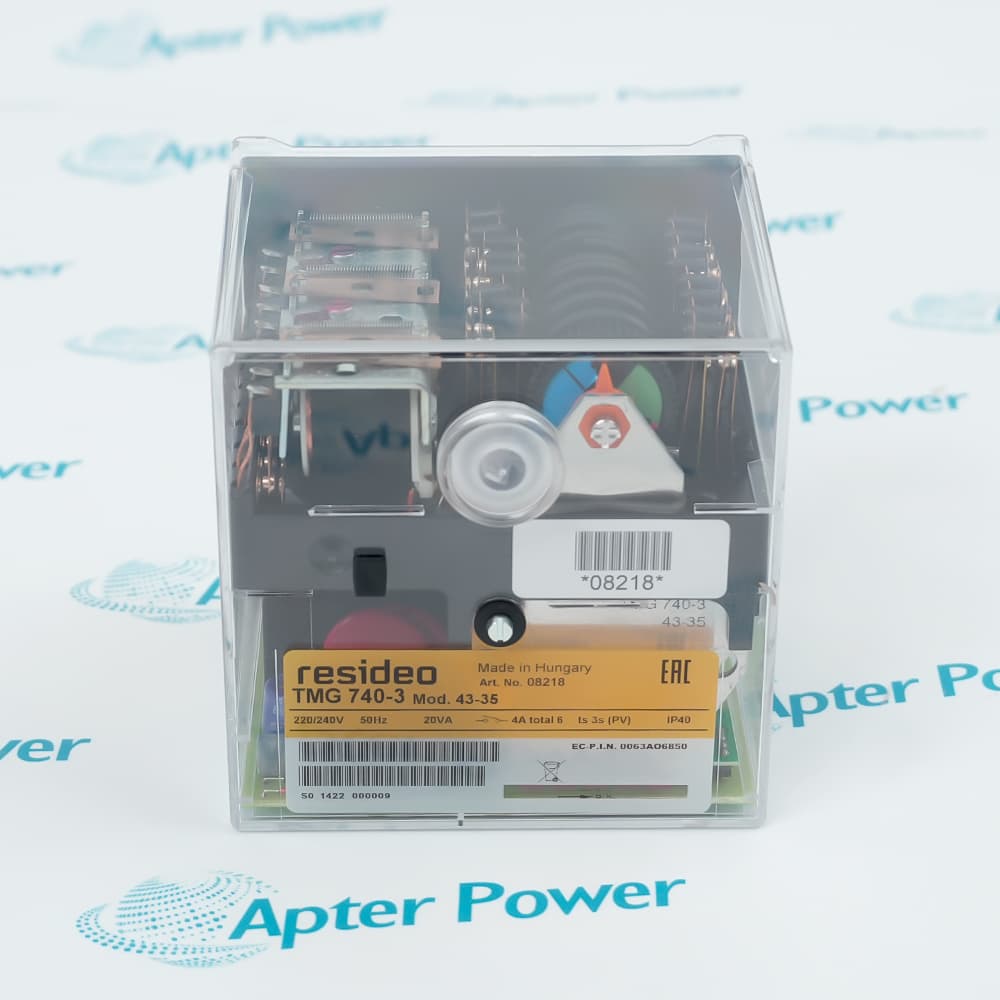
TMG 740-3 MOD 43-35 is the exact MOD 43-35 program variant of the Honeywell/Resideo TMG 740-3 burner-control family.
Its practical value is the coordinated relationship between damper proving, ignition timing, valve release and continuous flame supervision.
The MOD suffix remains a functional identity because another TMG 740-3 timing program may fit the same style of base without matching the burner sequence.
Apter Power can help confirm Honeywell TMG 740-3 MOD 43-35 program identity, base wiring, flame detector and supplied scope before quotation.
TMG 740-3 MOD 43-35 Manuals, Datasheets, Links
Important Notice: Other accessories, manuals, cables, calibration data, software, etc. are not included with this equipment unless listed in the above stock item description. All prices are shown in USD.
- Air-first start: The program proves the required airflow before fuel release.
- Timed ignition: Pre-ignition and safety intervals create a defined window for flame establishment.
- Valve supervision: Fuel outputs follow the selected program rather than independent timer settings.
- Lockout boundary: A failed proving or flame condition interrupts the sequence and requires fault correction.
- Detector selection: The configured amplifier path must match the installed ionization, UV or IR sensor.
- Signal visibility: The front indication helps distinguish weak flame signal from another start permissive.
- Stray-light check: The control evaluates an unwanted signal when flame should be absent.
- Wiring continuity: Detector lead routing and grounding remain part of reliable supervision.
- Exact MOD program: Timing suffixes are not accepted as automatic equivalents.
- Base verification: Terminal functions are compared with the burner diagram before insertion.
- Controlled restart: Air, ignition, flame and valve actions are observed in sequence.
- Fault-first diagnosis: The program indicator is read before resetting or changing a component.
- Industrial boilers: Supervises a defined gas or dual-fuel burner start and running flame.
- Process heaters: Coordinates purge and ignition where safe fuel admission is essential.
- Direct-fired air systems: Links airflow proving with the burner release sequence.
- Legacy combustion service: Restores an installation that is documented for the MOD 43-35 program.