Features:
- Dual-port interface: two 100 Mbit RJ45 connections on one switched Ethernet interface
- Flexible PROFINET role: operation as IO Controller or IO Device
- Protocol coverage: TCP/IP, ISO-on-TCP, UDP, S7 communication, SNMPv1, and NTP
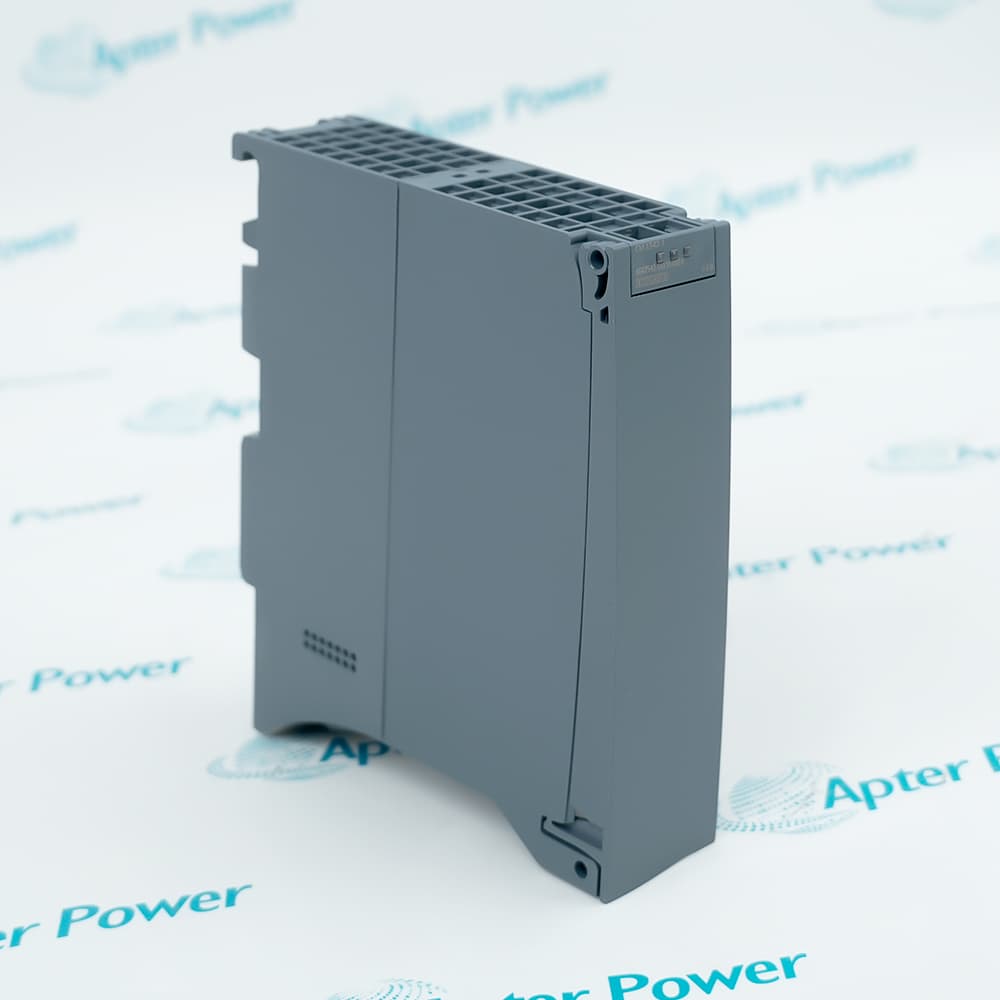
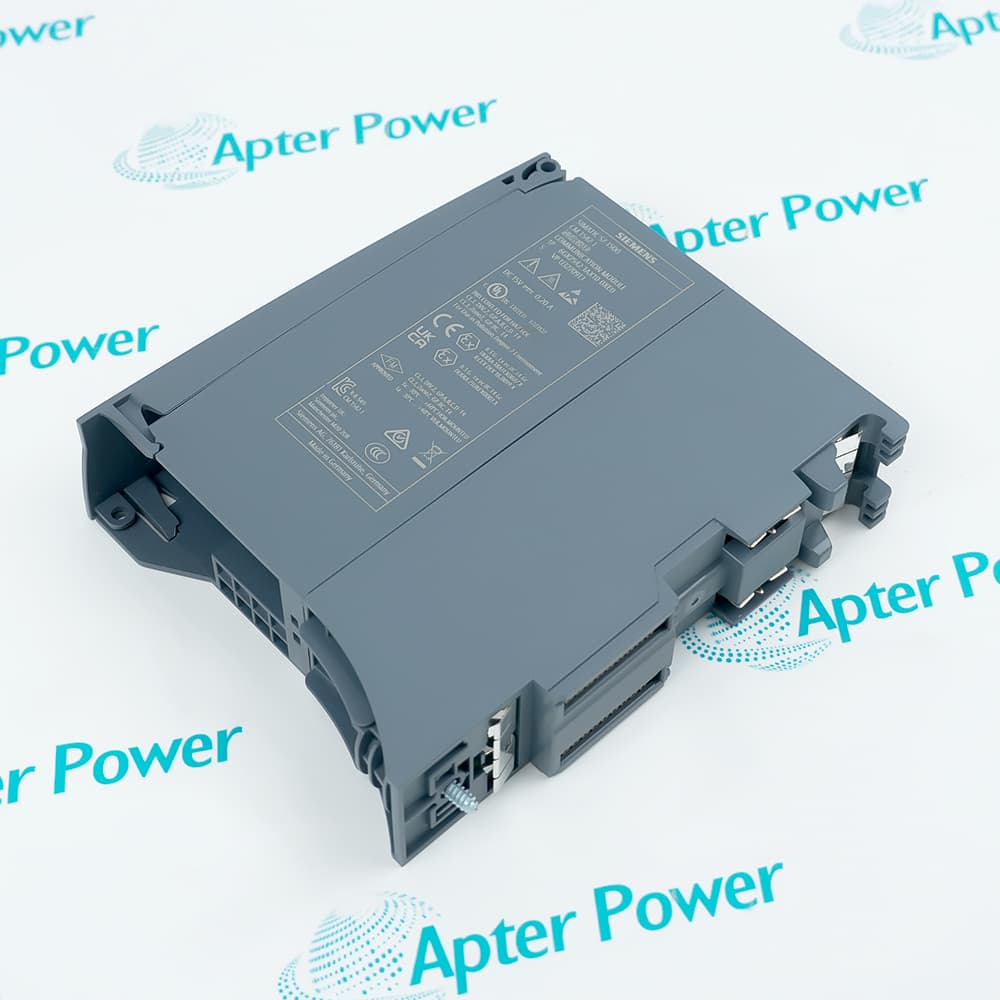
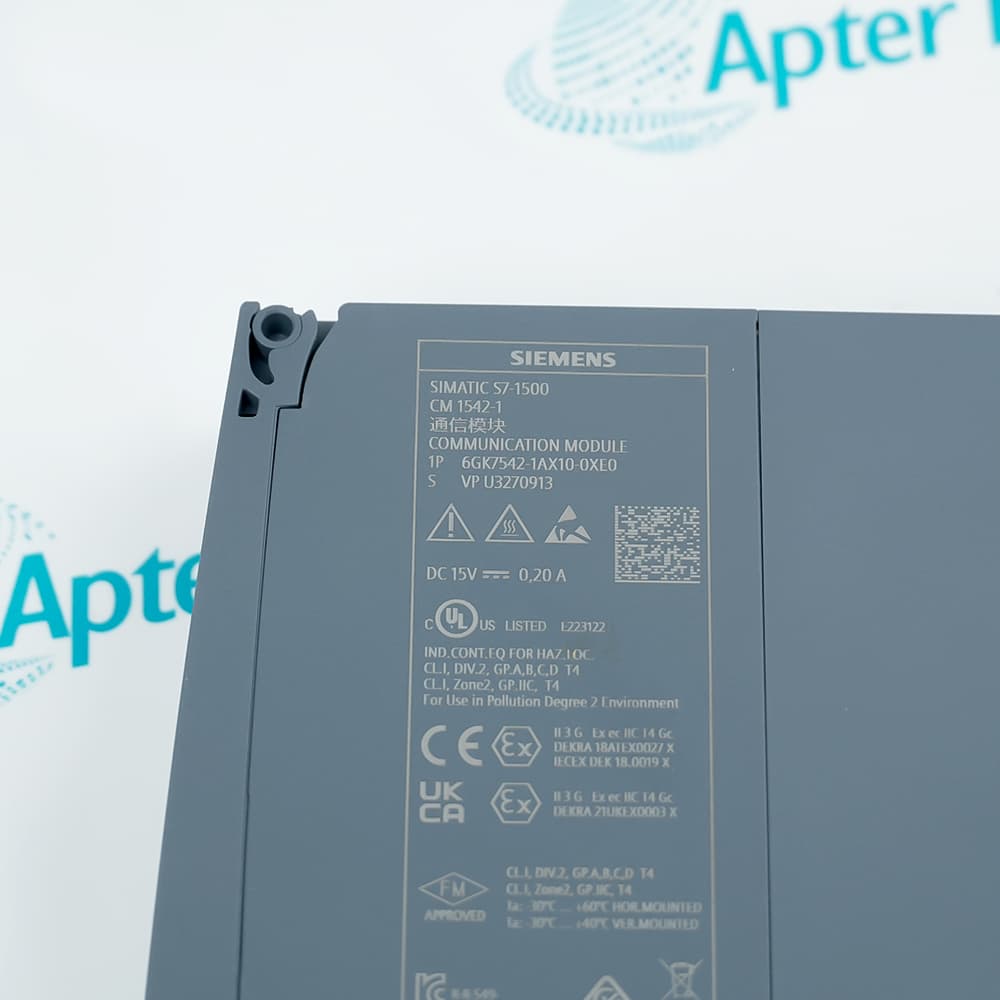
6GK7542-1AX10-0XE0 expands an S7-1500 system with a dedicated PROFINET communications path rather than additional process I/O.
Its dual-port switch supports line wiring while the logical resource is still one Industrial Ethernet interface.
The distinction between CM and CP is part of the product identity and should remain intact in the hardware configuration.
Apter Power can review 6GK7542-1AX10-0XE0 network role, exact CM identity, condition, and quotation scope.
Siemens 6GK7542-1AX10-0XE0 CM 1542-1 PROFINET Communications Module Manuals,Datasheets,Link
Important Notice: Other accessories, manuals, cables, calibration data, software, etc. are not included with this equipment unless listed in the above stock item description. All prices are shown in USD.
- IO Controller: the module can manage assigned PROFINET IO devices.
- IO Device: it can also present the S7-1500 station to another controller.
- Configuration: the selected role is established in the engineering project.
- Identity: Siemens names the hardware CM 1542-1.
- TCP/IP: supported for open user communication.
- ISO-on-TCP: available through the documented T-block resources.
- UDP: supported alongside IP broadcast and multicast.
- S7 communication: provided as a separate Siemens communication service.
- Port layout: two RJ45 ports form an integrated switch.
- Device management: SNMPv1 is supported.
- Time service: NTP can synchronize the module clock.
- Media rate: each electrical connection operates at 100 Mbit/s.
- S7-1500 PROFINET expansion: add an IO Controller or IO Device role to the station.
- Open Ethernet communication: exchange user data with TCP/IP, ISO-on-TCP, or UDP.
- Managed plant networking: integrate SNMPv1 monitoring and NTP time synchronization.
- Redundant system communication: apply the Siemens-supported redundancy functions in the documented topology.