SNT401-13
SNT401-13
SNT401-13
SNT401-13
SNT401-13
SNT401-13
Ask our team:
  • Phone: +86 181 0690 9650
  • E-Mail sales1@apterpower.com
  • Lifecycle status

    Discontinued / Obsolete by OEM
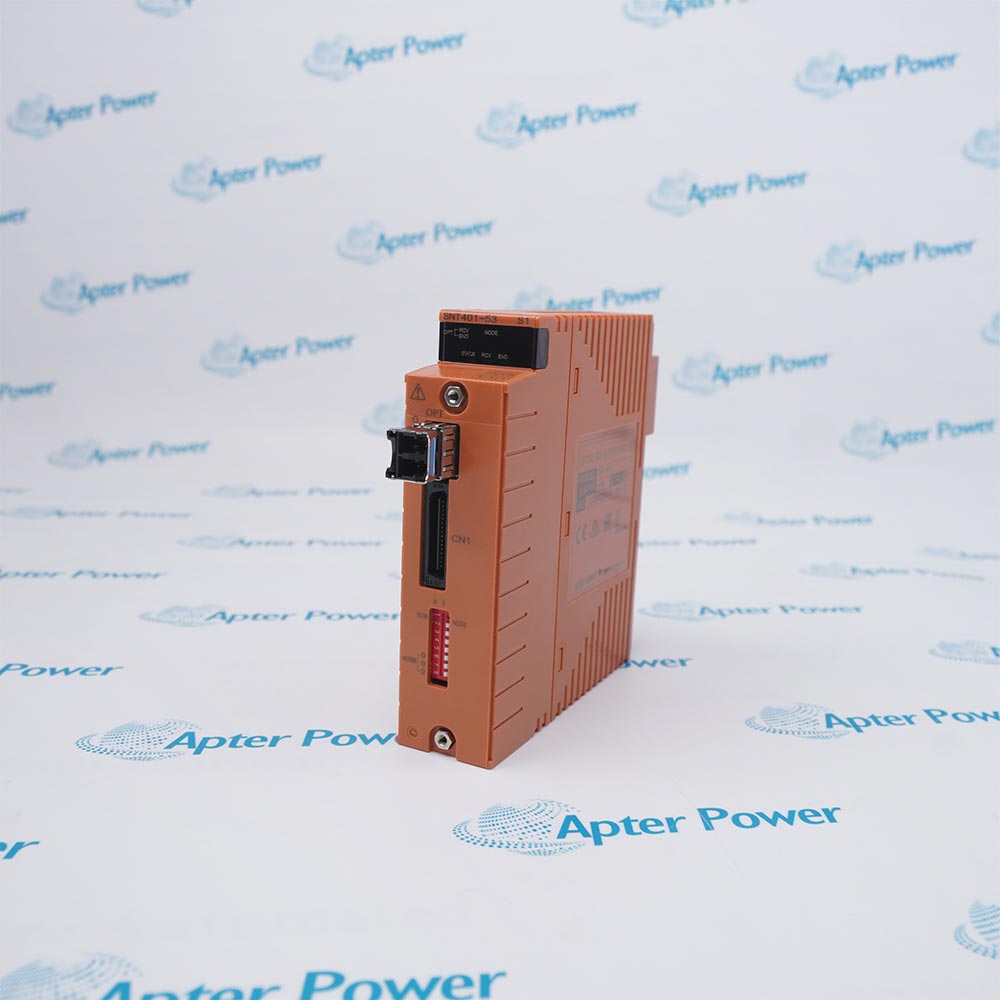
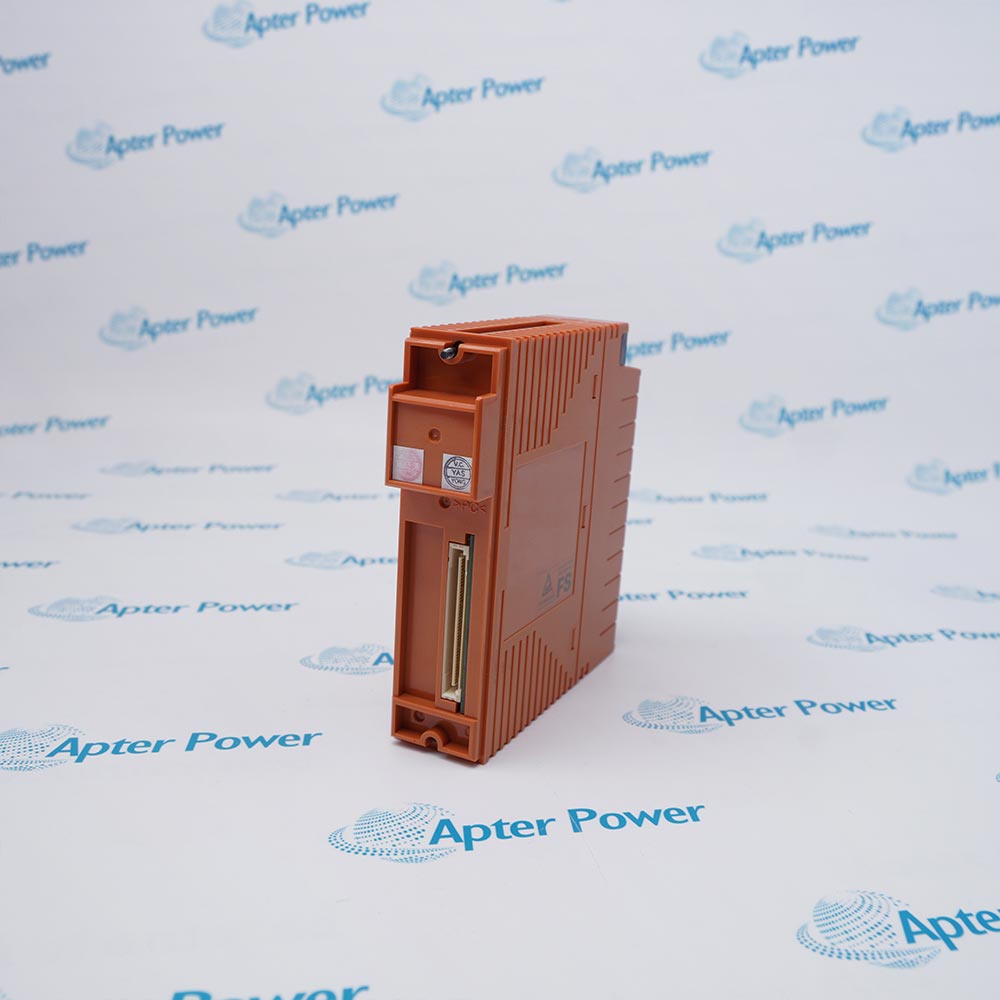
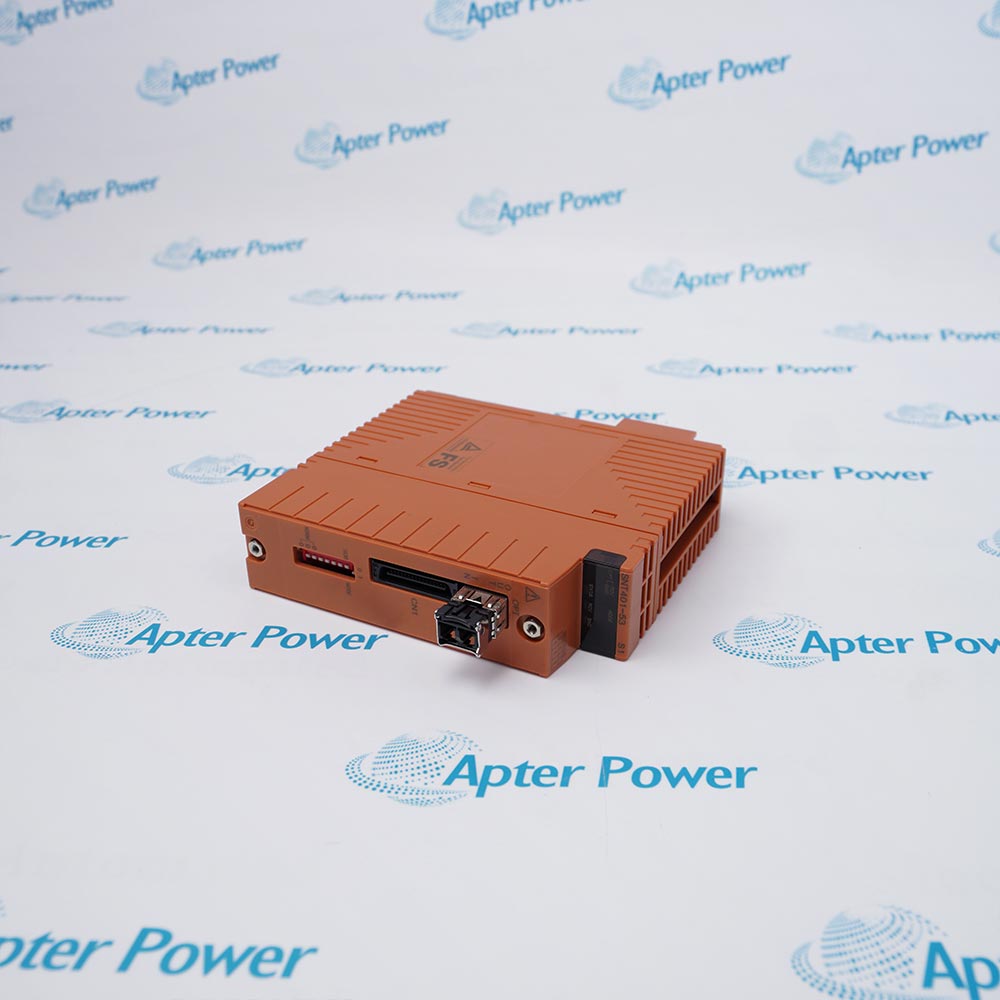
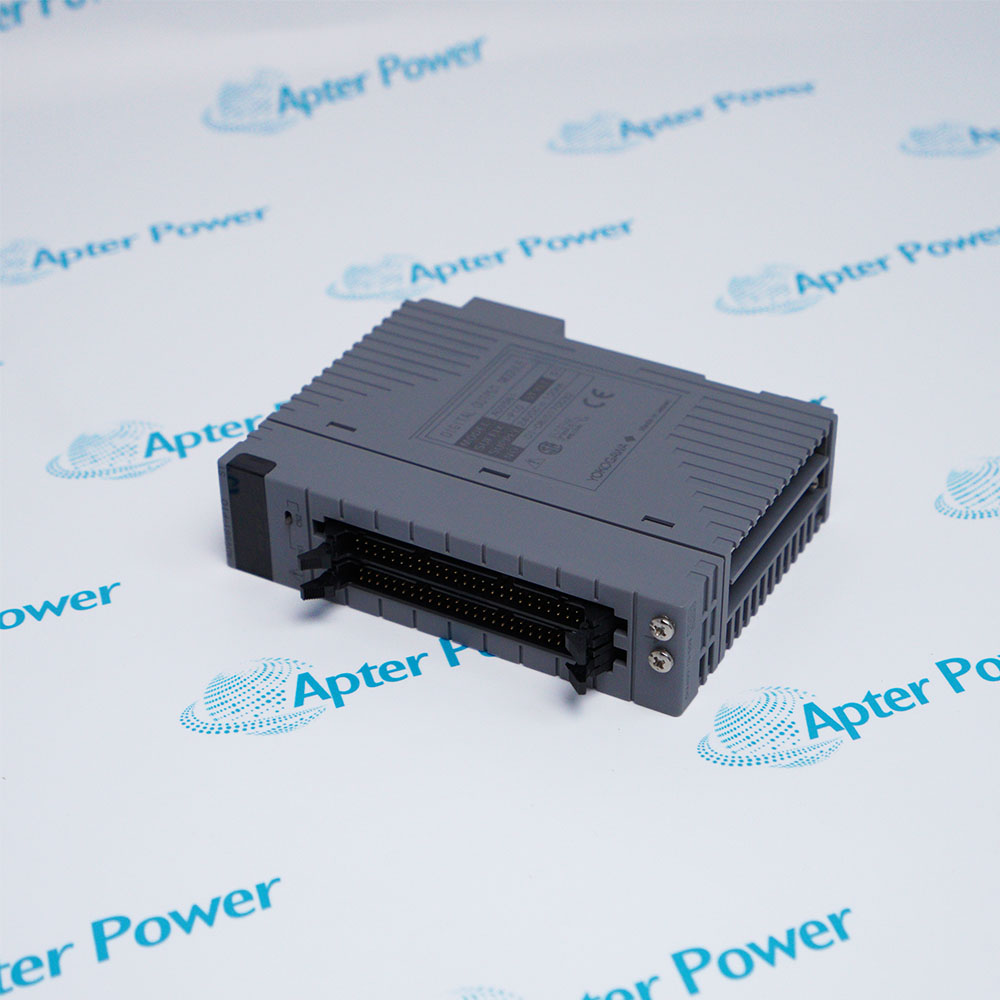
    Apter Power supplies factory-fresh Yokogawa SNT401-13 communication modules. We deliver current-generation hardware to maintain seamless process automation network topology.

SNT401-13

/ 4.9
1001 reviews | Need a Specific Revision?
The Yokogawa SNT401-13 is a fiber optic ESB bus repeater master module that enables long-distance electro-optic bus signal conversion in critical process industries.
In Stock
Ships by Thursday, October 29
Fast Shipping Available
Get a quick price for SNT401-13
Quantity
*E-mail
Company
*Mobile
*Content
Upload (gif, jpg, jpeg, png, bmp, doc, docx, xls, xlsx, ppt, pdf, csv)

Technical specifications for SNT401-13

  • Manufacturer:
    Yokogawa
  • Part Number:
    SNT401-13
  • Product Family:
    Centum CS-Centum VP
  • Product Type:
    Optical ESB Bus Repeater Master Module
  • Stock:
    3
  • Rated Input Voltage:
    24 VDC
  • Current Consumption:
    0.5 A
  • Operating Temperature:
    -20°C to +70°C
  • Storage Temperature:
    -40°C to +85°C
  • Ambient Humidity:
    10% to 90% RH (Non-condensing)
  • Corrosion Protection:
    Compliant with ISA Standard G3 class environments
  • Explosion Protection:
    Standard type, with no explosion protection
  • Network Topologies:
    Supports both Star type and Chain type network structures
  • Weight:
    0.25 kg
  • Estimated shipping dimensions:
    16x13x5.3cm
  • Tariff Code:
    8537101190
  • Country of origin:
    Japan
  • Place of shipment:
    Xiamen, Fujian, China
By purchasing this item, you agree to the Terms & Conditions, ApterPower is not an authorized distributor for listed manufacturers or tradenames and therefore the manufacturer's warranty does not apply. All our products come with ApterPower's 1-year warranty.

More Information

Overview Manuals Specifications Applications Performance & Efficiency Safety & Compliance

Features:

  • Extended Optical Distance Linkage (Up to 10 km)
  • ISA G3 Certified Harsh Environment Conformance
  • Fault-Tolerant Hot-Swapping & Duplex Redundancy
The YOKOGAWA SNT401-13 breaks through localized geographic restraints by pushing standard safety ESB bus copper limits up to a total 5 km transmission distance over single-mode/multimodal fiber links, which dynamically expands up to 10 km when embedded into modern Vnet/IP system frameworks running Revision 1.03 or newer.

Unlike standard industrial modules, the YOKOGAWA SNT401-13 features a meticulous chemical-resistant conformal coating that meets ISA Standard G3 protocols, providing flawless dielectric insulation and barrier shield protection against airborne corrosive elements across a broadened operational thermal spectrum of -20°C to 70°C.

Engineered for non-stop uptime in dangerous industrial spaces, the YOKOGAWA SNT401-13 natively accommodates dual-redundant bus architectures on continuous odd/even rack slots, ensuring zero process interruptions and total safety maintenance through online hot-swapping parameters during a master bus rollover.

The SNT401-13 YOKOGAWA Optical ESB Bus Repeater Master Module may still be available for purchase and support from Apter Power beyond End-Of-Life (EOL) by the manufacturer (OEM).
YOKOGAWA SNT401-13 Optical ESB Bus Repeater Master Module Manuals,Datasheets,Link Important Notice: Other accessories, manuals, cables, calibration data, software, etc. are not included with this equipment unless listed in the above stock item description. All prices are shown in USD.
YOKOGAWA SNT401-13 Optical ESB Bus Repeater Master Module

General

  • Manufacturer YOKOGAWA
  • Model SNT401-13
  • Condition New Original ready stock
  • Product Family SNT401-53,SNT501-13,SNT401-E3
Important Notice: Other accessories, manuals, cables, calibration data, software, etc. are not included with this equipment unless listed in the above stock item description. All prices are shown in USD.
  • Offshore Oil & Gas Platforms: The YOKOGAWA SNT401-13 is heavily deployed on offshore platforms where the distance between remote wellhead platforms and the main living quarter control room spans miles of fiber optics, safely running emergency shutdown (ESD) networks across deep water lines.
  • Corrosive Petrochemical Plants: With its specialized G3 coating, the module is ideal for sulfur recovery units, ethylene plants, and fertilizer facilities where airborne H₂S and SOₓ gases would otherwise rapidly corrode standard electrical copper connections.
  • Vast Scale Oil Refineries: Enables the centralized consolidation of control rooms by safely aggregating remote tank farm I/O data over a 5km–10km optical loop back to the primary ProSafe-RS Safety Control Stations without experiencing electromagnetic interference from heavy high-voltage switchgear.
  • Thermal Power Generation Stations: Functions in critical boiler protection and Burner Management Systems (BMS), carrying safety-critical block interlock commands safely across high-temperature turbine environments without signal degradation.
  • Zero-Latency Protocol Conversions: The proprietary internal ASIC chip of the YOKOGAWA SNT401-13 guarantees near-zero propagation delay when converting electrical ESB frames to light waves, which is vital for high-speed emergency trip executions.
  • Optimized Power Footprint: Drawing a modest 0.5 A at nominal system voltage, it lowers the overall thermal loading within sealed, unventilated marshalling panels, expanding the operational lifespan of neighboring safety relays.
  • Flexible Network Layout Scaling: Natively adapts to complex hybrid architectures, allowing EPC projects to seamlessly mix Star and Chain physical topologies to minimize total fiber-optic trenching and installation expenditures.
  • High-Speed Diagnostic Sync: Operates with high internal baud-rate efficiencies to ensure that real-time line metrics are refreshed at millisecond intervals on the asset management system, allowing operators to preemptively catch fiber bend degradation.
  • SIL3 Certified Architectural Integrity: Built as an organic component of the ProSafe-RS safety loop, the YOKOGAWA SNT401-13 conforms completely to IEC 61508/IEC 61511 safety standards, maintaining low probability of failure on demand (PFD) values.
  • Galvanic Optical Isolation Barriers: By replacing metallic paths with fiber optics, the module acts as a total physical isolation barrier, preventing high-voltage lightning surges or ground-loop potentials from traveling back to damage central CPU nodes.
  • Strict Conformal Protection Standards: Certified under the international ISA-71.04 Class G3 (Harsh) environment classification, ensuring the internal copper circuits are completely sealed against humidity-induced silver whiskering and chemical creeping.
  • Redundant Suffix Standardization: Adheres to Yokogawa's strict dual-redundant pairing policies, requiring matching hardware suffixes to eliminate unexpected behavior during safety bus transfers.
Description
The YOKOGAWA SNT401-13 functions as the vital master-side component within a high-speed fiber-optic communication link, successfully converting standard electrical ESB bus signals into robust optical mediums. By working in tight synchronization with an optical slave module (such as the SNT501) via specialized fiber-optic cabling, this module effortlessly circumvents the physical distance limitations traditionally imposed by copper cabling, allowing safety node units (SNB10D) and complex N-IO nodes to be deployed deeply across vast plant topologies.  

Engineered specifically under the rigorous umbrella of Yokogawa's ProSafe-RS safety-instrumented infrastructure, the YOKOGAWA SNT401-13 is optimized to preserve loop integrity up to SIL3 execution requirements. It bridges the technical gap between central ESB Bus Coupler Modules (SEC401/SEC402) hosted on the safety control unit and remote I/O nodes, assuring that safety interlocking commands encounter negligible delay or degradation over long runs.

A distinguishing commercial feature of the YOKOGAWA SNT401-13 variant is its hardened hardware profile. Denoted by its explicit suffix codes, this model is factory-treated with a high-grade conformal coating conforming strictly to ISA Standard G3 corrosion parameters, enabling it to maintain pristine performance matrixes even when exposed to severe ambient concentrations of toxic, humid, or corrosive airborne contaminants. 
Alternative Names
SNT401 13 SNT401-13 S1 SNT4O1-13 SNT40I-I3 SNT401-53 SNT501-13 SNT521-53
Technical notes
The YOKOGAWA SNT401-13 requires dual-bus configuration alignment, meaning it must be installed into a pair of continuous slots on the safety control unit where Bus 1 populates odd-numbered slots and Bus 2 utilizes adjacent even-numbered slots. Furthermore, the YOKOGAWA SNT401-13 master module must always be symmetrically paired with an identical ISA G3-compliant SNT501-3 slave repeater module on the remote cluster to guarantee end-to-end signal balancing and thermal tolerance up to 70°C.
Exceptional Service

Our Mission

  • 100% Satisfaction

    We believe expertise is priceless. With over 20 years of experience, and top engineers on staff, we can help you solve or avoid problems that threaten your business.
  • Trust Guaranteed

    Not only do we have a vast inventory, our team makes sure every piece of equipment is in working condition. Your purchases are also backed by our Warranty.
  • Expertise

    Time is money, especially when your equipment is down. We work quickly to get your equipment on its way so you can get it back up and running.

FAQS

The following is a list of questions commonly asked by our customers. Please contact us if you have a question about our process that is not answered below.
What are the primary firmware and software revision prerequisites for deploying the YOKOGAWA SNT401-13 within an existing architecture?
The YOKOGAWA SNT401-13 requires the ProSafe-RS platform software engineering environment (SENG) and Safety Control Station (SCS) firmware to be running at revision R1.02 or later. If you are planning to achieve the maximized 10 km extended bus transmission distance over two stages, the system must utilize a Vnet/IP network baseline of R1.03 or later.
Which explicit option codes must be specified when purchasing the YOKOGAWA SNT401-13 to ensure complete I/O terminal connector compatibility?
When ordering the YOKOGAWA SNT401-13, it must be appended with one of two specific connector unit option codes depending on your bus terminal structure: select YOKOGAWA SNT401-13/CU1N for a connector unit without a built-in terminator (Part Number: S9345FA), or select YOKOGAWA SNT401-13/CU1T if your topology requires a connector unit with an integrated ESB Bus terminator (Part Number: S9346FA).
How does the YOKOGAWA SNT401-13 report bus-level diagnostic depth back to the central engineering station?
The YOKOGAWA SNT401-13 features dedicated physical diagnostic indicators ("OUT" and "IN" optical indicators) directly on its front faceplate to provide local health checks. Simultaneously, it transmits granular optical signal attenuation monitoring, bus loop echoes, and hardware failure registers to the SCS control logic, triggering system alarms in the CENTUM VP / ProSafe-RS engineering windows when link quality degrades below safe decibel thresholds.
Can the YOKOGAWA SNT401-13 module be integrated into third-party non-Yokogawa safety networks or standalone PLCs?
No, the YOKOGAWA SNT401-13 utilizes a proprietary Yokogawa ESB (Extended Safety Bus) protocol and physical layer architecture. It is strictly designed for direct interface with Yokogawa's SEC401/SEC402 bus couplers or SSB401 bus interface modules, meaning it cannot be used as a generic generic third-party fiber optic modem or Ethernet repeater.
What are the strict ambient environment limitations and slot constraints when mounting the YOKOGAWA SNT401-13 in high-temperature zones?
While the YOKOGAWA SNT401-13 supports an extended operating temperature range of -20°C up to +70°C, strict thermal restrictions apply if the module is installed inside a dedicated SNT10D optical bus repeater unit under high ambient heats (60°C to 70°C). In such states, installers must leave two empty slots next to the power supply module and mount only one set of SNT401 modules per every two slots to avoid localized heat traps.
What functional security certificates and industrial safety compliance approvals does the YOKOGAWA SNT401-13 hold for hazardous process areas?
The YOKOGAWA SNT401-13 is structurally integrated into Yokogawa's TÜV Rheinland-certified ProSafe-RS platform, complying with international functional safety standards IEC 61508 and IEC 61511 up to SIL3 capabilities. However, please note that the suffix "-1" denotes a standard design with no explosion protection, meaning the YOKOGAWA SNT401-13 must be housed within non-hazardous or purged/explosion-proof rack cabinets if deployed near explosive atmospheres.

Product Browsing History