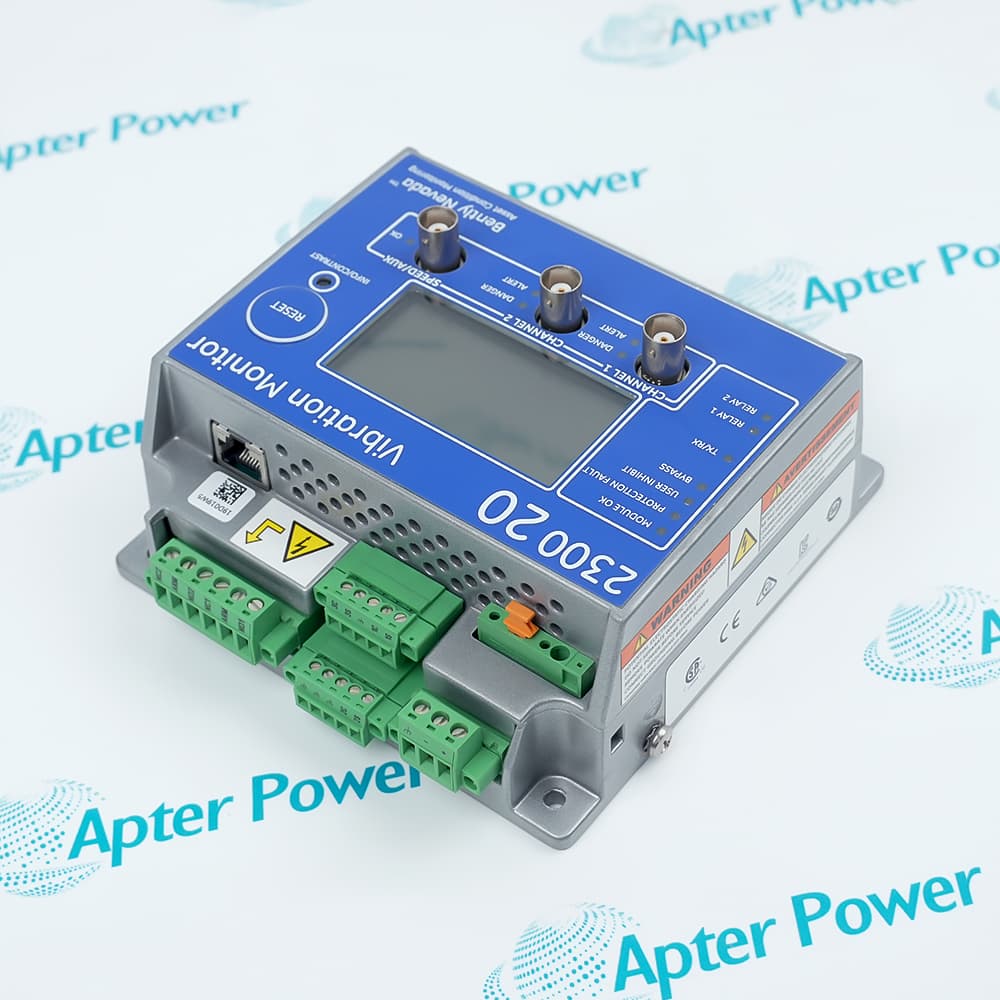
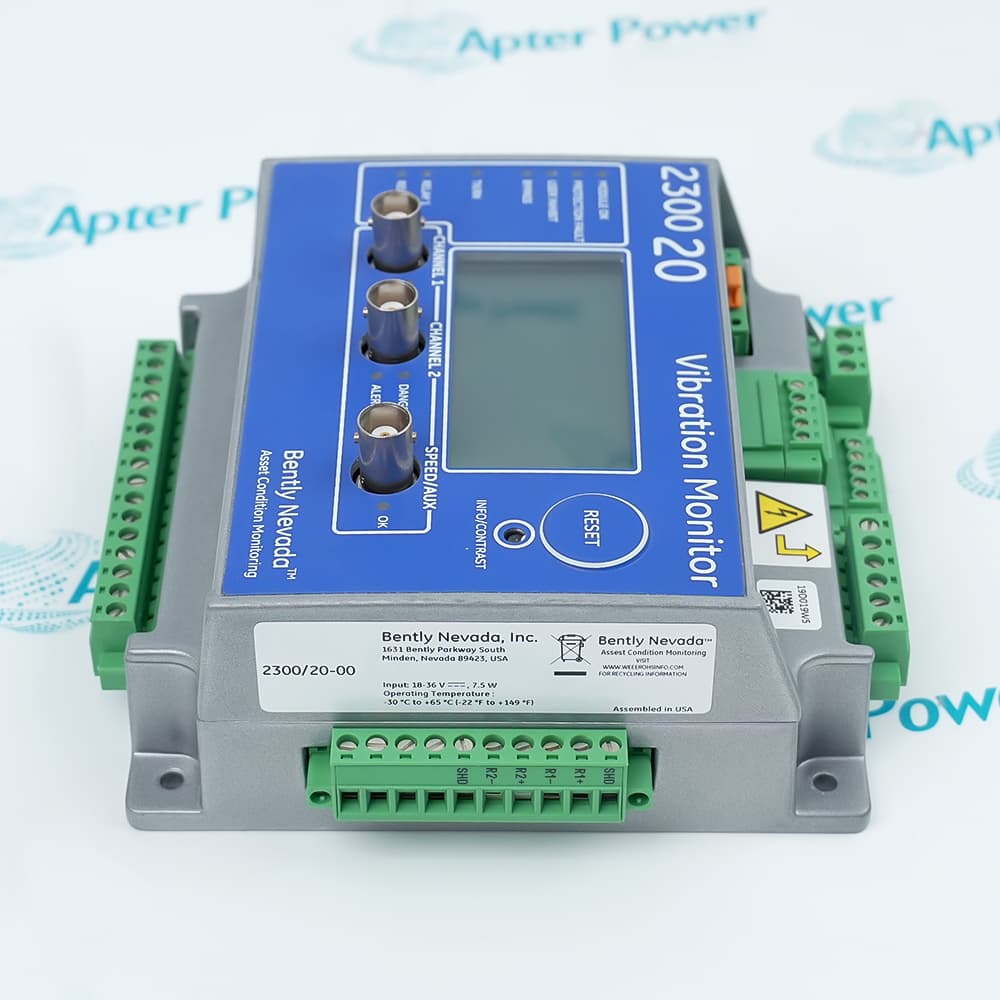
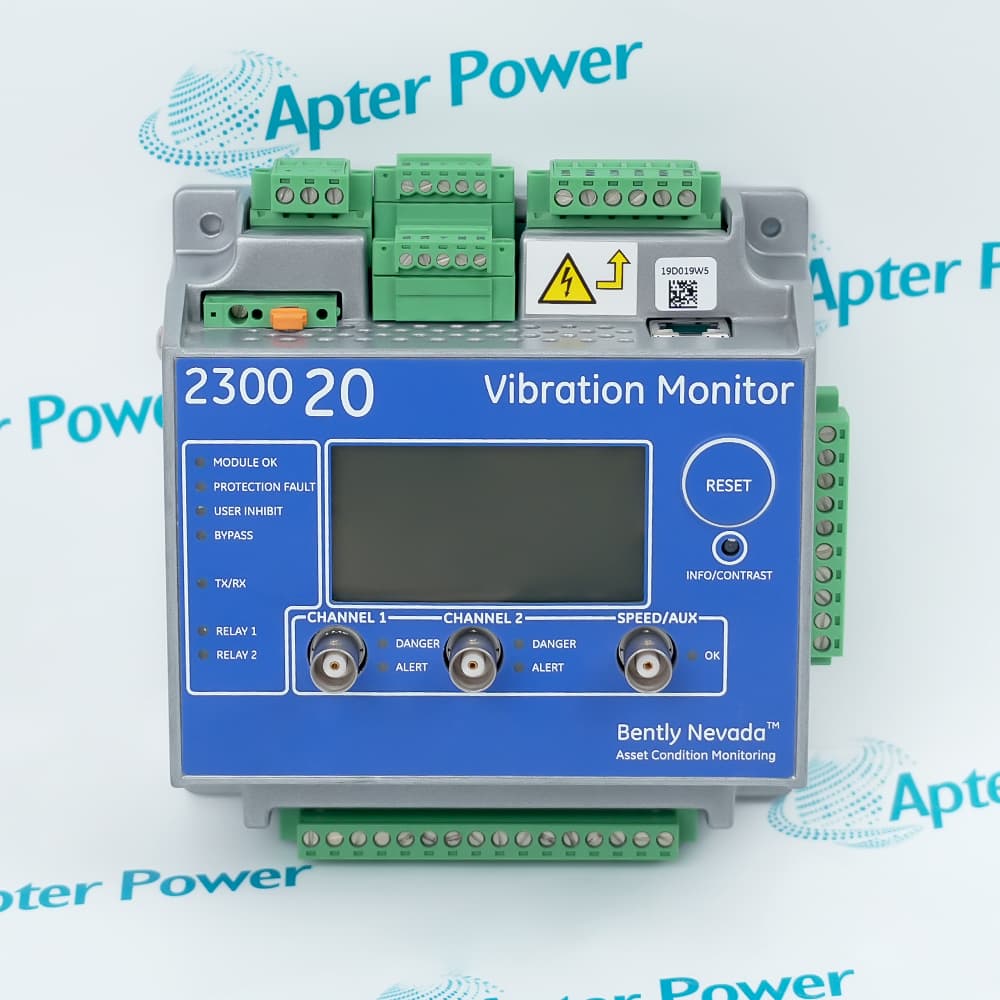
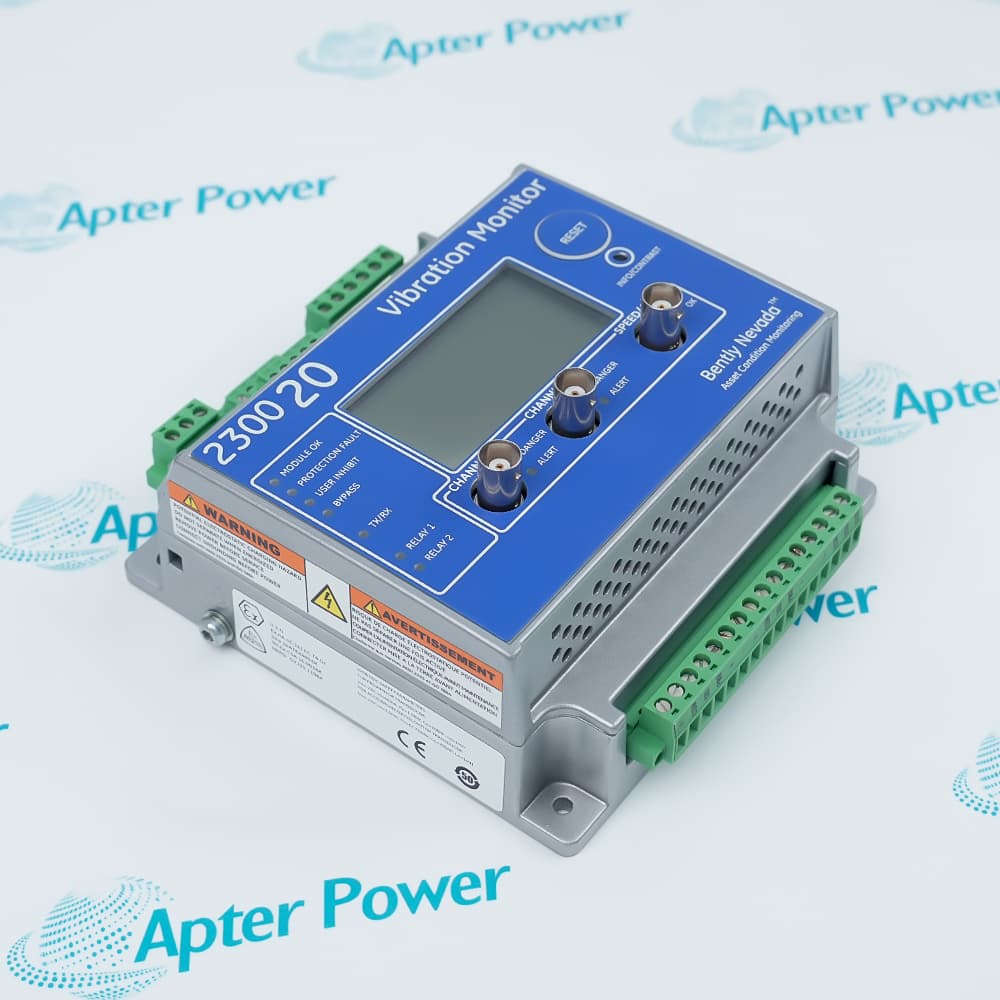
Features:
- Processes two synchronized vibration channels
- Separates safe-area option 00 from approved variants
- Combines local indication, relay logic and Ethernet access
Bently Nevada 2300/20-00 coordinates measurement, alarm and protection tasks in one compact monitor while keeping the two vibration inputs independent.
Its dedicated speed input is used alongside channel measurements, and the selected sensor type determines whether acceleration, velocity or displacement is processed.
The 00 ordering position carries no hazardous-area approval, so the complete 2300/20-00 identity must remain associated with a safe-area installation.
The Bently Nevada 2300/20-00 Two-Channel Vibration Monitor may still be available for purchase and support from Apter Power beyond End-Of-Life (EOL) by the manufacturer (OEM).
Bently Nevada 2300/20-00 Two-Channel Vibration Monitor Manuals,Datasheets,Link
Important Notice: Other accessories, manuals, cables, calibration data, software, etc. are not included with this equipment unless listed in the above stock item description. All prices are shown in USD.
How measurements move through 2300/20-00
- Vibration inputs: Each channel samples its assigned supported transducer independently and synchronously.
- Speed reference: The separate speed input supplies rotational reference information without consuming a vibration channel.
- Process signals: Selected measurements can be assigned to the two 4–20 mA outputs for control-system use.
- Local access: Buffered BNC connections expose sensor signals for analysis without rewiring the field input.
Alarm and protection behavior
- Setpoint layers: Alert and Danger thresholds are configured for the required measurement variables.
- Relay mapping: The two relays are assigned to protection logic rather than fixed to one channel.
- Intentional inhibit: User Inhibit and Bypass states distinguish deliberate suppression from an instrument fault.
- Latched response: A configured latched alarm remains asserted until its reset conditions and reset command are satisfied.
Front-panel checks before configuration changes
- Monitor health: The OK and Protection Fault indicators separate instrument condition from process alarm state.
- Communication: TX and RX activity helps confirm network exchanges before changing addressing.
- Measurements: The LCD provides overall channel values, speed and configured setpoint information.
- Configuration lock: The local control path can prevent unintended parameter changes while measurements remain visible.
Condition data retained around an alarm
- Trend context: Pre-event and post-event trend records preserve the period surrounding a configured alarm.
- Waveform records: Time waveforms and spectra support analysis beyond the front-panel overall values.
- Network interruption: Compatible firmware can retain captures locally when the software connection is interrupted.
- Version dependency: Alarm Data Capture depends on the specified monitor firmware and compatible System 1 Evolution release.