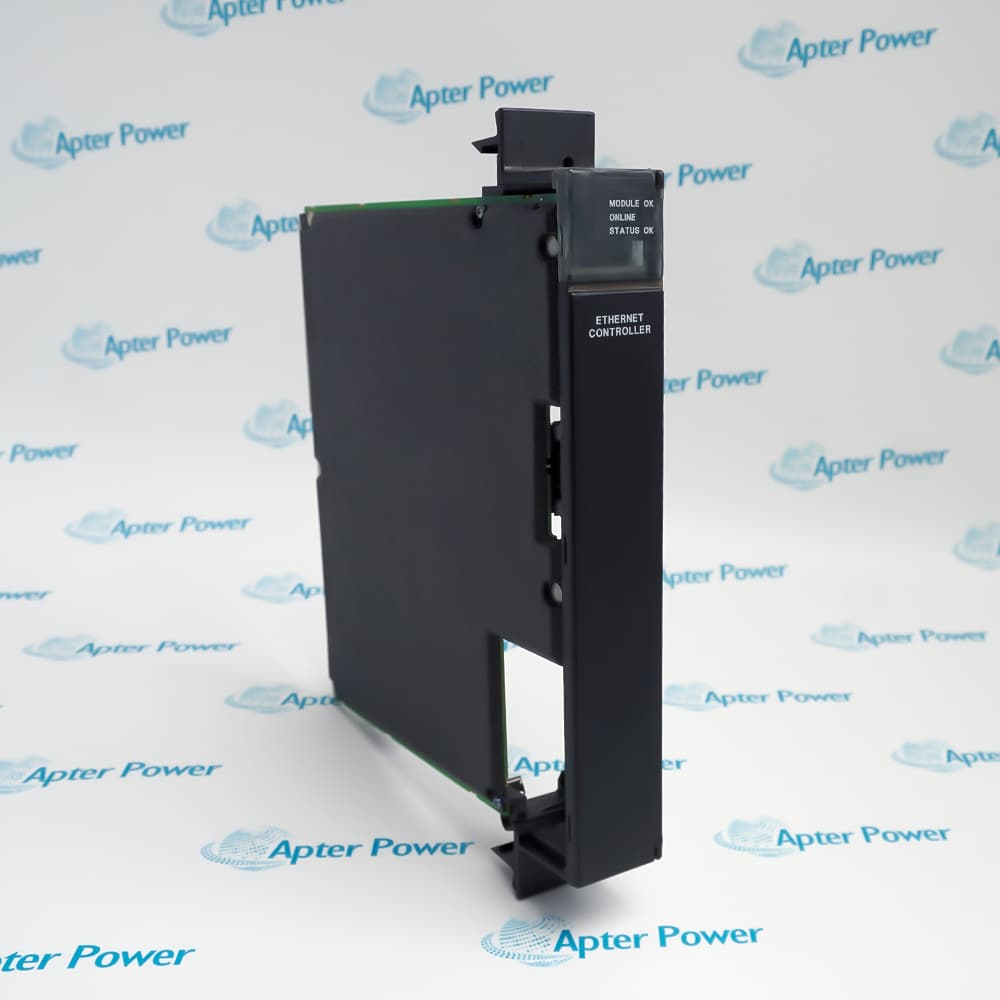
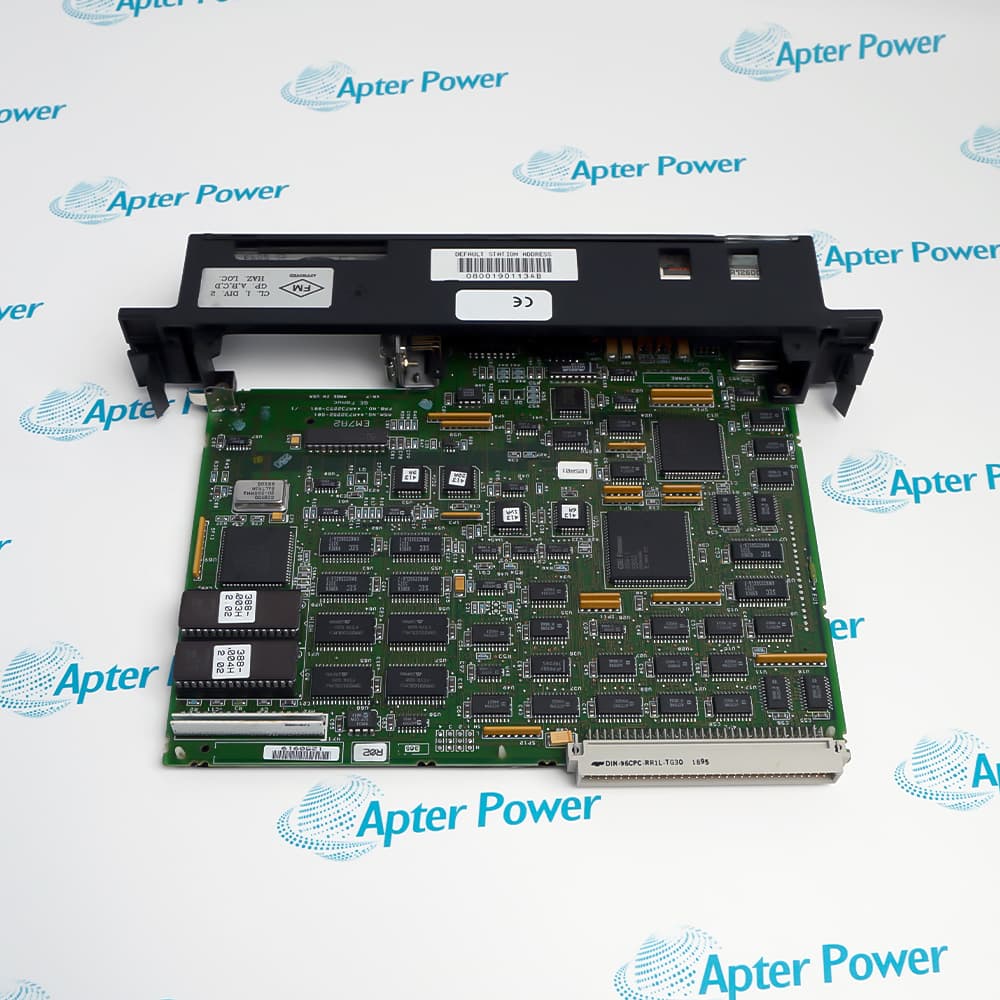
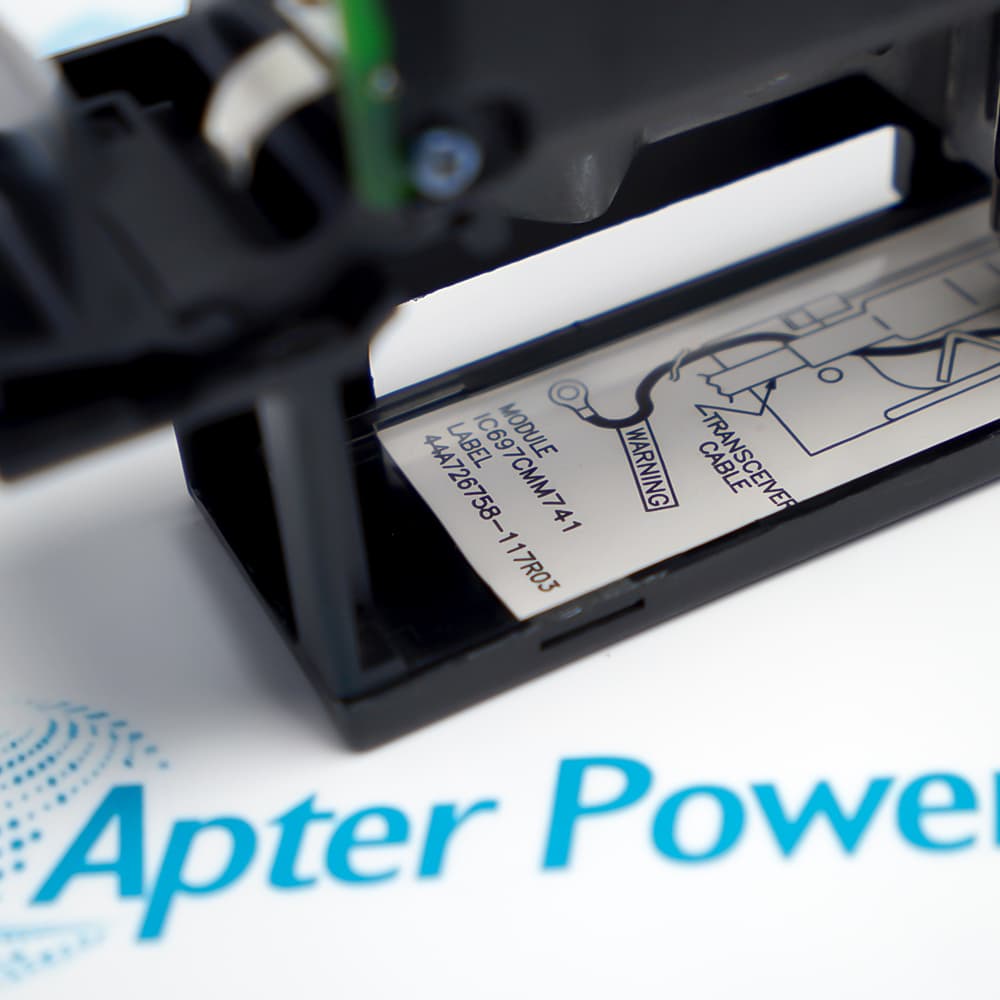
Features:
- Links an IC697 rack directly to a 10 Mbps IEEE 802.3 network.
- Uses a 15-pin AUI port with an external 802.3-compatible transceiver.
- Supports TCP/IP-SRTP or MMS/OSI communications software packages.
IC697CMM741 gives a Series 90-70 controller a dedicated Ethernet station without consuming more than one rack slot.
The external transceiver determines whether the LAN uses coaxial, twisted-pair, fiber-optic, or broadband media.
Three front indicators separate module health, network availability, and station-configuration status for faster fault isolation.
The General Electric IC697CMM741 Series 90-70 Ethernet Controller may still be available for purchase and support from Apter Power beyond End-Of-Life (EOL) by the manufacturer (OEM).
General Electric IC697CMM741 Series 90-70 Ethernet Controller Manuals,Datasheets,Link
Important Notice: Other accessories, manuals, cables, calibration data, software, etc. are not included with this equipment unless listed in the above stock item description. All prices are shown in USD.
Physical network choices
- AUI Connection: The 15-pin port links the controller to a user-supplied transceiver rather than directly to the cable plant.
- Media Flexibility: Compatible transceivers extend the same interface to 10Base5, 10Base2, 10BaseT, 10BaseF, or 10Broad36.
- SQE Requirement: The selected 802.3 transceiver must have Signal Quality Error testing enabled.
- Network Speed: Every supported physical medium carries the controller's 10 Mbps Ethernet traffic.
Selectable communications stacks
- TCP/IP Package: SRTP services support host communication and compatible programming tools over a four-layer stack.
- MMS Package: The alternative stack implements Manufacturing Message Specification over the seven-layer OSI model.
- RAM Loading: Protocol software is downloaded into controller memory instead of being fixed by one permanent stack.
- Software Retention: The onboard battery preserves the loaded package for at least six months without rack power.
Station and rack preparation
- Rack Position: The module uses the first suitable slot to the right of the CPU or Bus Transmitter Module.
- Station Identity: A factory-assigned 12-digit station address provides the starting network identity.
- Soft Switches: Station parameters are stored electronically, avoiding field jumpers for network setup.
- Local Access: A 9-pin RS-232 DTE port supports local configuration and station-management activity.
Front-panel operating feedback
- MODULE OK: A steady indication follows successful diagnostics, while blinking identifies startup or soft-switch entry.
- ONLINE: This indicator confirms that the station is connected and ready to communicate on the LAN.
- STATUS OK: The controller uses this state to report whether valid station configuration has been loaded.
- Restart Control: The front restart button supports soft or hard controller restart sequences.