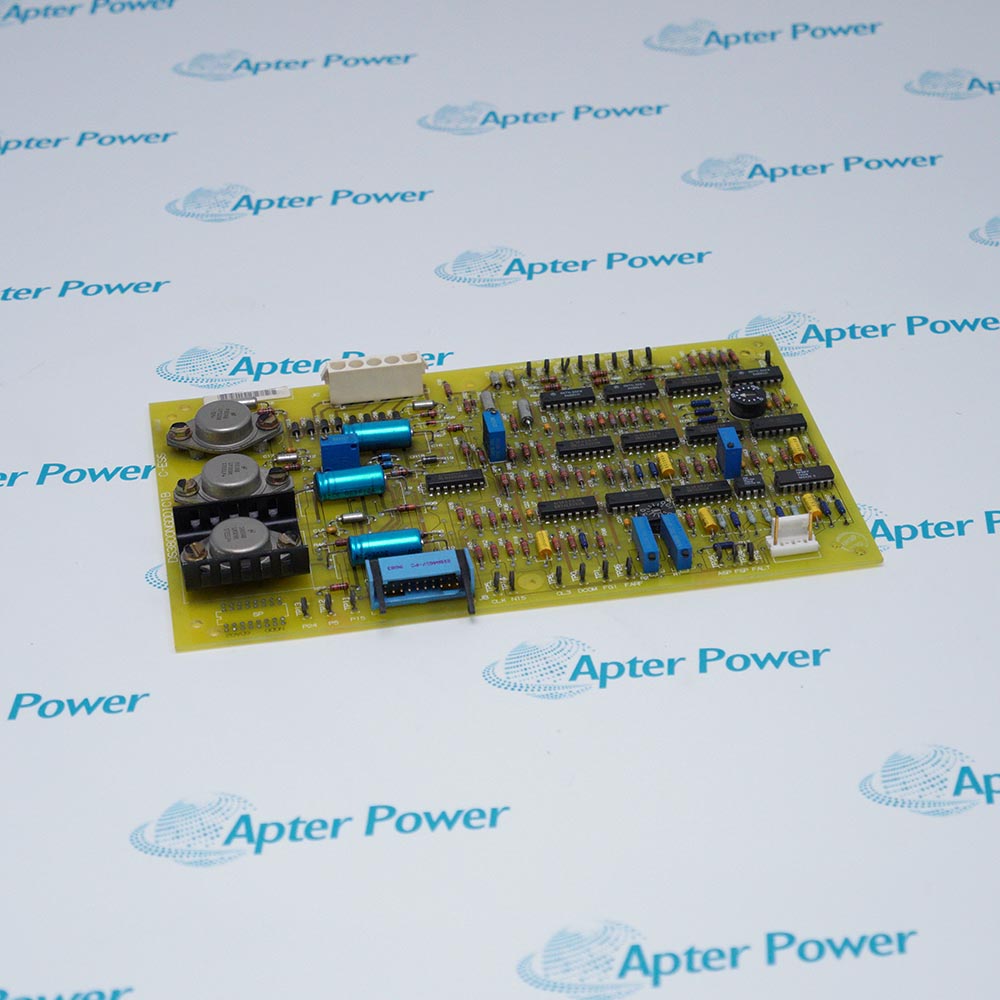
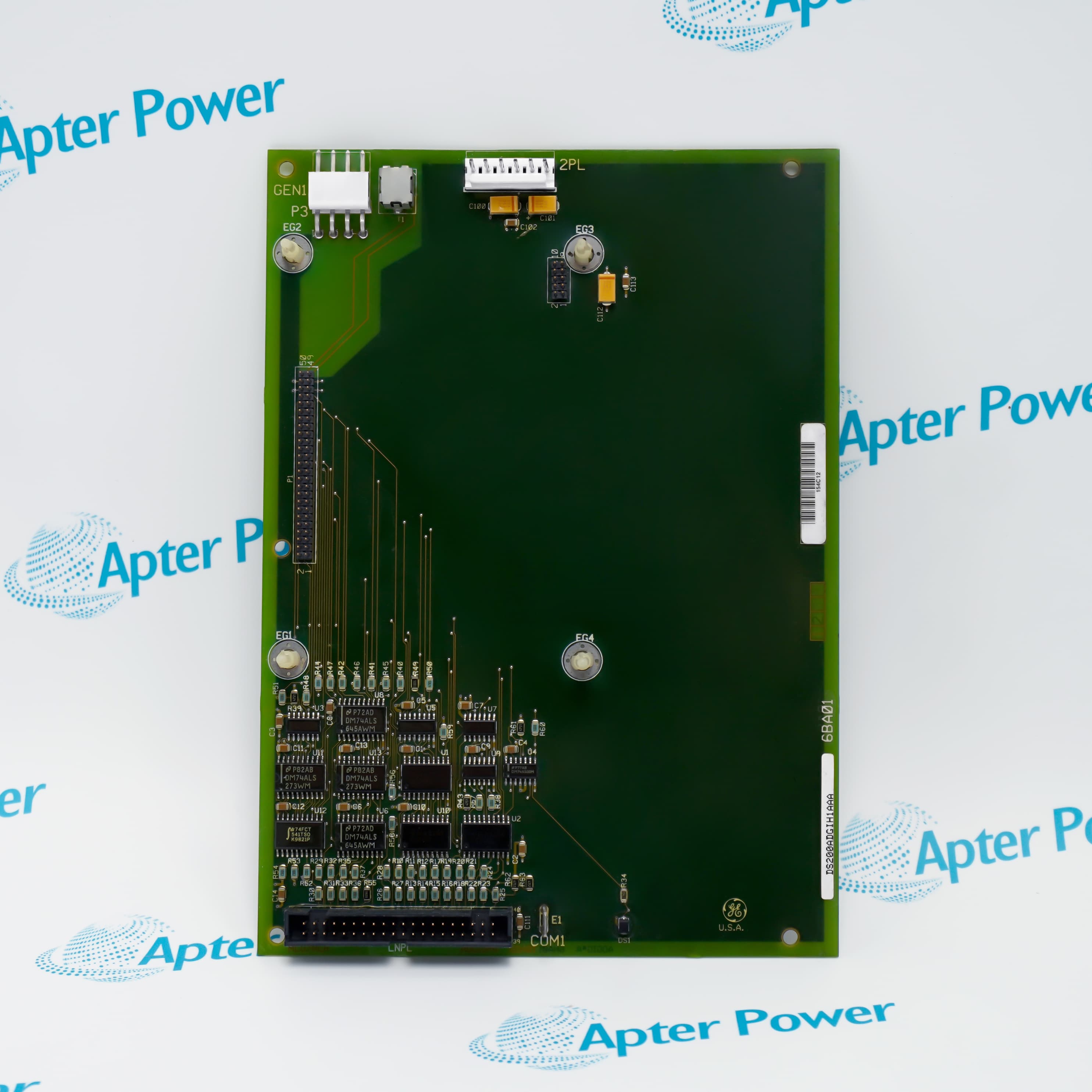
Features:
- Provides massive analog capacity for monitoring temperature, pressure, position, and speed sensors while controlling fuel and steam valves simultaneously.
- Eliminates the need for external servo‑amplifiers; directly drives hydraulic actuators with precise current control for fast, stable valve positioning.
- Powers external loop‑powered transmitters directly from the board, simplifying cabinet wiring and reducing the need for separate power supplies.
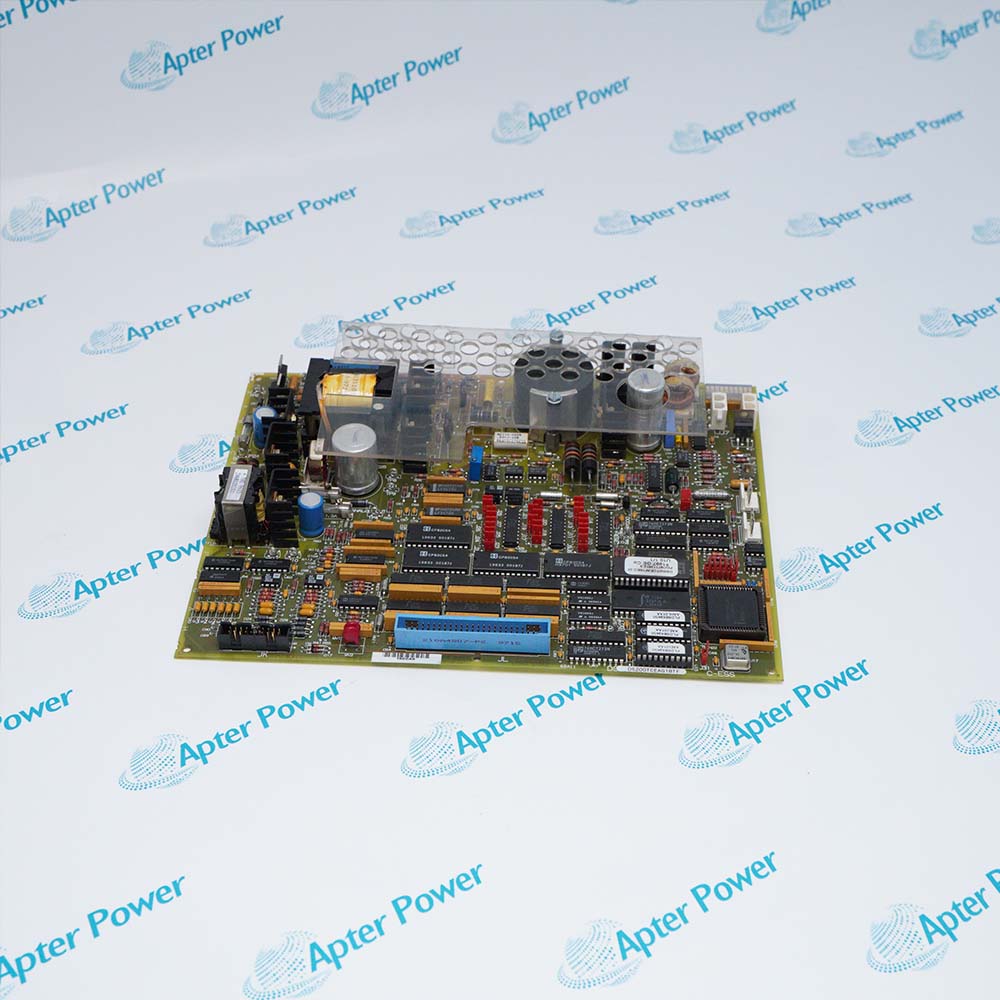
The DS200TCEAG1BTF consolidates a massive amount of analog input and output capability onto a single VME board. In a gas turbine, the 64 analog inputs connect directly to thermocouples measuring exhaust temperature spread, pressure transmitters on compressor discharge, LVDTs for inlet guide vane position, and vibration sensors. The 32 analog outputs control fuel flow between multiple gas control valves, liquid fuel bypass, steam injection, and inlet bleed heat valves.
Hydraulic actuators are the muscles of a turbine, moving fuel stop valves, steam chests, and blow‑off valves. The DS200TCEAG1BTF contains high‑power (±50 mA) current drivers specifically tuned for proportional servo valves. When the Mark V control logic commands “Open 35%”, this board converts that digital command into an analog current. The feedback loop (reading the LVDT position) is also closed here, ensuring the valve reaches the exact position without overshoot or hunting. The ±50 mA current loop is immune to voltage drop over long cable runs, making it reliable even when the valve is located hundreds of feet from the control cabinet.
Field transmitters (pressure, temperature, flow) typically require a 24V DC power source to operate. In many control systems, this power comes from a separate external supply, requiring additional wiring, fusing, and cabinet space. The DS200TCEAG1BTF solves this with an onboard 24V DC output specifically rated to power loop‑powered transmitters. This output is available on the I/O connector and can supply current to all 32 analog input loops (depending on total load). This design reduces the cost of the turbine cabinet by removing a separate industrial power supply, simplifies wiring because power is sourced directly from the I/O termination, and provides fused protection for each channel.
The DS200TCEAG1BTF General Electric Control Board may still be available for purchase and support from Apter Power beyond
End-Of-Life (EOL)by the manufacturer (OEM).
General Electric DS200TCEAG1BTF Control Board Manuals,
Datasheets,Drivers,Link
Important Notice:Other accessories,manuals,cables,calibration data,software,etc.are not
included with this equipment unless listed in the above stock item description.All prices are
shown in USD.
General Electric DS200TCEAG1BTF Control Board Specs
General
- Manufacturer General Electric
- Model DS200TCEAG1BTF
- Condition New Original ready stock
- Product Family
DS200TCEAG1B,DS200TCQAG1B,DS200TCCAG1B
Important Notice:Other accessories,manuals,cables,calibration data,software,etc.are not
included with this equipment unless listed in the above stock item description.All prices are
shown in USD.
- Gas Turbine Control: Deployed in GE heavy-duty gas turbines (e.g., Frame 6, 7, and 9 series) and aeroderivative models (e.g., LM6000) for overspeed mitigation.
- Steam Turbine Control: Implemented in large-scale utility thermal power plants and nuclear steam turbines for critical emergency trip protection.
- Industrial Process Turbines: Utilized in petrochemical refineries to safeguard massive turbine-driven compressors and air separation units.
- Temperature & Humidity: Operates optimally inside the panel enclosure between 0°C and 60°C (32°F to 140°F), with a relative humidity profile of 5% to 95% non-condensing to prevent high-voltage arcing on trip loops.
- Electrical Isolation & Fusing: Equipped with 3 onboard industrial fuses designed to clamp high-voltage transients or electrical surges, preventing localized short-circuits from damaging the system backplane.
- Electromagnetic Immunity (EMI): Because it processes low-voltage, high-frequency pulse inputs from magnetic speed pickups, the board requires rigid grounding contact with the chassis and shielded twisted-pair cabling to reject industrial noise.
- Triple Redundant Monitoring (X, Y, Z): Operates in a triple-redundant topology across the protective rack as designated X, Y, and Z processors. They simultaneously calculate turbine shaft speed via pulse sensors, monitor flame detectors, and verify autosynchronization parameters.
- Hardware-Level Threshold Enforcement: The onboard microprocessor reads firm safety thresholds (I/O configuration constants) embedded directly in the socketed PROM chips. If calculated speed rates breach these limits, a trip sequence is triggered natively.
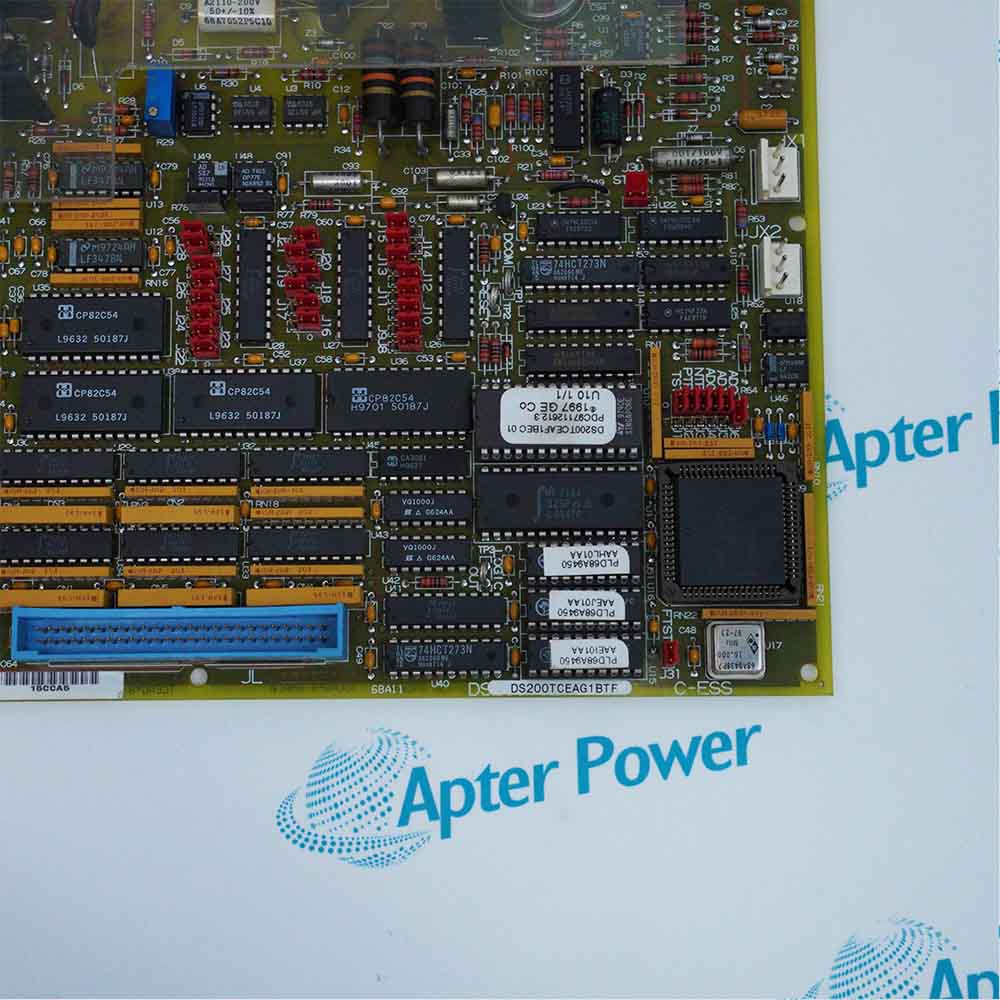
- Data Bus Transmission (IONET): Conditioned and scaled speed telemetry is piped out via dedicated high-speed IONET buses (utilizing JX1/JX2 connectors) straight to the STCA master board in the core rack for system-wide diagnostic tracking.