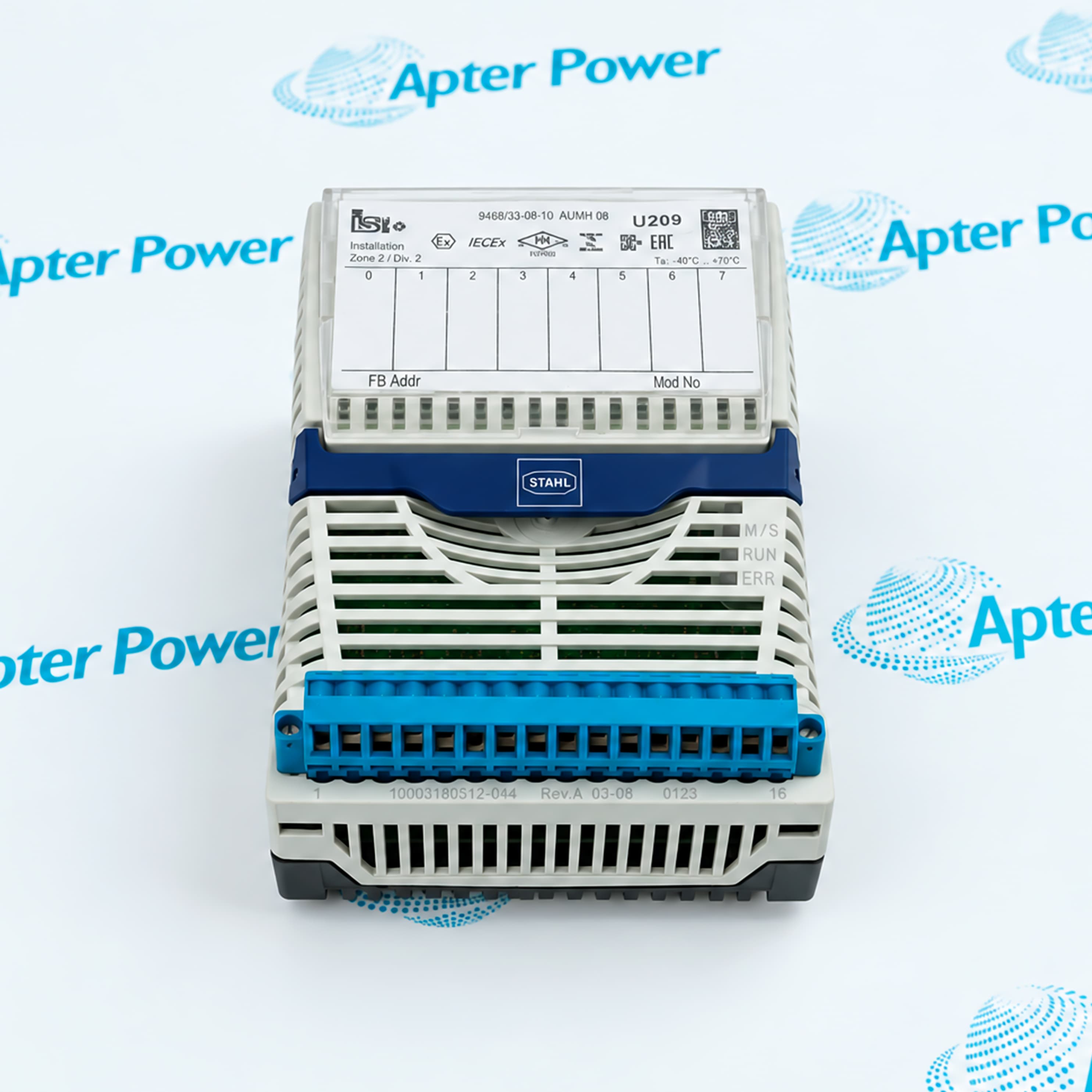
Features:
- Sixteen digital channels assigned as input or output pairs
- Frequency measurement and direction-detection functions
- Per-channel operating and line-fault diagnostics
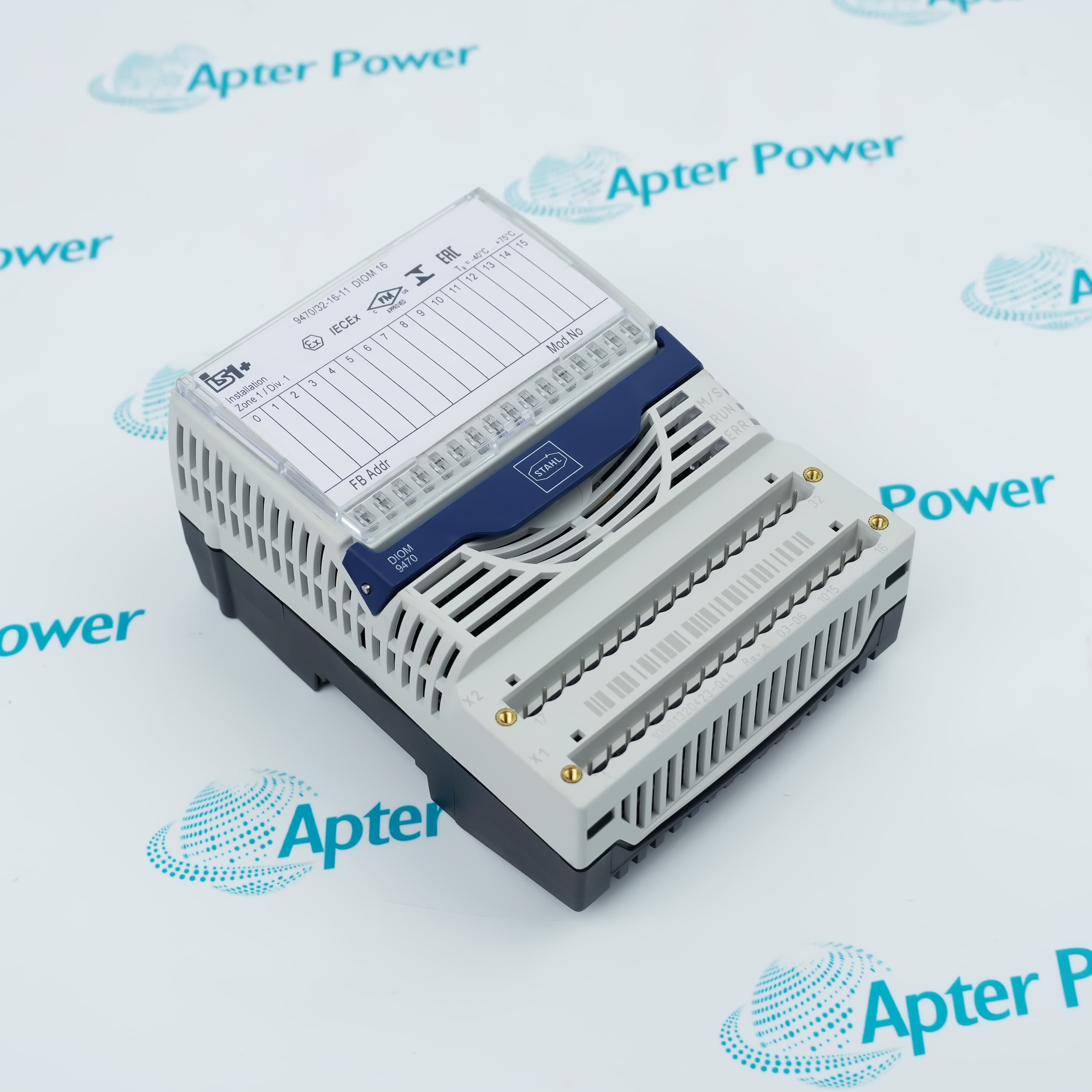
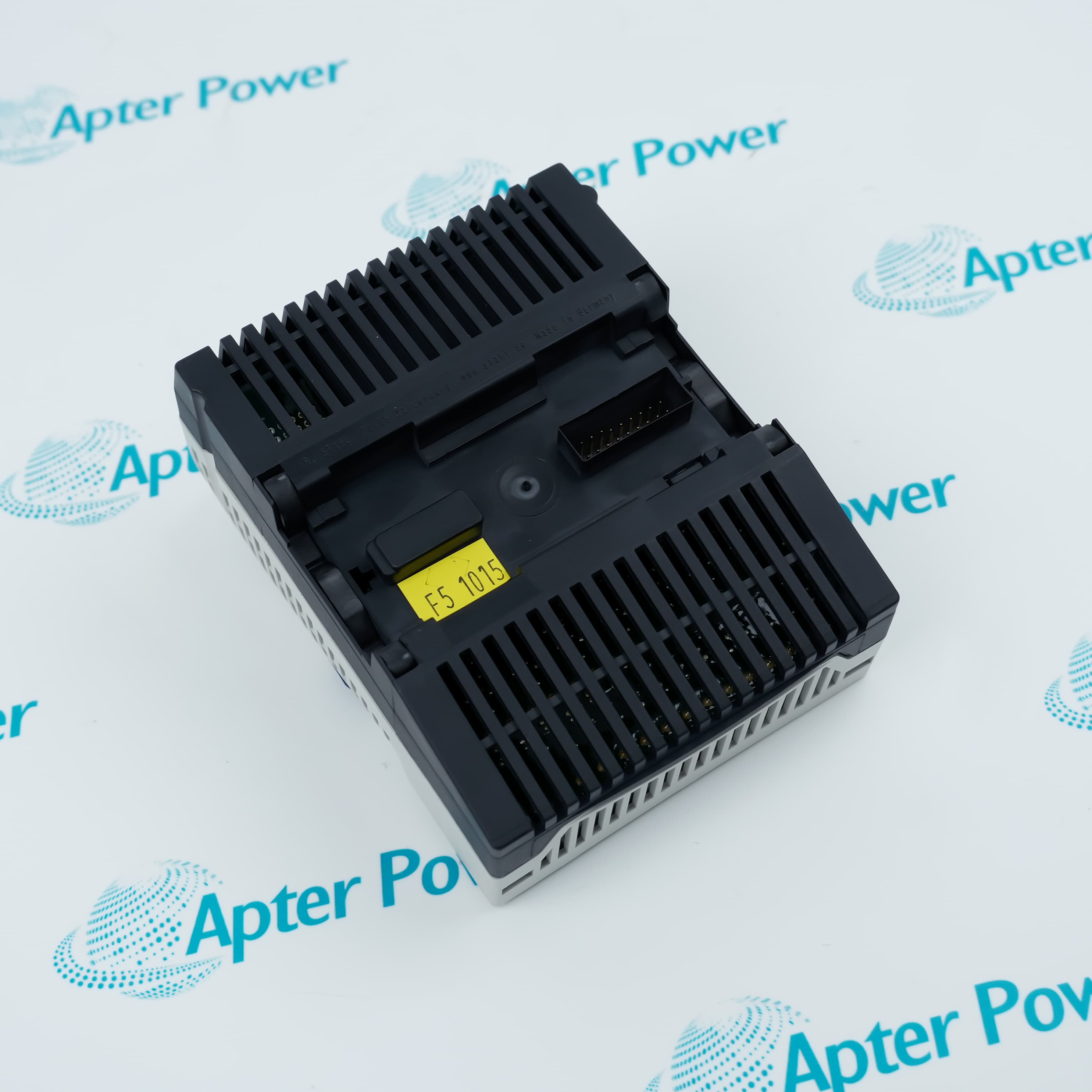
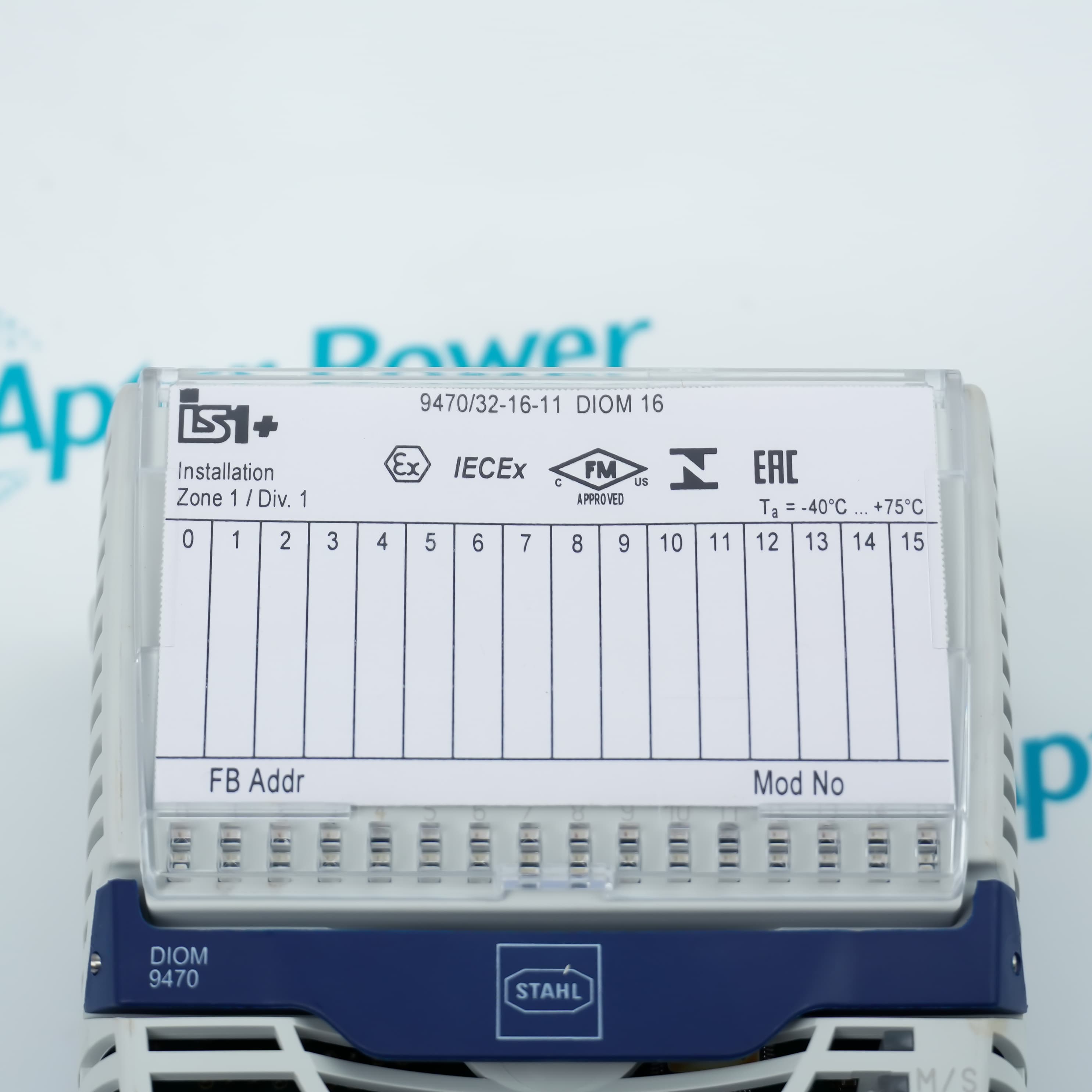
9470/32-16-11 combines contact or NAMUR acquisition and low-power output control in one IS1+ module position.
Paired assignment gives the channel set a structured configuration boundary, while the frequency inputs extend the module beyond simple binary states.
Engineering review should distinguish the selected channel mode, field-device type and fault-monitoring circuit before the module is commissioned.
For STAHL 9470/32-16-11 Digital Input/Output Module sourcing, Apter Power can help confirm article 210447, channel duty and IS1+ installation context.
STAHL 9470/32-16-11 Digital Input/Output Module Manuals,Datasheets,Link
Important Notice: Other accessories, manuals, cables, calibration data, software, etc. are not included with this equipment unless listed in the above stock item description. All prices are shown in USD.
- Pair structure: The 16 channels are assigned as input or output in pairs.
- Input duty: A pair can receive contact or NAMUR signals.
- Output duty: A pair can drive indicator lamps or low-power solenoid valves.
- Mode planning: Reserve each pair according to the required field-device direction.
- Frequency count: Eight inputs support frequency measurement.
- Upper frequency: The documented input rate reaches 20 kHz.
- Direction channels: Four channels support rotation-direction detection.
- Cable boundary: Higher-frequency service requires the reduced conductor length stated by R. STAHL.
- Channel display: LEDs report the configured channel state.
- Module display: A separate indication reports module-level faults.
- Input supervision: Contact circuits need the specified resistor network for line monitoring.
- Output supervision: Output line faults are detected only while the channel is on.
- Contact acquisition: Reads dry-contact state in an IS1+ station.
- NAMUR acquisition: Receives supported proximity-sensor signals.
- Indicator control: Drives documented low-power lamps from configured output pairs.
- Rotation monitoring: Uses paired inputs for direction detection in rotating equipment.