Ask our team:
  • Phone: +86 181 0690 9650
  • E-Mail info@apterpower.com
  • Lifecycle status

    Active / Available from OEM
    For IS220PTURH1B, Apter Power supports quotations, manuals, and turbine-trip hardware matching.

IS220PTURH1B

/ 4.9
1001 reviews | Need a Specific Revision?
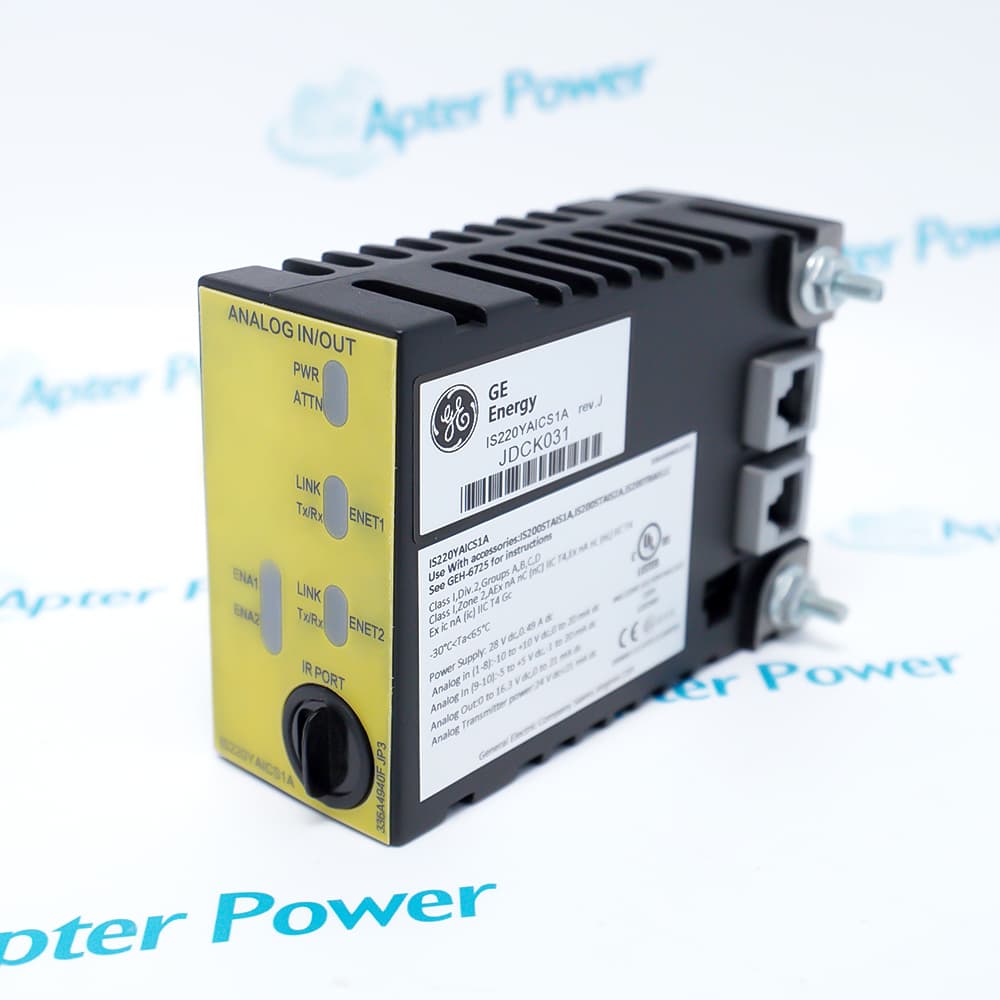
General Electric IS220PTURH1B is a Mark VIe turbine-specific primary trip I/O pack that acquires speed and protection signals and drives synchronization and trip interfaces.
In Stock
Ships by Tuesday, September 29
Fast Shipping Available
Get a quick price for IS220PTURH1B
Quantity
*E-mail
Company
*Mobile
*Content
Upload (gif, jpg, jpeg, png, bmp, doc, docx, xls, xlsx, ppt, pdf, csv)

Technical specifications for IS220PTURH1B

  • Manufacturer:
    General Electric
  • Part Number:
    IS220PTURH1B
  • Product Family:
    GE Mark VIe Distributed I/O
  • Product Type:
    Turbine-Specific Primary Trip I/O Pack
  • Stock:
    1
  • Speed Inputs:
    Four passive magnetic pickup channels
  • Speed Range:
    2 Hz to 20 kHz
  • Speed Accuracy:
    0.05% of reading
  • Voltage Inputs:
    Generator and bus potential signals
  • Flame Inputs:
    Eight channels through the terminal-board path
  • Trip Outputs:
    Three primary trip-solenoid interface outputs
  • Emergency-Trip Input:
    18–140 V dc
  • Contact Output:
    28 V dc, 7 A
  • Power Input:
    28 V dc, 0.41 A maximum
  • Operating Temperature:
    -30 to +65 °C
  • Tariff Code:
    8538900000
  • Country of origin:
    USA
  • Place of shipment:
    Xiamen,Fujian,China
By purchasing this item, you agree to the Terms & Conditions, ApterPower is not an authorized distributor for listed manufacturers or tradenames and therefore the manufacturer's warranty does not apply. All our products come with ApterPower's 1-year warranty.

More Information

Overview Manuals Speed Channels Synchronizing Path Trip Interface Auxiliary Monitoring

Features:

  • IS220PTURH1B consolidates speed, trip, synchronizing, shaft, and flame interfaces.
  • Separate generator and bus references feed the automatic synchronizing path.
  • Pack diagnostics report the condition of connected protection channels.
IS220PTURH1B is a turbine-specific Mark VIe I/O point rather than a general analog pack.

Its primary-trip outputs remain tied to the compatible terminal-board arrangement.

The H1B pack can participate in the documented single- or dual-IONet configuration.

The General Electric IS220PTURH1B Turbine-Specific Primary Trip I/O Pack may still be available for purchase and support from Apter Power beyond End-Of-Life (EOL) by the manufacturer (OEM).
General Electric IS220PTURH1B Turbine-Specific Primary Trip I/O Pack Manuals,Datasheets,LinkImportant Notice: Other accessories, manuals, cables, calibration data, software, etc. are not included with this equipment unless listed in the above stock item description. All prices are shown in USD.

Pickup Signal Processing

  • Channel count: Four passive magnetic pickups supply independent speed signals.
  • Frequency span: Each channel covers 2 Hz through 20 kHz.
  • Measurement accuracy: Speed accuracy is 0.05 percent of reading.
  • Low-speed use: The lower frequency boundary supports turning-gear measurement with the defined pickup geometry.

Generator Breaker Control

  • Generator reference: A dedicated potential input supplies generator voltage.
  • Bus reference: A second potential path measures bus voltage.
  • Breaker state: Generator-breaker status enters the synchronizing logic.
  • Close command: The evaluated conditions feed the main-breaker output path.

Primary Protection Outputs

  • Trip channels: Three outputs connect to the primary trip-solenoid circuitry.
  • Emergency input: The pack accepts an 18–140 V dc emergency-trip signal.
  • Contact rating: The documented contact output is rated 28 V dc at 7 A.
  • Terminal dependency: Available trip paths follow the installed terminal-board arrangement.

Shaft and Flame Inputs

  • Shaft voltage: One path acquires the potential developed on the shaft.
  • Shaft current: A separate channel measures the associated current signal.
  • Flame group: Eight detector inputs reach the pack from the turbine terminal board.
  • Diagnostics: Channel status separates pack, terminal, and field-signal conditions.
Description
Within the Mark VIe turbine-protection architecture, General Electric IS220PTURH1B is the PTUR primary trip I/O pack. It collects turbine and generator protection signals and connects them to the controller's trip and synchronizing functions.

Speed pickups, flame-detector circuits, shaft-monitoring signals, breaker status, and potential inputs arrive at IS220PTURH1B through the installed turbine terminal-board arrangement. The pack keeps these signal groups distinct while presenting their status through its I/O interface.

Synchronization processing uses the generator reference, bus reference, and breaker condition delivered through IS220PTURH1B; the resulting close-command path is separate from the three primary trip outputs. Emergency-trip wiring follows the terminal-board configuration rather than a universal pack-only connection.

One or two IONet connections link IS220PTURH1B to the control network, while the 28 V dc input powers the pack electronics. Channel diagnostics distinguish the pack, terminal-board path, and incoming field signal when protection data is missing.
Alternative Names
GE IS220PTURH1B General Electric IS220PTURH1B IS220-PTUR-H1B IS220 PTUR H1B PTUR H1B Primary Trip Pack GE PTUR H1B Module Mark VIe PTUR Trip I/O IS220PTUR H1B
Technical notes
IS220PTURH1B combines speed acquisition, synchronizing inputs, primary trip outputs, and shaft/flame monitoring in one turbine-specific I/O pack.
Exceptional Service

Our Mission

  • 100% Satisfaction

    We believe expertise is priceless. With over 20 years of experience, and top engineers on staff, we can help you solve or avoid problems that threaten your business.
  • Trust Guaranteed

    Not only do we have a vast inventory, our team makes sure every piece of equipment is in working condition. Your purchases are also backed by our Warranty.
  • Expertise

    Time is money, especially when your equipment is down. We work quickly to get your equipment on its way so you can get it back up and running.

FAQS

The following is a list of questions commonly asked by our customers. Please contact us if you have a question about our process that is not answered below.
IS220PTURH1B shows no speed while the shaft is visibly turning. Which boundary should be checked?
Trace the passive magnetic pickup circuit into IS220PTURH1B, including wiring, polarity, and whether the signal frequency is inside the documented 2 Hz to 20 kHz range.
Why can the main breaker remain open even when IS220PTURH1B receives a generator-voltage signal?
The synchronizing path also requires the bus-voltage reference and generator-breaker status; verify all three inputs reaching IS220PTURH1B before judging the close output.
An emergency-trip signal reaches the cabinet but the trip solenoid does not respond. How should IS220PTURH1B be isolated in the check?
Confirm that the emergency input and the three primary trip outputs follow the installed terminal-board arrangement connected to IS220PTURH1B, then trace the affected output path to the solenoid circuit.
The shaft-voltage indication is present but shaft current is absent on IS220PTURH1B. Are these the same input?
No. IS220PTURH1B acquires shaft voltage and shaft current on separate paths, so the missing current channel should be checked independently.
All eight flame indications disappear together at IS220PTURH1B. Where is the shared fault boundary?
The eight flame-detector inputs reach IS220PTURH1B through the associated turbine terminal-board path; inspect that common connection and detector supply group before treating eight detectors as separate failures.
IS220PTURH1B resets or drops off IONet during operation. Which pack conditions should be verified?
Check that IS220PTURH1B receives a stable 28 V dc supply within its documented current requirement and that the H1B hardware remains inside the -30 to +65 °C operating range.

Product Browsing History