SNAP-PAC-S1
SNAP-PAC-S1
SNAP-PAC-S1
SNAP-PAC-S1
SNAP-PAC-S1
SNAP-PAC-S1
Ask our team:
  • Phone: +86 181 0690 9650
  • E-Mail sales1@apterpower.com
How We Verify Your Order
Before dispatch, we confirm the exact model, revision, condition, inspection requirements and shipping documents for your order.
See a real on-site verification case >>
  • Lifecycle status

    Active / Available from OEM
    Apter Power supports SNAP-PAC-S1 quotations, PAC Control documentation and controller-network matching.

SNAP-PAC-S1

/ 4.9
1001 reviews | Need a Specific Revision?
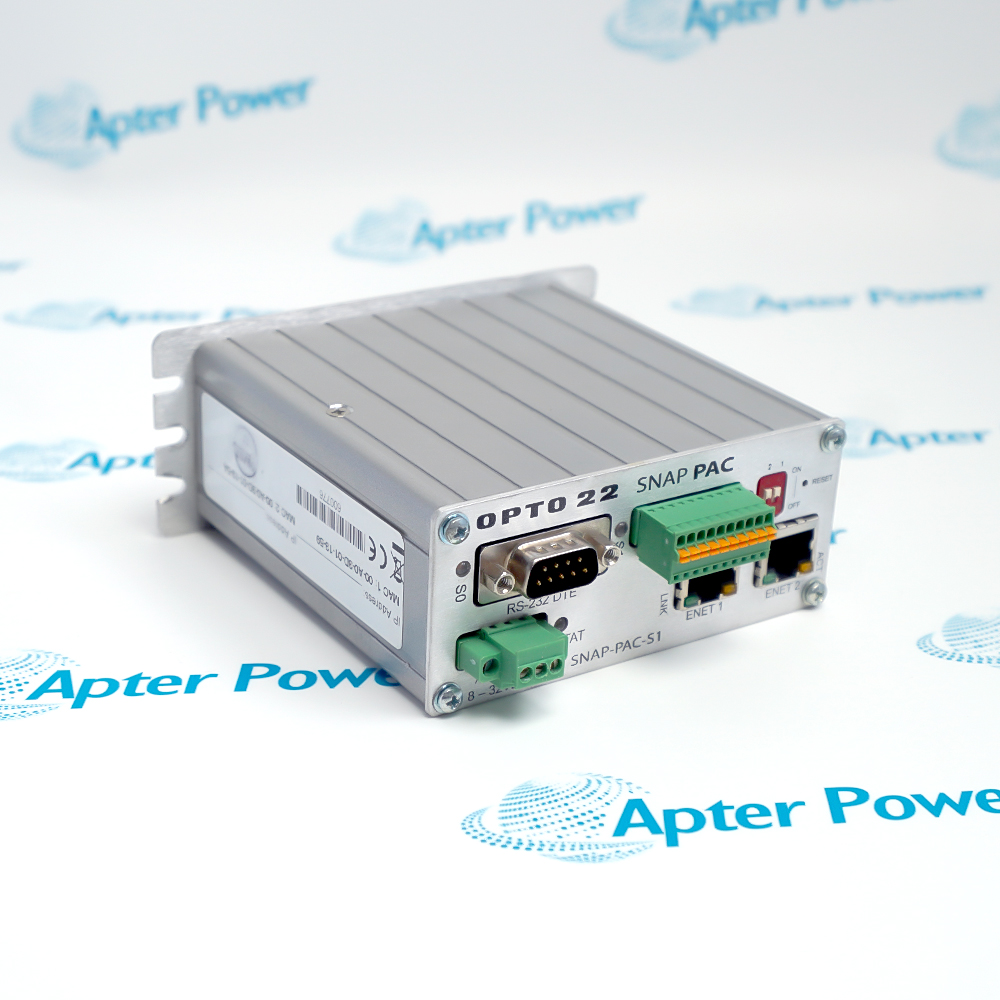
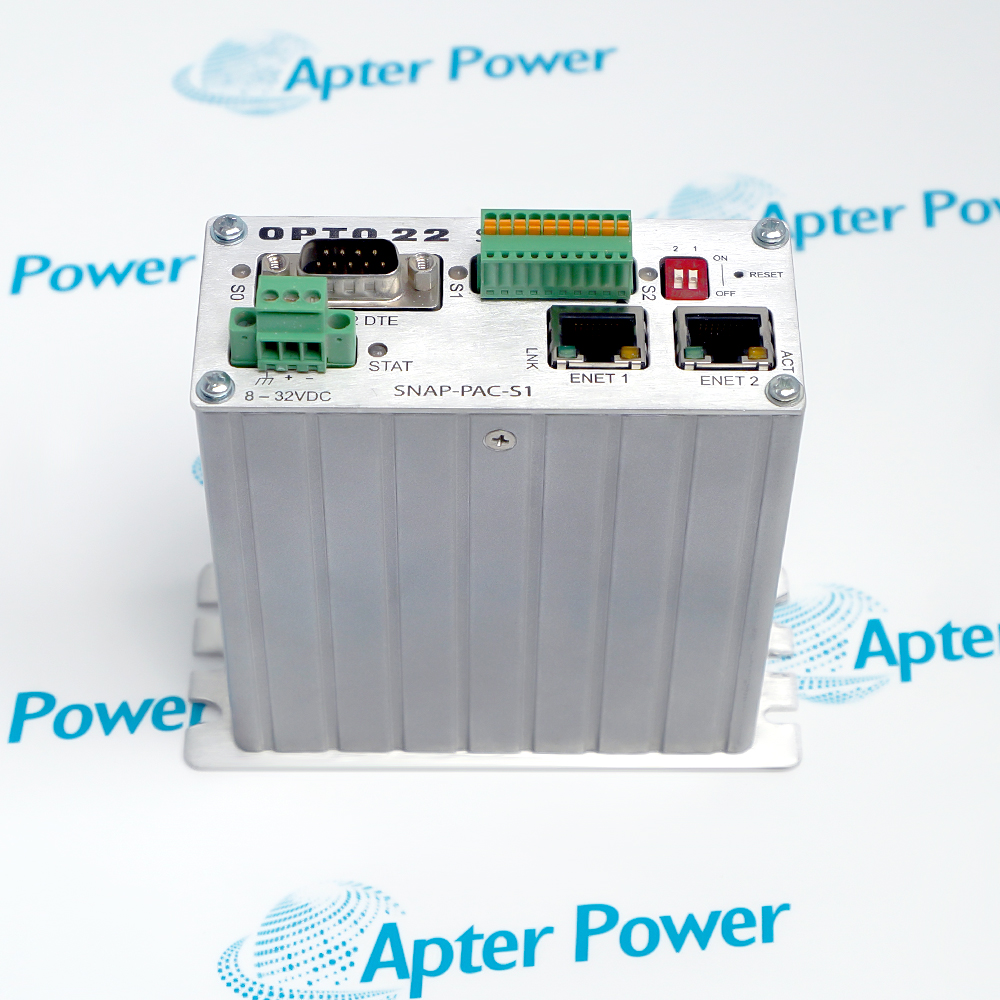
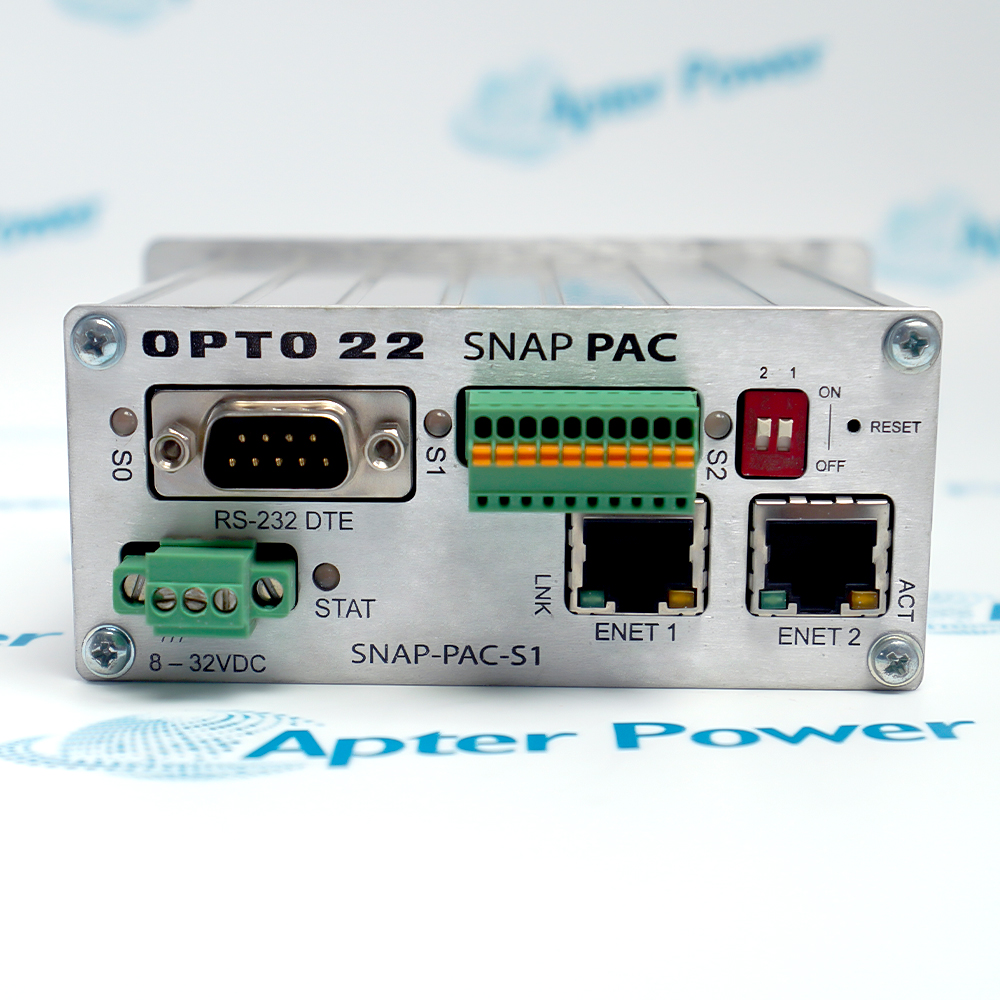
OPTO22 SNAP-PAC-S1 is an Ethernet programmable automation controller for distributed SNAP I/O and industrial communications.
In Stock
Ships by Saturday, November 14
Fast Shipping Available
Get a quick price for SNAP-PAC-S1
Quantity
*E-mail
Company
*Mobile
*Content
Upload (gif, jpg, jpeg, png, bmp, doc, docx, xls, xlsx, ppt, pdf, csv)

Technical specifications for SNAP-PAC-S1

  • Manufacturer:
    OPTO22
  • Part Number:
    SNAP-PAC-S1
  • Product Family:
    OPTO22
  • Product Type:
    Ethernet Programmable Automation Controller
  • Stock:
    1
  • Processor:
    266 MHz ColdFire 5475
  • Ethernet interfaces:
    2 independent 10/100 Mbps ports
  • RS-232 ports:
    2
  • RS-485 port:
    1
  • Power input:
    8–32 VDC
  • Programming environment:
    PAC Control
  • Web data access:
    REST interface supported
  • Control architecture:
    Standalone controller for distributed SNAP I/O
  • Weight:
    0.4 kg
  • Estimated shipping dimensions:
    12.184 x 5.080 x 11.110 cm
  • Tariff Code:
    8537101190
  • Country of origin:
    USA
  • Place of shipment:
    Xiamen,Fujian,China
By purchasing this item, you agree to the Terms & Conditions, ApterPower is not an authorized distributor for listed manufacturers or tradenames and therefore the manufacturer's warranty does not apply. All our products come with ApterPower's 1-year warranty.

More Information

Overview Manuals Network Architecture Serial Integration Strategy Commissioning Product Applications

Features:

  • Independent Ethernet ports: separates control and supervisory traffic when the network design requires it.
  • Serial integration: connects approved RS-232 and RS-485 devices to a PAC Control strategy.
  • Distributed control: coordinates SNAP I/O, peer controllers and application data from one standalone controller.
SNAP-PAC-S1 provides a central execution point for distributed SNAP I/O systems without forcing both Ethernet interfaces onto the same network. Each port should be documented with its own address plan, switching context and operational purpose.

When serial equipment is involved, SNAP-PAC-S1 commissioning must align electrical format, data rate and application protocol. A successful link indication does not prove that framing or controller logic is correct.

For long-term support, SNAP-PAC-S1 records should include the PAC Control strategy, firmware level, I/O unit definitions and startup behavior. That package gives maintenance teams a reliable baseline after network or program changes.

Technical support: Share the strategy version, firmware level, network layout and serial-port duties when requesting application review.
OPTO22 SNAP-PAC-S1 Ethernet Programmable Automation Controller Manuals,Datasheets,Link
Important Notice: Other accessories, manuals, cables, calibration data, software, etc. are not included with this equipment unless listed in the above stock item description. All prices are shown in USD.
  • Port separation: the two Ethernet interfaces can serve distinct network segments and should be addressed independently.
  • Switch context: VLAN, routing and gateway policy must match the intended traffic path for each interface.
  • Service exposure: controller services should be enabled only where the site security design permits them.
  • Address records: maintain one approved network record for controller, I/O and peer endpoints.
  • Electrical format: select the correct RS-232 or RS-485 interface before validating protocol messages.
  • Framing agreement: baud rate, data bits, parity and stop bits must match the connected instrument.
  • Bus discipline: RS-485 termination, bias and device addressing must follow the installed topology.
  • Controlled startup: verify the expected strategy state before field outputs can influence equipment.
  • I/O definitions: confirm every SNAP unit, module and point assignment against the cabinet record.
  • Timing baseline: record task execution and communications behavior under normal operating load.
  • Distributed machine control: coordinates networked SNAP I/O across industrial equipment.
  • Protocol gateways: brings approved serial instruments into an Ethernet control architecture.
  • Remote data access: exposes selected control data to authorized application services.
  • Network-segmented systems: separates plant and control traffic when engineering policy requires distinct paths.
Description
A pair of independent Ethernet interfaces lets SNAP-PAC-S1 separate a control network from enterprise traffic or provide redundant network paths in PAC Project Professional architectures. This gives system designers more flexibility than a controller with one shared Ethernet connection.

Serial integration is another defining role for SNAP-PAC-S1: two RS-232 ports and one two-wire RS-485 port allow direct communication with serial devices and legacy Opto 22 I/O. Existing instruments can remain part of a coordinated PAC Control strategy while Ethernet-connected I/O is added around them.

With suitable firmware and network policy, SNAP-PAC-S1 exposes controller tag data through its RESTful API while continuing to run the downloaded PAC Control strategy. This creates a practical bridge between real-time automation and business or IIoT applications without making external software the control engine.
Alternative Names
Opto 22 SNAP-PAC-S1 OPTO 22 SNAP-PAC-S1 SNAP PAC S1 SNAP-PAC-S1 controller Ethernet SNAP PAC controller OPTO22 part SNAP-PAC-S1
Technical notes
Before placing SNAP-PAC-S1 in service, document both Ethernet networks, each serial-port assignment, the power source, PAC Control strategy version and the expected startup state. Back up the running strategy before configuration changes.
Exceptional Service

Our Mission

  • 100% Satisfaction

    We believe expertise is priceless. With over 20 years of experience, and top engineers on staff, we can help you solve or avoid problems that threaten your business.
  • Trust Guaranteed

    Not only do we have a vast inventory, our team makes sure every piece of equipment is in working condition. Your purchases are also backed by our Warranty.
  • Expertise

    Time is money, especially when your equipment is down. We work quickly to get your equipment on its way so you can get it back up and running.

FAQS

The following is a list of questions commonly asked by our customers. Please contact us if you have a question about our process that is not answered below.
SNAP-PAC-S1 can reach field I/O on one Ethernet port but not the supervisory network on the other. Where should diagnosis begin?
Review each interface as an independent network: confirm its address, mask, gateway policy, cable link and the switch VLAN assigned to that port.
A serial instrument connected to SNAP-PAC-S1 sends data but the control strategy cannot parse it. What should be compared?
Compare electrical interface, baud rate, framing, termination and message format before changing the controller logic.
SNAP-PAC-S1 restarts when additional field devices are energized. Which installation checks matter first?
Measure the controller supply at its terminals during the event and review the 8–32 VDC source capacity, grounding and transient protection.
A REST client reaches SNAP-PAC-S1 but does not receive the expected tags. How should the problem be separated?
Confirm firmware support, enabled services, tag exposure and network access rules before treating it as a controller hardware issue.
A control strategy is moving to SNAP-PAC-S1 from another SNAP controller. Which records should be reviewed before commissioning?
Review the original strategy version, I/O unit definitions, network addresses, serial port duties, persistent variables and startup behavior.
SNAP-PAC-S1 communicates normally but scan behavior changes after a network expansion. What should be measured?
Measure controller workload, strategy task timing and network traffic separately so communications load is not mistaken for an I/O fault.