Ask our team:
  • Phone: +86 181 0690 9650
  • E-Mail sales1@apterpower.com
  • Lifecycle status

    NOT CONFIRMED
    Apter Power reviews exact-model evidence, field-circuit records, condition, and quotation requirements before supply.

KL3103X1-LS1

/ 4.9
1001 reviews | Need a Specific Revision?
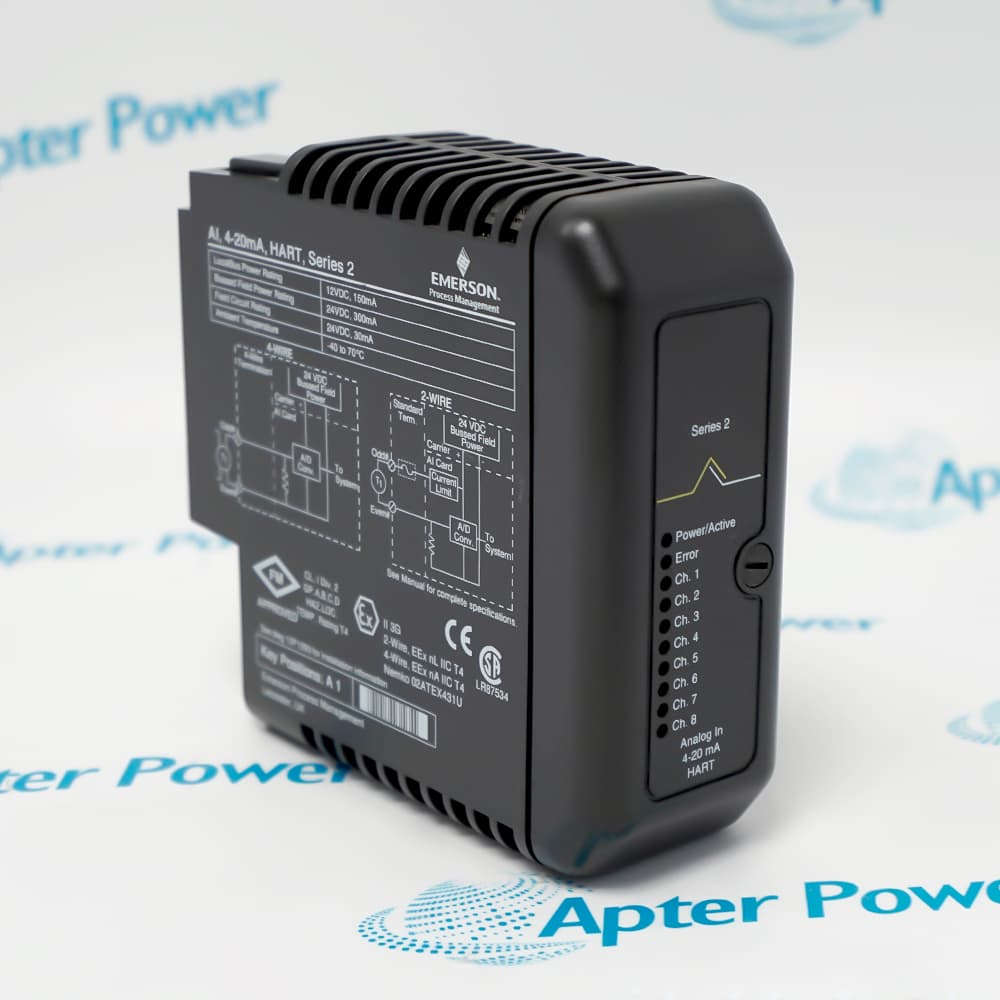
Emerson KL3103X1-LS1 is a DeltaV LS IS discrete-input CHARM for NAMUR sensors and dry contacts, with defined current thresholds for low-frequency state detection.
In Stock
Ships by Wednesday, October 28
Fast Shipping Available
Get a quick price for KL3103X1-LS1
Quantity
*E-mail
Company
*Mobile
*Content
Upload (gif, jpg, jpeg, png, bmp, doc, docx, xls, xlsx, ppt, pdf, csv)

Technical specifications for KL3103X1-LS1

  • Manufacturer:
    Emerson
  • Part Number:
    KL3103X1-LS1
  • Product Family:
    DeltaV
  • Product Type:
    DeltaV LS IS DI NAMUR CHARM
  • Stock:
    1
  • Signal Type:
    Discrete input
  • Sensor Types:
    NAMUR sensors; dry contacts
  • On Detection Level:
    2.1 mA
  • Off Detection Level:
    <1.2 mA
  • Channel Impedance:
    1 kΩ ±10%
  • Wetting Voltage:
    8 VDC ±1 VDC
  • State Change Rate:
    <2 Hz
  • Power Requirement:
    28 mA max at 24 VDC ±10%
  • Heat Dissipation:
    0.57 W
  • Short-Circuit Status:
    <100 Ω
  • Normal Resistance Status:
    360 Ω to 20 kΩ
  • Open-Circuit Status:
    >75 kΩ
  • Tariff Code:
    Please confirm the destination before shipping.
  • Place of shipment:
    Xiamen,Fujian,China
By purchasing this item, you agree to the Terms & Conditions, ApterPower is not an authorized distributor for listed manufacturers or tradenames and therefore the manufacturer's warranty does not apply. All our products come with ApterPower's 1-year warranty.

More Information

Overview Manuals Input Signals Circuit Data Fault Detection Product Applications

Features:

  • NAMUR sensor and dry-contact discrete input
  • Defined 2.1 mA ON and below 1.2 mA OFF thresholds
  • Low-frequency state monitoring below 2 Hz
KL3103X1-LS1 provides a discrete-state input path for NAMUR sensors and dry contacts.

Defined current thresholds help maintenance teams distinguish an OFF state from a signal that has reached the ON level.

For service or selection, preserve the field-circuit type and diagnostic arrangement; a dry contact does not provide the same fault-detection behavior without the specified resistor pack.

The KL3103X1-LS1 Emerson DeltaV LS IS Discrete-Input CHARM may be available for purchase and support from Apter Power.
Emerson KL3103X1-LS1 DeltaV LS IS Discrete-Input CHARM Manuals,Datasheets,Link

Important Notice: Other accessories, manuals, cables, calibration data, software, etc. are not included with this equipment unless listed in the above stock item description. All prices are shown in USD.

  • Accepts NAMUR sensors and dry contacts.
  • Discrete-state inputs are specified for changes below 2 Hz.
  • ON detection occurs at 2.1 mA.
  • OFF detection occurs below 1.2 mA.
  • Wetting voltage is 8 VDC ±1 VDC.
  • Channel impedance is 1 kΩ ±10%.
  • Power requirement is 28 mA maximum at 24 VDC ±10%.
  • Heat dissipation is 0.57 W.
  • Wiring diagnostics are available with a NAMUR sensor or the specified dry-contact resistor-pack arrangement.
  • A resistance below 100 Ω is guaranteed as short circuit.
  • A resistance from 360 Ω to 20 kΩ is guaranteed as good status.
  • A resistance above 75 kΩ is guaranteed as open circuit.
  • NAMUR sensor state acquisition.
  • Dry-contact limit and status feedback.
  • Low-frequency discrete-state monitoring below 2 Hz.
Description
KL3103X1-LS1 handles discrete input signals from NAMUR sensors and dry contacts. Its 8 VDC ±1 VDC wetting voltage and defined current thresholds give engineers a clear basis for matching the field circuit to the intended input behavior.

KL3103X1-LS1 reports ON at 2.1 mA and OFF below 1.2 mA, while the configurable discrete-input channel is intended for dry contacts or state sensors changing below 2 Hz. This lets maintenance teams separate a signal-level problem from a rapidly changing input that falls outside the published operating description.
Technical notes
KL3103X1-LS1 uses different fault-detection behavior according to the field-circuit arrangement. A NAMUR sensor can support wiring diagnostics, while a dry-contact circuit requires the specified optional resistor pack for the diagnostic configuration. Before service, record the terminal wiring and channel setup, then restore them unchanged before checking the input state.
Exceptional Service

Our Mission

  • 100% Satisfaction

    We believe expertise is priceless. With over 20 years of experience, and top engineers on staff, we can help you solve or avoid problems that threaten your business.
  • Trust Guaranteed

    Not only do we have a vast inventory, our team makes sure every piece of equipment is in working condition. Your purchases are also backed by our Warranty.
  • Expertise

    Time is money, especially when your equipment is down. We work quickly to get your equipment on its way so you can get it back up and running.

FAQS

The following is a list of questions commonly asked by our customers. Please contact us if you have a question about our process that is not answered below.
Can KL3103X1-LS1 read a NAMUR sensor?
Yes. The input is specified for NAMUR sensors. Check that the field current crosses the published ON and OFF thresholds before treating a state problem as a module fault.
Can KL3103X1-LS1 be used with a dry contact?
Yes. Dry contacts are included in the published sensor types. If wiring-fault detection is required, the field circuit needs the specified optional resistor-pack arrangement.
Why does KL3103X1-LS1 show the input as OFF when the device is connected?
A current below 1.2 mA is interpreted as OFF. Measure at the channel, then trace the sensor/contact circuit and wetting-voltage path before replacing the module.
When KL3103X1-LS1 shows a blinking red Power/Integrity LED, should the module be replaced?
Not immediately. Emerson assigns a blinking red indication to a field-wiring fault, so trace the circuit first. A solid red indication instead points to an internal fault and changes the replacement decision.
Is KL3103X1-LS1 intended for rapidly changing pulse signals?
The published discrete-input description covers dry contacts or state sensors changing below 2 Hz. A faster pulse application needs separate manufacturer evidence for the intended signal path.
What should maintenance record before removing KL3103X1-LS1?
Record the sensor type and terminal/channel assignment, including any diagnostic resistor pack. Restore that same circuit before judging the returned input.