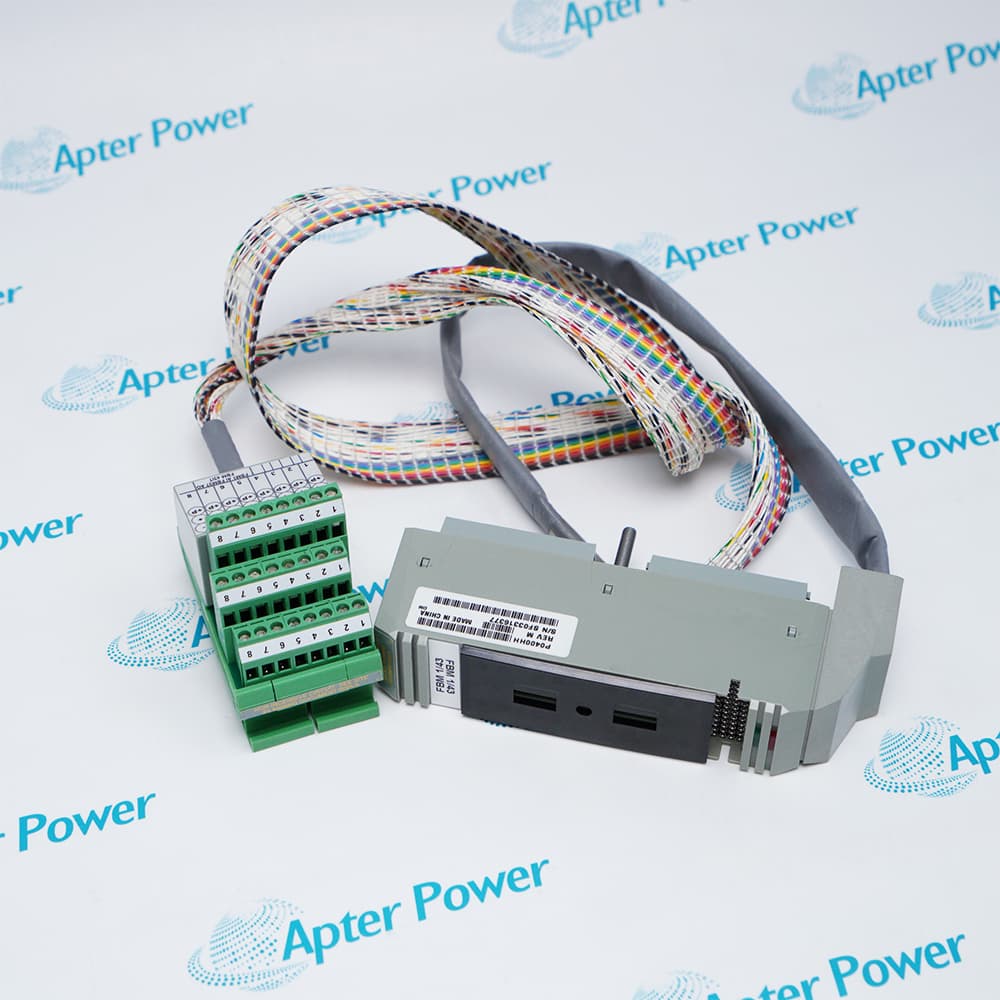
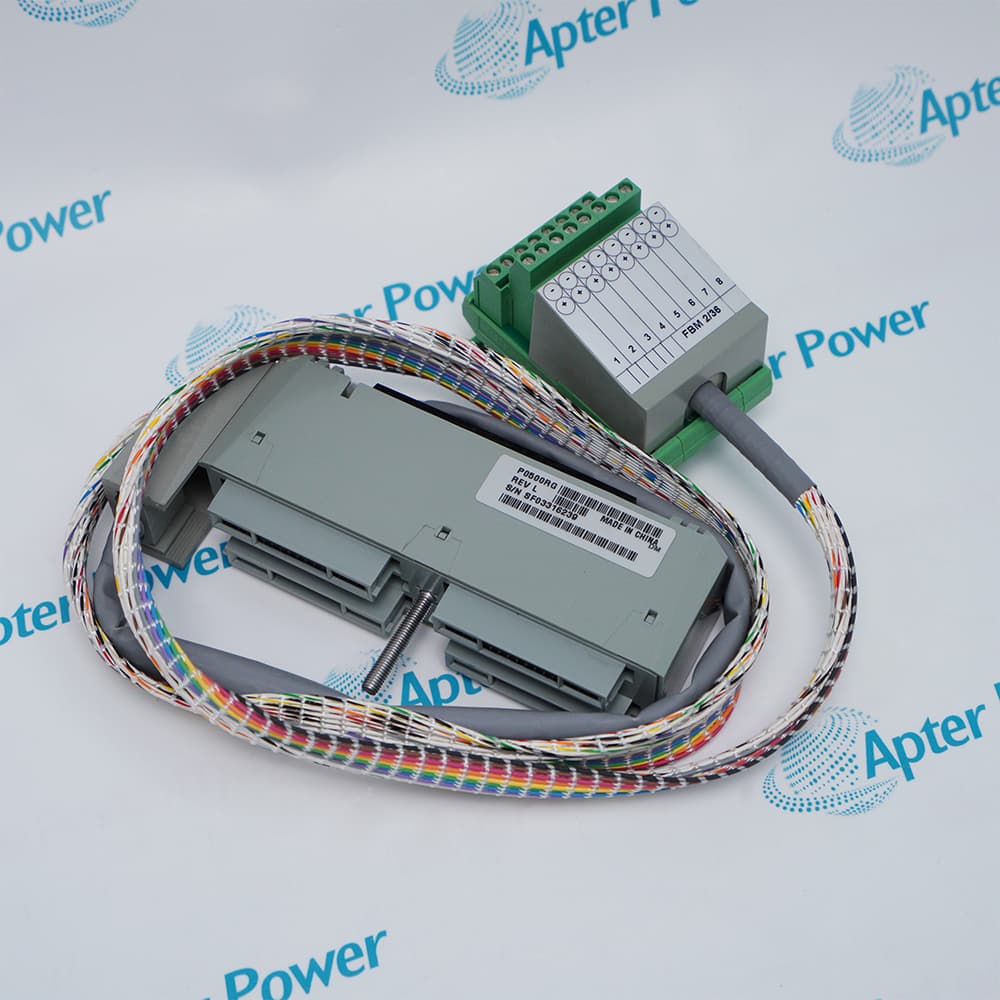
Ask our team:
  • Phone: +86 181 0690 9650
  • E-Mail sales1@apterpower.com

RH928CV

/ 4.9
1001 reviews | Need a Specific Revision?
Foxboro RH928CV connects an FCP280 baseplate fieldbus port to two TCA blocks on a 268 Kbps twinaxial fieldbus.
In Stock
Ships by Wednesday, October 28
Fast Shipping Available
Get a quick price for RH928CV
Quantity
*E-mail
Company
*Mobile
*Content
Upload (gif, jpg, jpeg, png, bmp, doc, docx, xls, xlsx, ppt, pdf, csv)

Technical specifications for RH928CV

  • Manufacturer:
    Invensys
  • Part Number:
    RH928CV
  • Product Family:
    Foxboro
  • Product Type:
    FCP280 268 Kbps Fieldbus Splitter
  • Stock:
    1
  • Accessory type:
    FCP280 fieldbus splitter
  • Compatible baseplate:
    Standard FCP280 baseplate
  • Compatible connection:
    Any Fieldbus port on a standard FCP280 baseplate
  • Fieldbus medium:
    Twinaxial cable
  • Fieldbus protocol / rate:
    268 kbit/s HDLC
  • Integral splitter cable length:
    3.0 m (9.8 ft)
  • Included components:
    Fieldbus-port connector and one TCA termination block
  • TCA construction:
    One termination block similar to two joined P0903VY blocks
  • Dual-cable baseplate compatibility:
    Not used with the FCP280 dual-cable baseplate
  • Tariff Code:
    8538900000
  • Country of origin:
    USA
  • Place of shipment:
    Xiamen, Fujian, China
By purchasing this item, you agree to the Terms & Conditions, ApterPower is not an authorized distributor for listed manufacturers or tradenames and therefore the manufacturer's warranty does not apply. All our products come with ApterPower's 1-year warranty.

More Information

Overview Manuals Fieldbus Interface Assembly Migration Checks Application
  • Connects any FCP280 baseplate fieldbus port to 268 Kbps twinaxial fieldbus
  • Provides two TCA field-side connections through the documented termination block
  • Uses a 3.0 m processor-port cable assembly

RH928CV is the documented splitter for linking an FCP280 fieldbus port to twinaxial 268 Kbps HDLC wiring.

It is chosen for legacy 100 Series I/O or other supported TCA-based fieldbus arrangements, not for Ethernet or Module Fieldbus cabling.

Before installation, confirm the port, TCA blocks, cable route, fieldbus termination and database migration design.

Availability, condition, price, and shipping time for RH928CV are confirmed during quotation.

Foxboro RH928CV FCP280 268 Kbps Fieldbus Splitter Manuals, Datasheets, Links

Important Notice: Other accessories, manuals, cables, calibration data, software, etc. are not included with this equipment unless listed in the above stock item description. All prices are shown in USD.

  • Connects to any FCP280 fieldbus port
  • Supports 268 Kbps HDLC twinaxial fieldbus
  • Provides two field-side TCA connections
  • Includes the FCP280 port connector
  • Includes a TCA termination block
  • Uses a documented 3.0 m cable between connector and block
  • Confirm 100 Series I/O topology
  • Verify TCA and terminator identities
  • Preserve channel mapping and fieldbus rate
  • Connection of FCP280 to supported 100 Series fieldbus I/O
  • Migration of 268 Kbps twinaxial HDLC fieldbus segments
  • Dual-TCA distribution from an FCP280 baseplate fieldbus port
Description
RH928CV adapts one FCP280 baseplate fieldbus port to the documented 268 Kbps twinaxial fieldbus arrangement.

Its 3.0 m assembly connects the processor-side port connector to a TCA termination block serving two field-side TCA connections.

Selection must match the legacy I/O topology, fieldbus rate, TCA hardware and port assignment.
Alternative Names
RH928CV RH 928CV Foxboro RH928CV Invensys RH928CV Invensys Foxboro RH928CV FCP280 RH928CV
Technical notes
Foxboro RH928CV is a 3.0 m FCP280-to-twinaxial splitter for 268 Kbps HDLC fieldbus. Match the processor port, two TCA branches, termination and legacy I/O topology before replacement.
Exceptional Service

Our Mission

  • 100% Satisfaction

    We believe expertise is priceless. With over 20 years of experience, and top engineers on staff, we can help you solve or avoid problems that threaten your business.
  • Trust Guaranteed

    Not only do we have a vast inventory, our team makes sure every piece of equipment is in working condition. Your purchases are also backed by our Warranty.
  • Expertise

    Time is money, especially when your equipment is down. We work quickly to get your equipment on its way so you can get it back up and running.

FAQS

The following is a list of questions commonly asked by our customers. Please contact us if you have a question about our process that is not answered below.
How can I confirm Foxboro RH928CV is the correct interface for an existing fieldbus?
Confirm that the installation uses a supported 268 Kbps twinaxial fieldbus, then verify the FCP280 baseplate port, branch topology, connectors, terminators and existing cable routing before ordering.
Can Foxboro RH928CV be used on a 2 Mbps Module Fieldbus?
No. RH928CV is documented for 268 Kbps HDLC twinaxial fieldbus; do not substitute it for a 2 Mbps Module Fieldbus cable or splitter.
What is included with Foxboro RH928CV?
Official documentation describes an FCP280 port connector, a 3.0 m cable and a TCA termination block that provides two TCA field-side connections.
Can Foxboro RH928CV replace two separate P0903VY blocks directly?
The RH928CV termination block is described as similar to two P0903VY blocks joined together, but the complete topology, connectors and termination must be verified before substitution.
Why can one branch remain offline after installing Foxboro RH928CV?
Inspect the affected TCA connector, twinaxial polarity, shield, termination, fieldbus rate and database path while confirming the other branch has not masked a wiring error.
What should be documented before replacing Foxboro RH928CV?
Record the FCP280 port, both TCA branches, cable route, terminator locations, fieldbus rate, I/O chain and live diagnostics.
How should Foxboro RH928CV be tested after installation?
Verify both TCA branches, stable 268 Kbps communication, correct I/O mapping and recovery after a controlled branch interruption.