PDP601
PDP601
PDP601
PDP601
PDP601
PDP601
Ask our team:
  • Phone: +86 181 0690 9650
  • E-Mail sales1@apterpower.com
How We Verify Your Order
Before dispatch, we confirm the exact model, revision, condition, inspection requirements and shipping documents for your order.
See a real on-site verification case >>
  • Lifecycle status

    Active / Available from OEM
    Apter Power provides quotations, technical documents, sourcing support, and system configuration guidance.

PDP601

/ 4.9
1001 reviews | Need a Specific Revision?
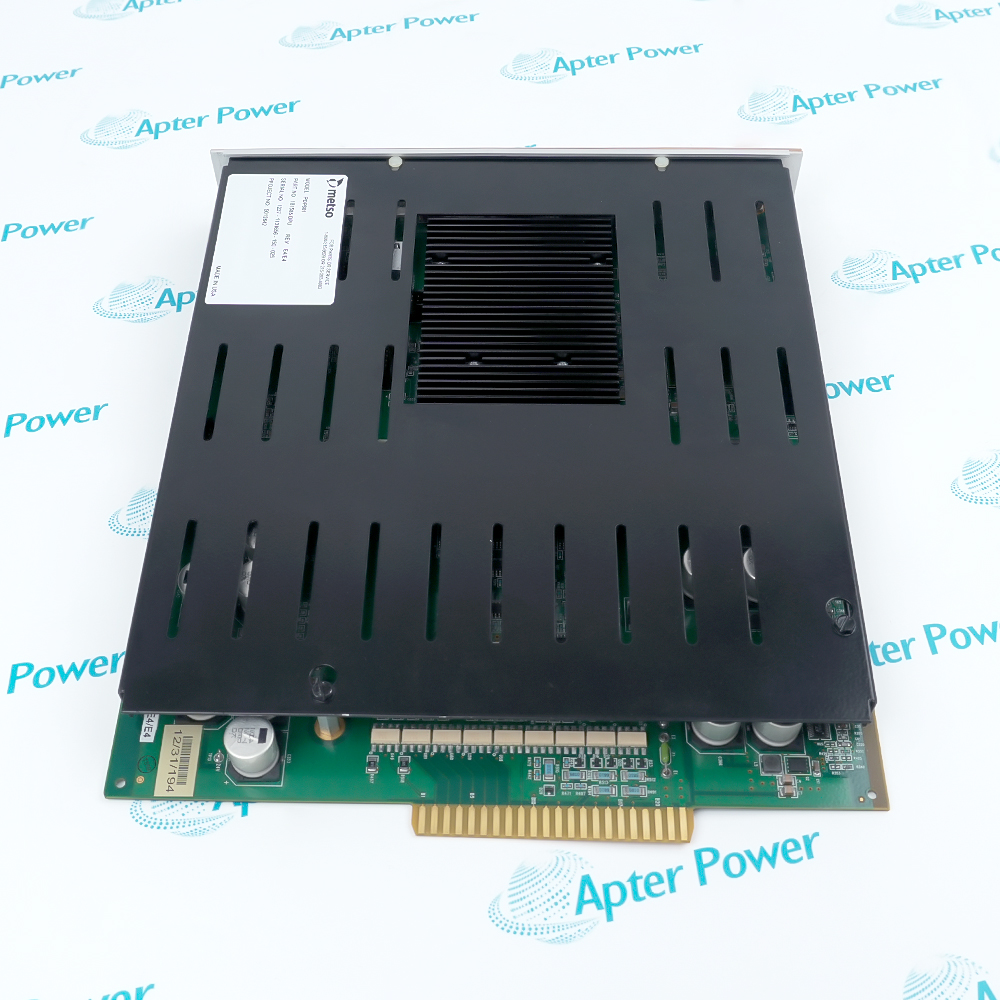
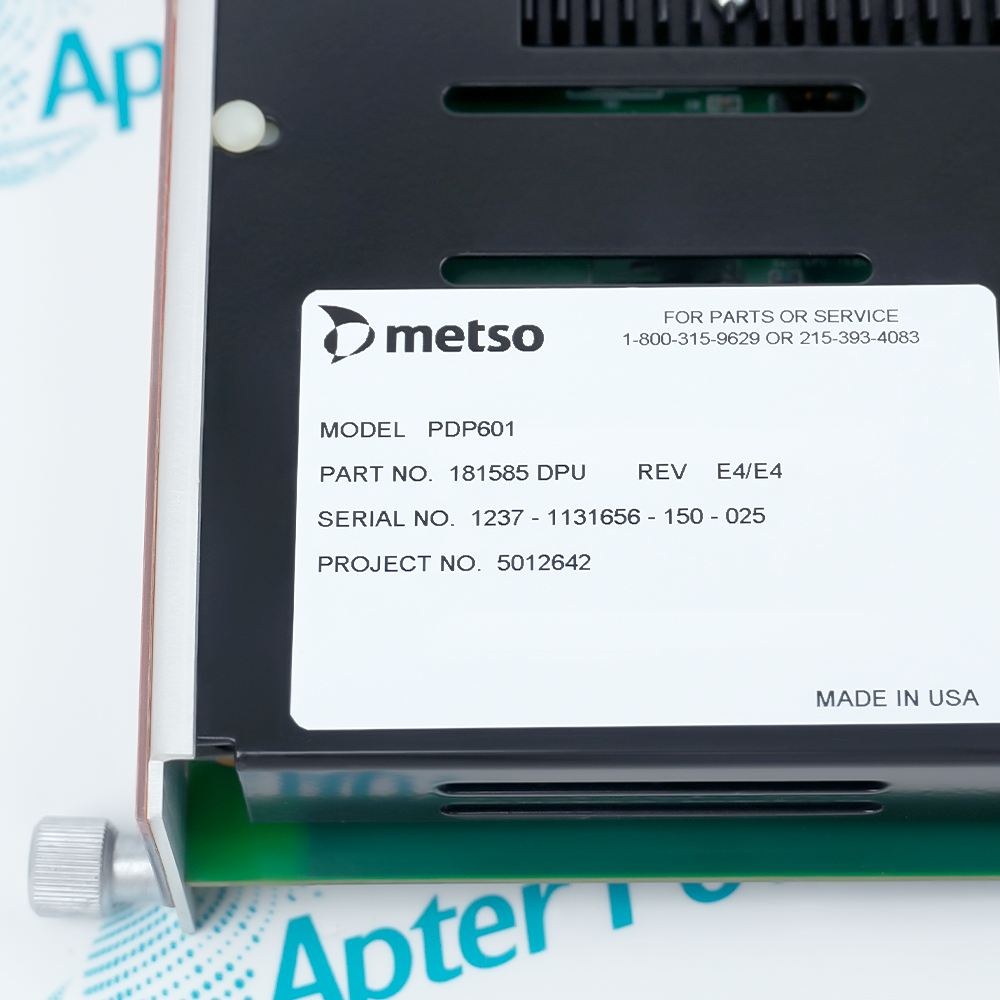
Metso Automation PDP601 is a PDP Series 600 distributed processing unit, commonly identified with assembly 181585, for established maxDNA control-system processing.
In Stock
Ships by Saturday, November 14
Fast Shipping Available
Get a quick price for PDP601
Quantity
*E-mail
Company
*Mobile
*Content
Upload (gif, jpg, jpeg, png, bmp, doc, docx, xls, xlsx, ppt, pdf, csv)

Technical specifications for PDP601

  • Manufacturer:
    Metso Auttomation
  • Part Number:
    PDP601
  • Product Family:
    Metso Auttomation
  • Product Type:
    PDP Series 600 Distributed Processing Unit
  • Stock:
    1
  • Processing role:
    Distributed Processing Unit
  • Documented hardware code:
    181585 DPU
  • Control platform:
    Metso / Valmet maxDNA
  • Installation format:
    maxPAC chassis module
  • Tariff Code:
    8537101190
  • Country of origin:
    Finland
  • Place of shipment:
    Xiamen,Fujian,China
By purchasing this item, you agree to the Terms & Conditions, ApterPower is not an authorized distributor for listed manufacturers or tradenames and therefore the manufacturer's warranty does not apply. All our products come with ApterPower's 1-year warranty.

More Information

Overview Manuals Processor Role Chassis Integration Network & Diagnostics Product Applications

Features:

  • Distributed processing: Runs configured control and data-handling tasks within maxDNA.
  • Chassis operation: Installs as a processing module in the established maxPAC hardware environment.
  • System coordination: Works with configured I/O, networks, operator stations, and application data.
The processor should be treated as part of a configured control node rather than as a stand-alone computer.

Backups and node information are essential when restoring service after hardware work.

Public content is limited to the manufacturer-documented DPU role because exact-unit dimensions and weight are not confirmed.

Apter Power supports Metso Automation PDP601 distributed processing unit quotations, document searches, and maxDNA hardware review.
Metso Auttomation PDP601 PDP Series 600 Distributed Processing Unit Manuals,Datasheets,Link
Important Notice: Other accessories, manuals, cables, calibration data, software, etc. are not included with this equipment unless listed in the above stock item description. All prices are shown in USD.
  • Control execution: Runs the configured algorithms assigned to the distributed node.
  • Data handling: Coordinates I/O values, alarms, trends, and operator-system information.
  • Local operation: Maintains its defined processing tasks within the maxDNA architecture.
  • Application context: Depends on the correct database, node settings, and hardware configuration.
  • Slot position: Retain the documented maxPAC location and adjacent hardware arrangement.
  • Power path: Check chassis supply, distribution, connectors, and module seating.
  • I/O relationship: Keep the configured input/output processors and channels aligned with the application.
  • Revision control: Capture every hardware and firmware marking before service.
  • Node settings: Preserve addressing and system-name information used by the control network.
  • Physical links: Inspect cabling, connectors, switch ports, and status indications.
  • System messages: Use maxDNA diagnostics to separate communication, application, and hardware faults.
  • Startup sequence: Observe boot progress and peer visibility before enabling control.
  • Process control: Executes distributed regulatory and sequential control in maxDNA systems.
  • Plant data handling: Coordinates alarms, trends, I/O scans, and operator information.
  • Legacy node service: Maintains existing maxPAC processing positions with controlled system data.
Description
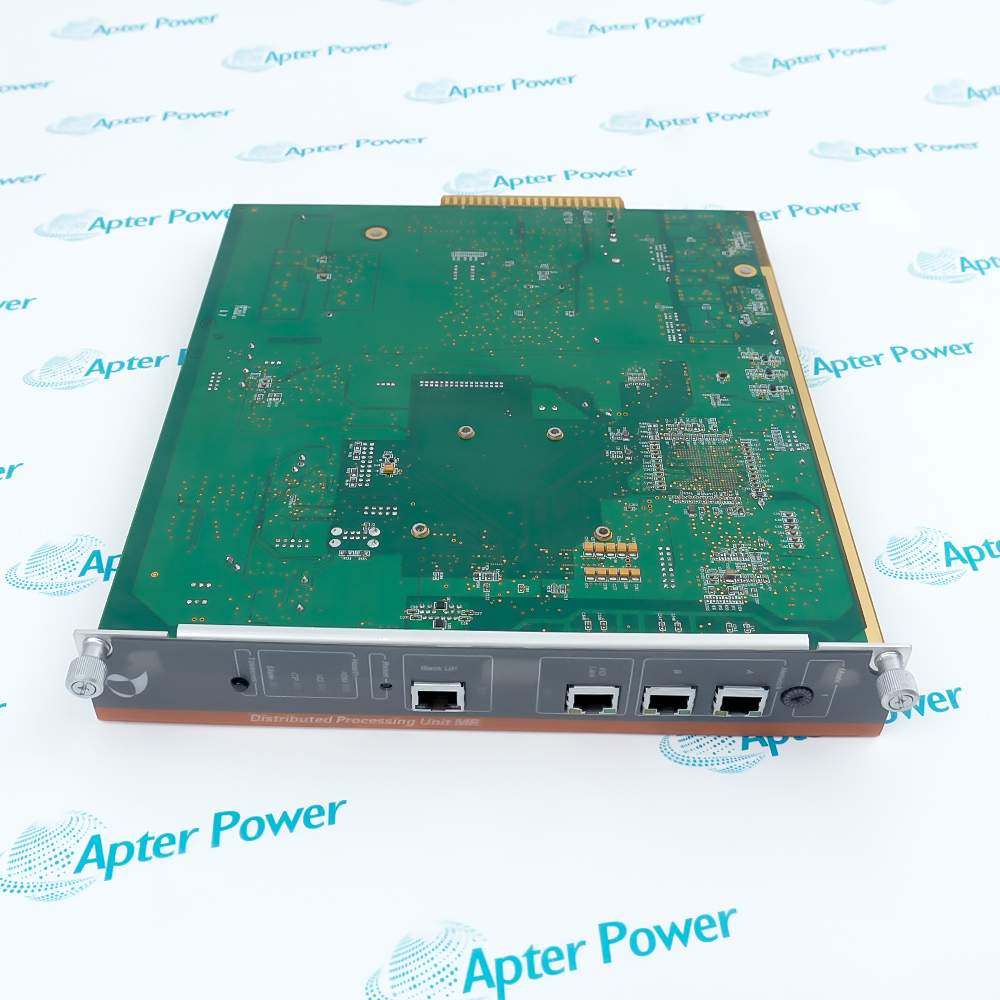
Acting as a local processing engine in a maxDNA control architecture, PDP601 executes configured control functions and coordinates system data from its installed chassis position. The assembly is commonly identified with the 181585 DPU hardware code.

The working context of PDP601 includes the maxPAC chassis, assigned network paths, configured I/O processors, application database, and any paired processing arrangement. These system dependencies should be preserved before the module is disturbed because a healthy processor cannot restore an absent or incompatible application by itself.

Apter Power can support PDP601 quotations, nameplate review, documentation searches, and maxDNA hardware planning. Dimensions and weight remain blank because no sufficiently reliable manufacturer value was located for the exact supplied unit.
Alternative Names
PDP601 PDP-601 PDP 601 PDP601 181585 181585 DPU Metso PDP601 Valmet PDP601 maxDNA PDP601
Technical notes
For PDP601, preserve the 181585 DPU identity, hardware revision, maxPAC slot, node settings, application backup, network paths, I/O assignments, and current diagnostics before removal. During startup, separate chassis power, communication, application, and processor indications methodically. Functional testing should cover control execution, I/O scans, alarms, trends, and peer visibility.
Exceptional Service

Our Mission

  • 100% Satisfaction

    We believe expertise is priceless. With over 20 years of experience, and top engineers on staff, we can help you solve or avoid problems that threaten your business.
  • Trust Guaranteed

    Not only do we have a vast inventory, our team makes sure every piece of equipment is in working condition. Your purchases are also backed by our Warranty.
  • Expertise

    Time is money, especially when your equipment is down. We work quickly to get your equipment on its way so you can get it back up and running.

FAQS

The following is a list of questions commonly asked by our customers. Please contact us if you have a question about our process that is not answered below.
What role does PDP601 perform in a maxDNA system?
It provides distributed processing for configured control, data acquisition, alarming, and system communication in its assigned maxPAC environment.
What should be secured before PDP601 is removed?
Preserve application backups, node settings, network information, chassis position, I/O assignments, revision labels, and current diagnostics.
PDP601 does not start normally; which supporting items should be checked?
Check chassis power, seating, processor indications, network links, boot media or firmware context, connected I/O processors, and the approved startup sequence.
How should network faults around PDP601 be separated from processor faults?
Compare link indications, cabling, switch ports, node addressing, peer communication, and system diagnostics before assigning the fault to the DPU.
Can a PDP Series module be fitted into the PDP601 position without engineering review?
Hardware code, revision, chassis requirements, firmware, application database, interfaces, and any paired configuration should all agree.
What should commissioning confirm after PDP601 service?
Confirm boot completion, node visibility, I/O scans, control execution, alarms, trends, time handling, peer communication, and operator-station status.