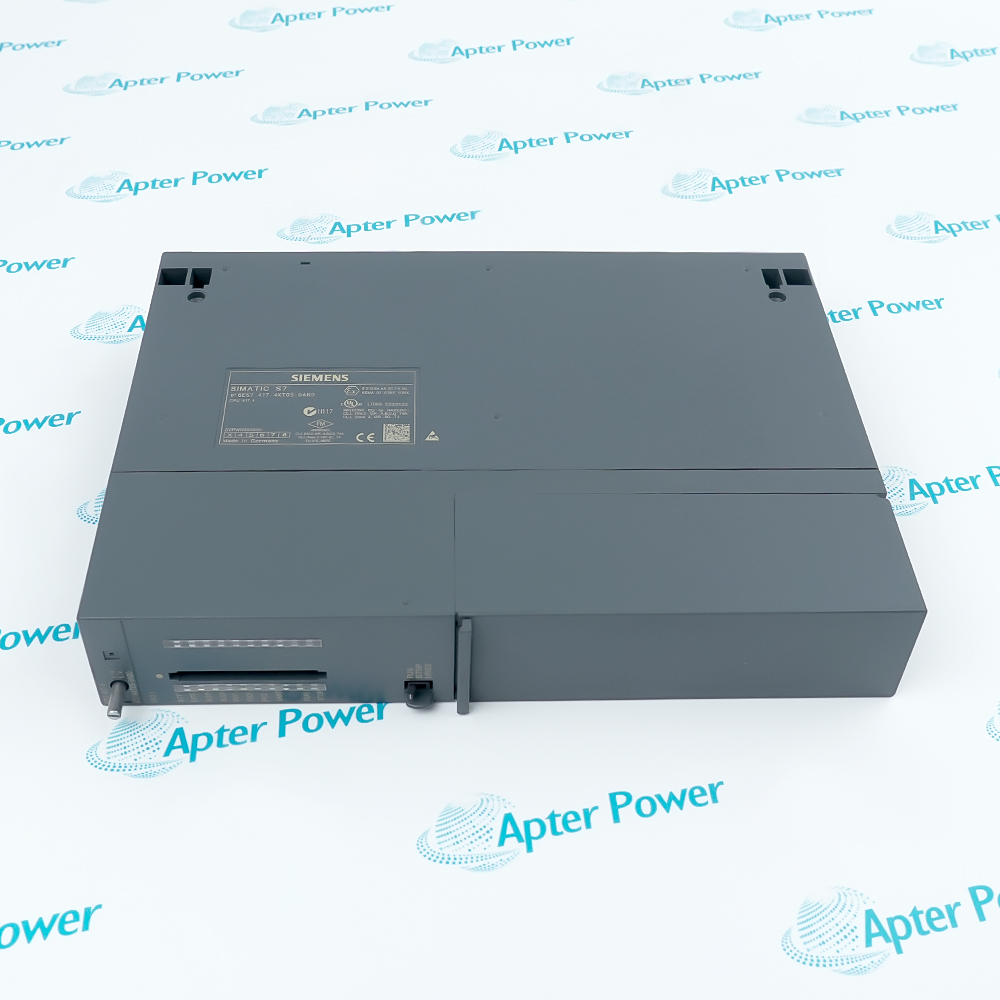
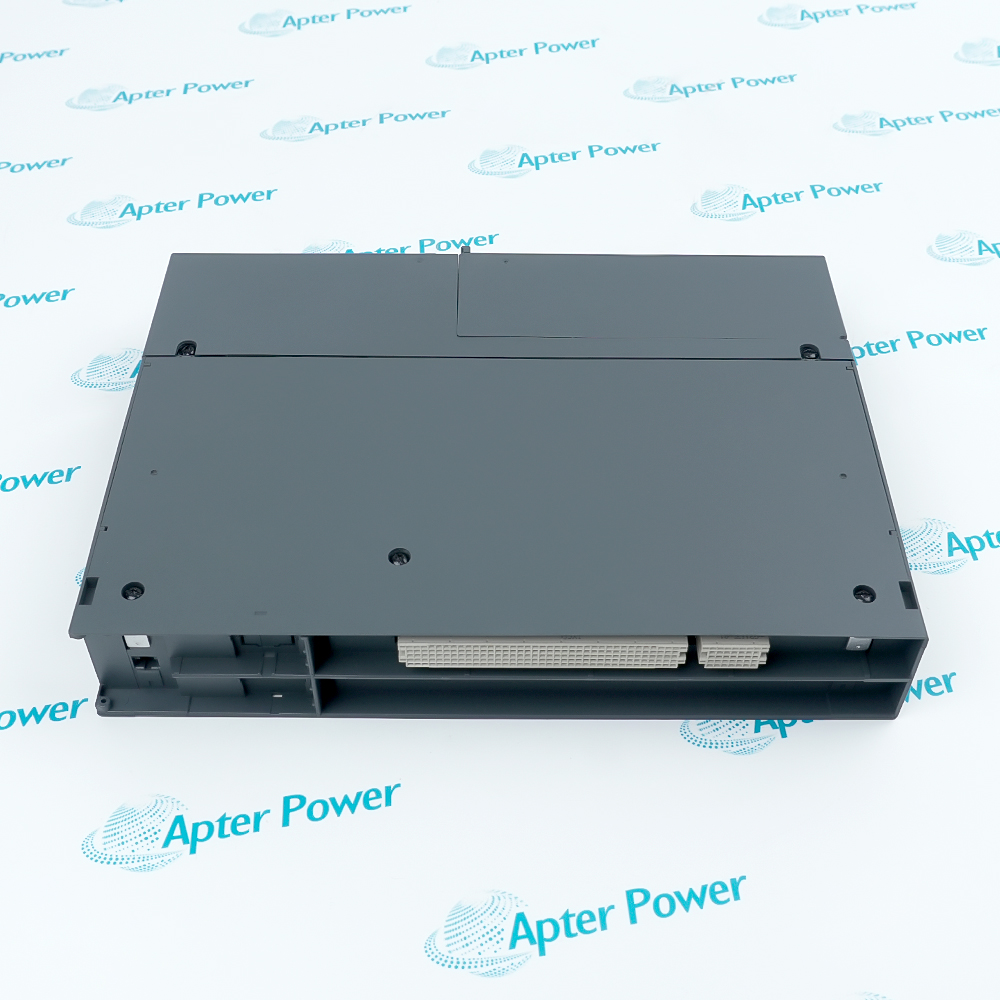
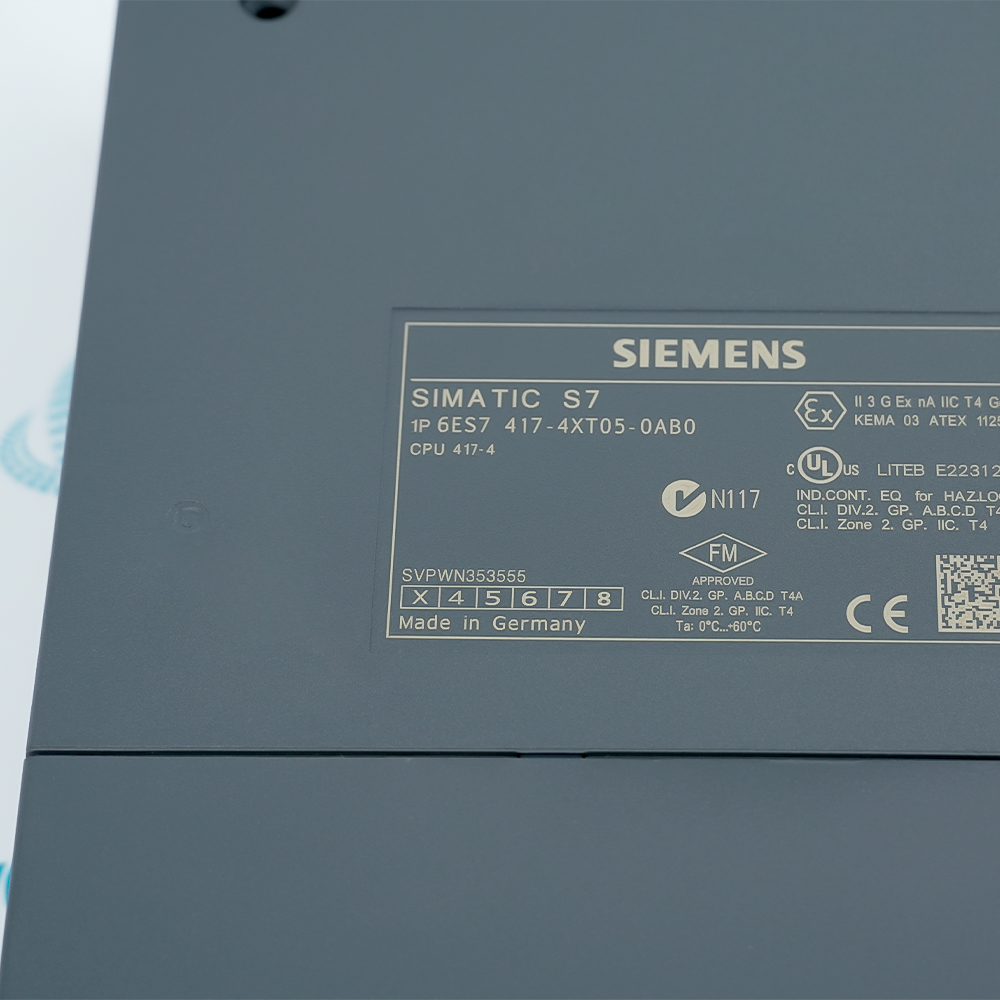
Features:
- Thirty megabytes of work memory is divided equally between program code and controller data.
- Two integrated and two optional interfaces organize MPI and PROFIBUS DP communication.
- STEP 7 commissioning tools work with a diagnostic buffer, forcing, and online status functions.
Siemens 6ES7417-4XT05-0AB0 executes S7-400 program blocks while maintaining process images, timers, counters, and retentive data.
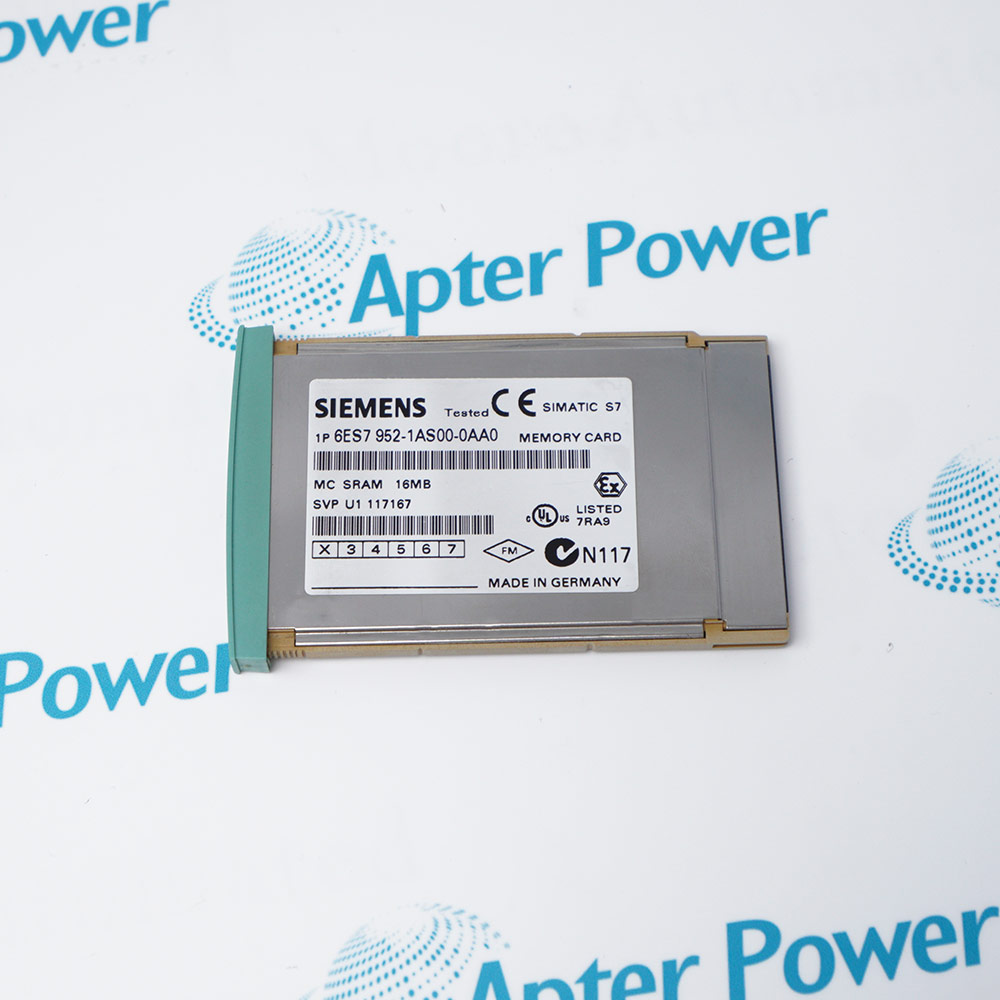
FLASH or RAM cards expand load memory, whereas the battery-backed CPU arrangement preserves the supported retained areas.
The controller can apply configuration changes in RUN and synchronize supported PROFIBUS processes through isochronous operation.
The Siemens 6ES7417-4XT05-0AB0 SIMATIC S7-400 CPU 417-4 Central Processing Unit may still be available for purchase and support from Apter Power beyond End-Of-Life (EOL) by the manufacturer (OEM).
Siemens 6ES7417-4XT05-0AB0 SIMATIC S7-400 CPU 417-4 Central Processing Unit Manuals,Datasheets,Link
Important Notice: Other accessories, manuals, cables, calibration data, software, etc. are not included with this equipment unless listed in the above stock item description. All prices are shown in USD.
How program, data, and load areas are separated
- Work split: The integrated work memory reserves 15 MB for program code and 15 MB for data.
- FLASH loading: A FLASH memory card can expand nonvolatile load memory to 64 MB.
- RAM loading: A RAM memory card provides an alternative expandable load-memory path to 64 MB.
- Retention: Battery backup preserves the supported work and load data areas when system power is removed.
Responsibilities assigned to each interface position
- First connection: The primary isolated port operates as MPI or as a PROFIBUS DP master or device.
- Second connection: The next isolated port is dedicated to PROFIBUS DP master or device operation.
- Plug-in positions: The third and fourth locations accept IF 964-DP interface modules.
- Routing path: Supported S7 routing passes programming and operator communication across configured bus interfaces.
What changes can remain synchronized online
- CiR function: Configuration in RUN permits supported hardware configuration changes during controller operation.
- Base interval: The synchronization sequence begins with the specified CiR basic-load interval.
- I/O contribution: Additional synchronization time is calculated for each affected I/O byte.
- Process boundary: Isochronous execution applies to PROFIBUS operation rather than to an integrated Ethernet controller.
Online evidence available during commissioning
- Block observation: STEP 7 can display the online status of up to two program blocks simultaneously.
- Variable tables: Status and control functions work with inputs, outputs, memory bits, data blocks, timers, and counters.
- Forced signals: Forcing assigns temporary test values to supported process and memory addresses.
- Event history: The diagnostic buffer retains controller events for commissioning and fault analysis.