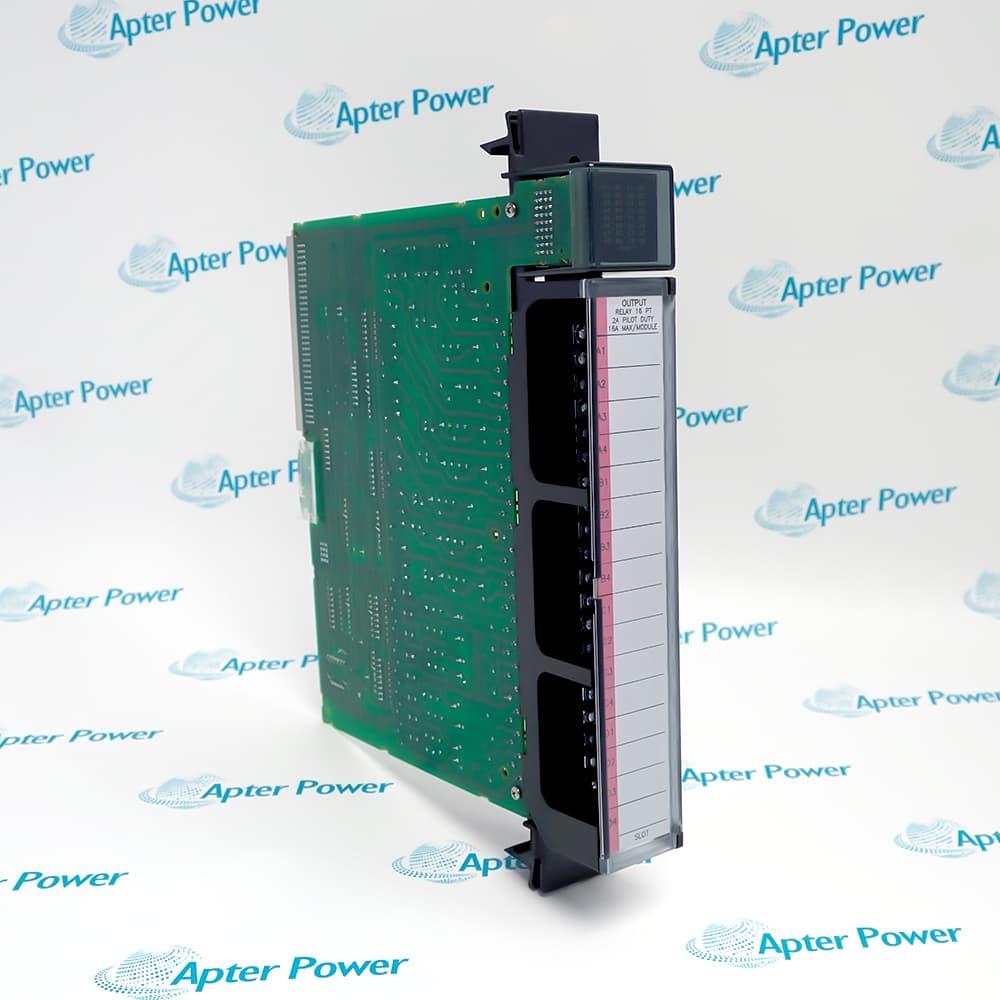
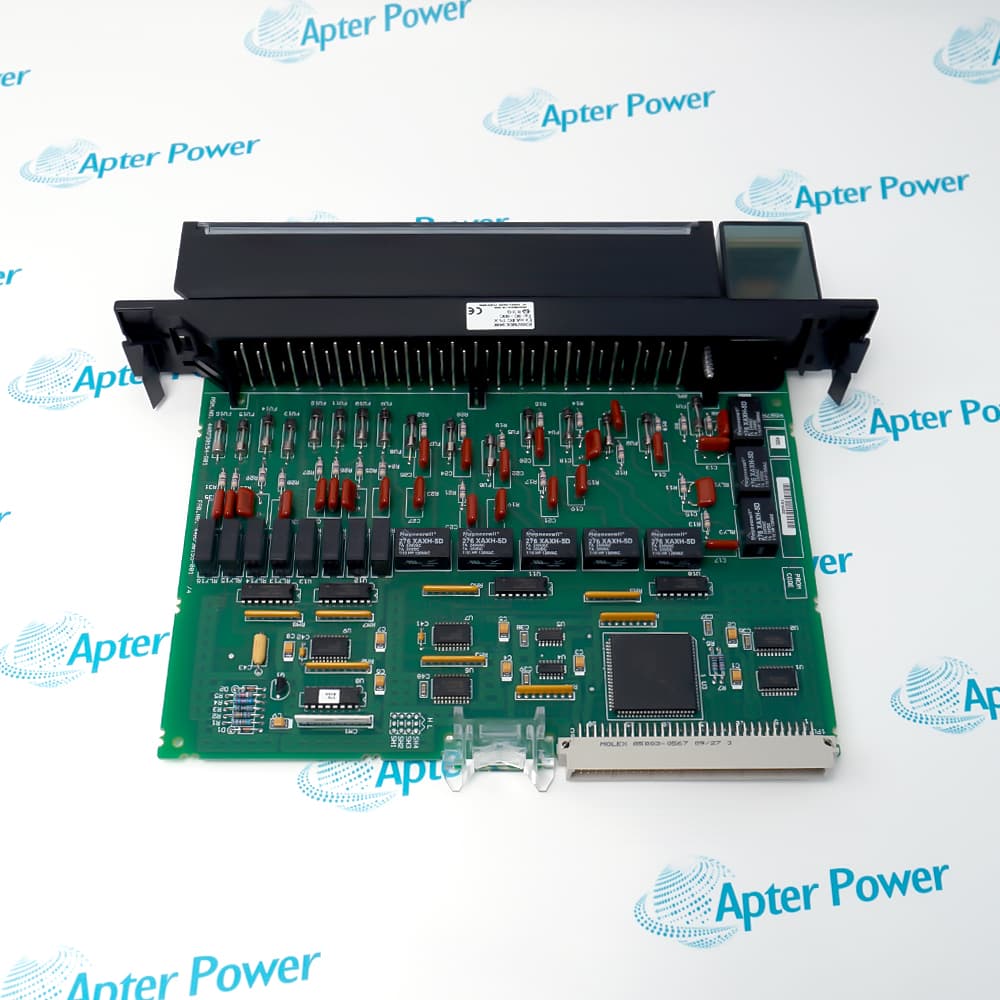
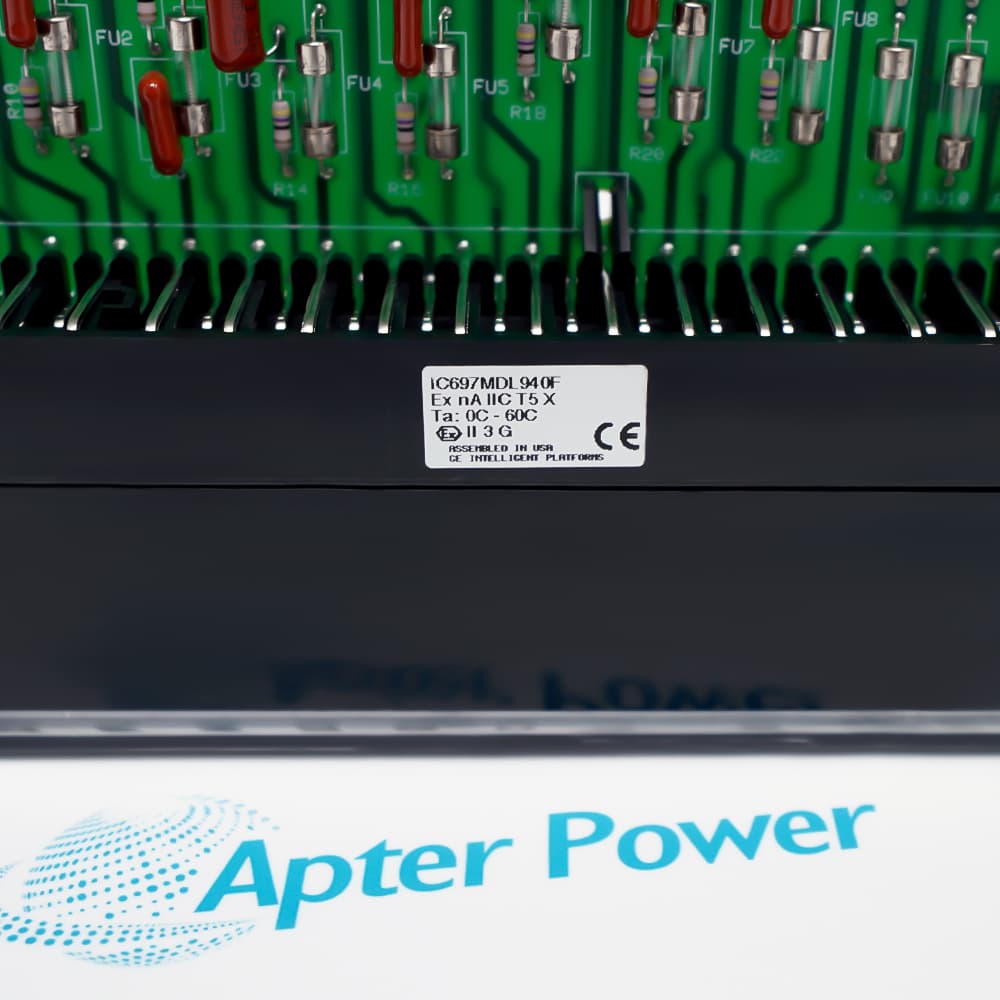
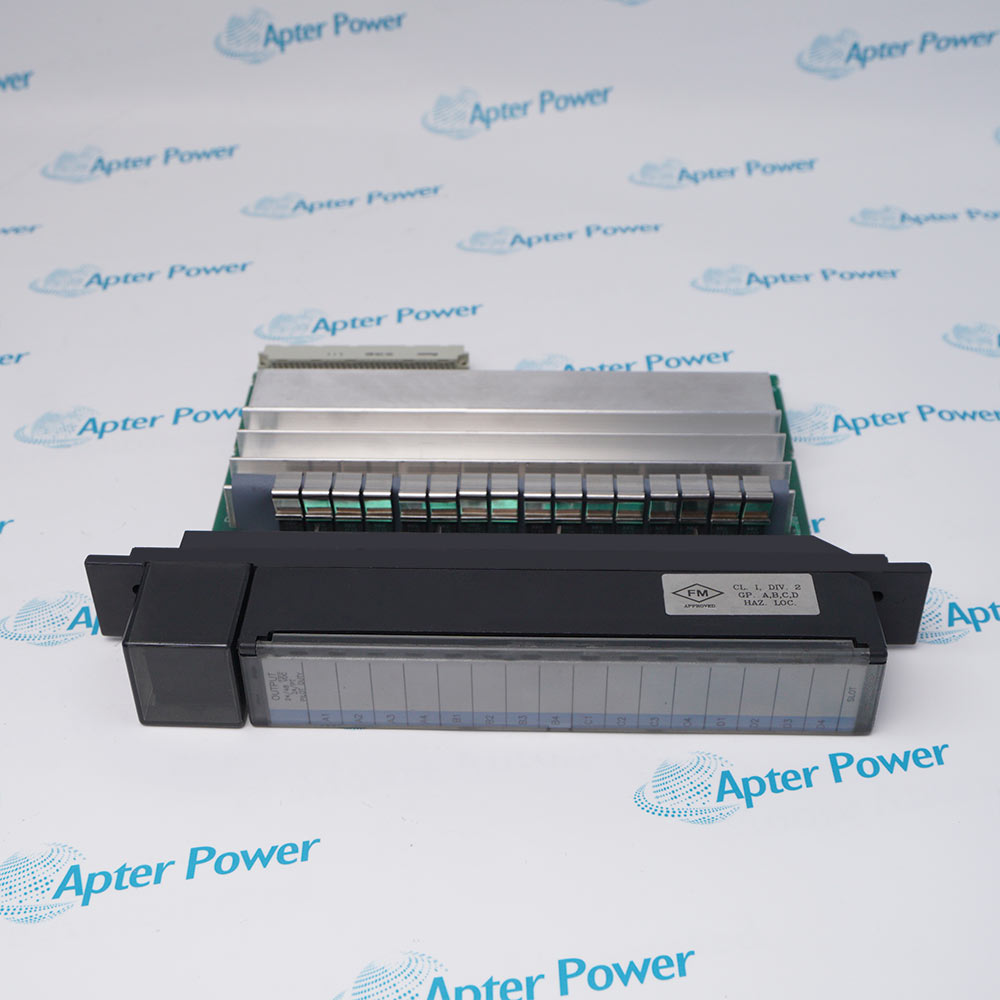
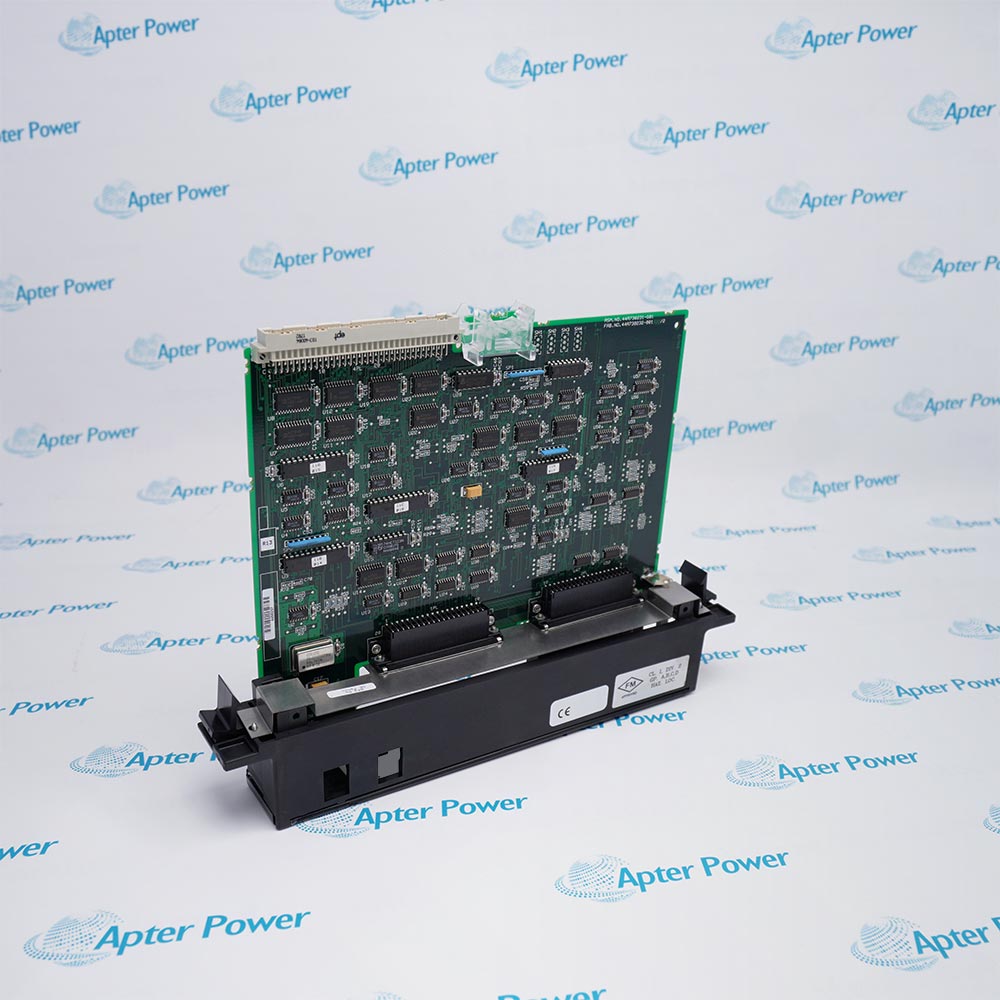
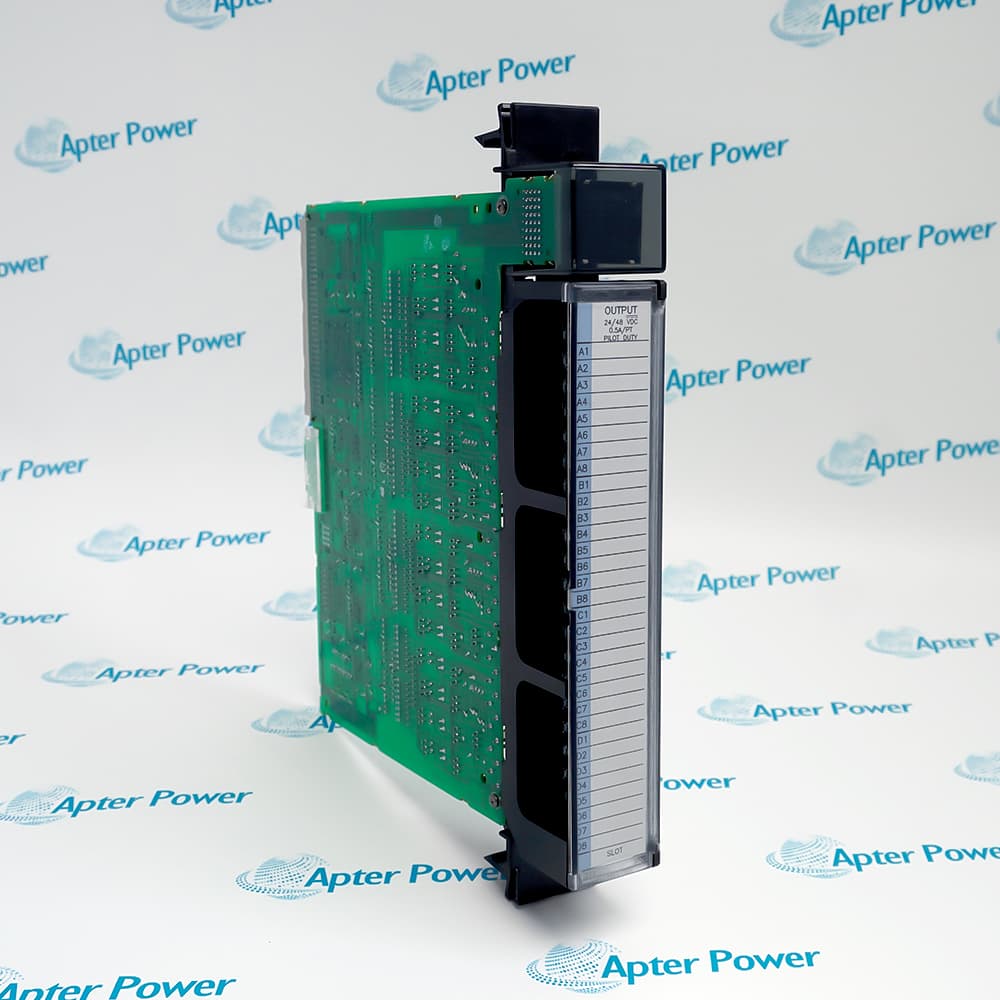
Features:
- Sixteen relay points combine isolated changeover contacts with grouped normally open contacts.
- Each output circuit includes its own fuse and RC suppression network.
- A removable 40-terminal board separates field wiring from the rack module.
IC697MDL940 assigns its relay points through the Series 90-70 hardware configuration rather than local jumpers.
The contact layout lets eight channels use independent commons while the remaining eight share four-point group commons.
Logic-side status LEDs provide a quick view of commanded output states during rack operation.
The General Electric IC697MDL940 16-Point Relay Output Module may still be available for purchase and support from Apter Power beyond End-Of-Life (EOL) by the manufacturer (OEM).
General Electric IC697MDL940 16-Point Relay Output Module Manuals,Datasheets,Link
Important Notice: Other accessories, manuals, cables, calibration data, software, etc. are not included with this equipment unless listed in the above stock item description. All prices are shown in USD.
Contact Arrangement
- Isolated outputs: Eight Form C points provide separate commons and both normally open and normally closed contacts.
- Grouped outputs: Two banks of four Form A points share a common within each bank.
- Point capacity: Each relay point is rated for switching up to 2 A within its documented voltage range.
- Module limit: The combined steady load across the module is limited to 16 A.
Terminal Board Planning
- Removable block: Field conductors remain on a detachable terminal board when the module is removed.
- Wire range: The terminals accept copper conductors from AWG 22 through AWG 14.
- Mechanical key: Keying identifies the correct module type during reinsertion.
- Reference card: Point and terminal information is available behind the hinged front door.
Output Safeguards
- Individual fusing: A dedicated fuse is placed in series with every relay output.
- Arc suppression: An RC snubber is fitted across each switching point to limit transients.
- Coil supply: Relay coils receive power from the module, so no separate user coil supply is needed.
- Status boundary: Front LEDs indicate PLC commands rather than the electrical condition of the external load.
Documented Load Types
- Interposing relays: Relay contacts can energize external relay coils within the stated load ratings.
- Contactors: The module can switch contactor control circuits used by industrial machinery.
- Indicator lamps: AC or DC lamps may be controlled when their inrush and steady current remain within limits.
- Mixed circuits: Isolated Form C points allow unlike field references to coexist on one module.