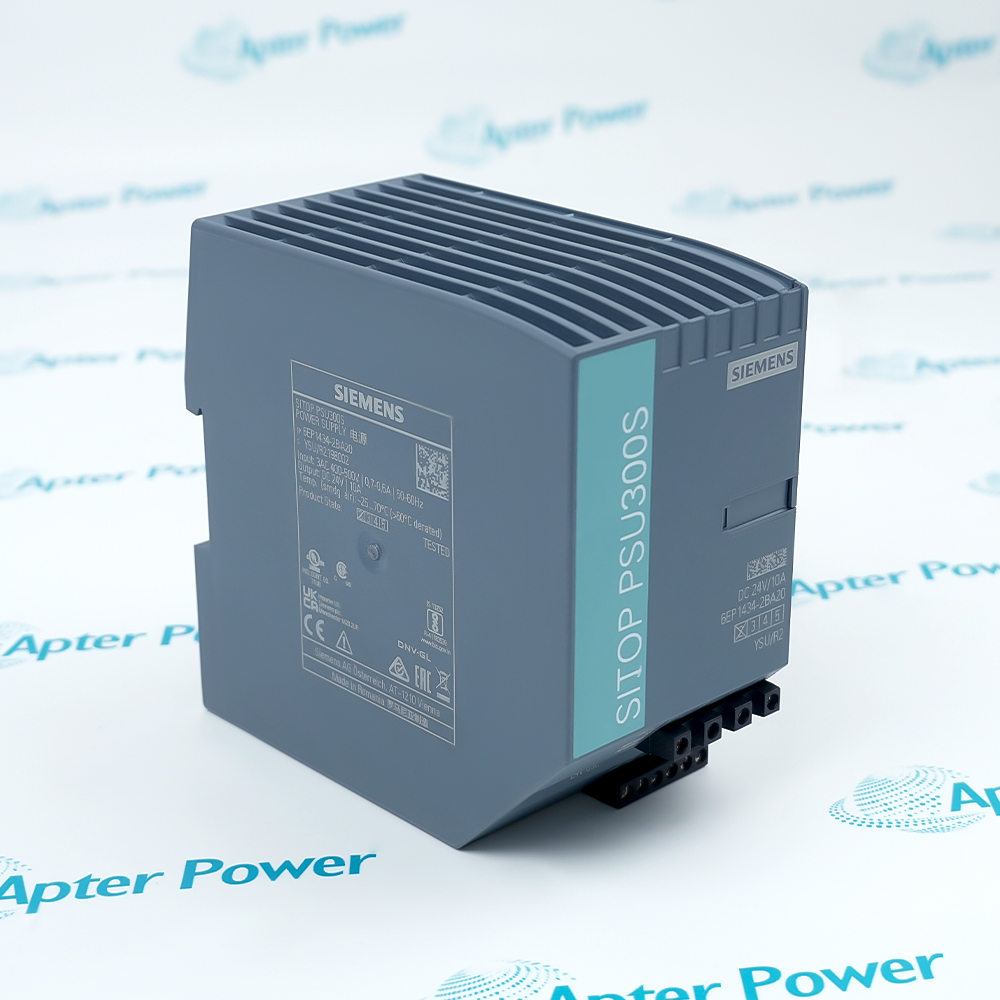
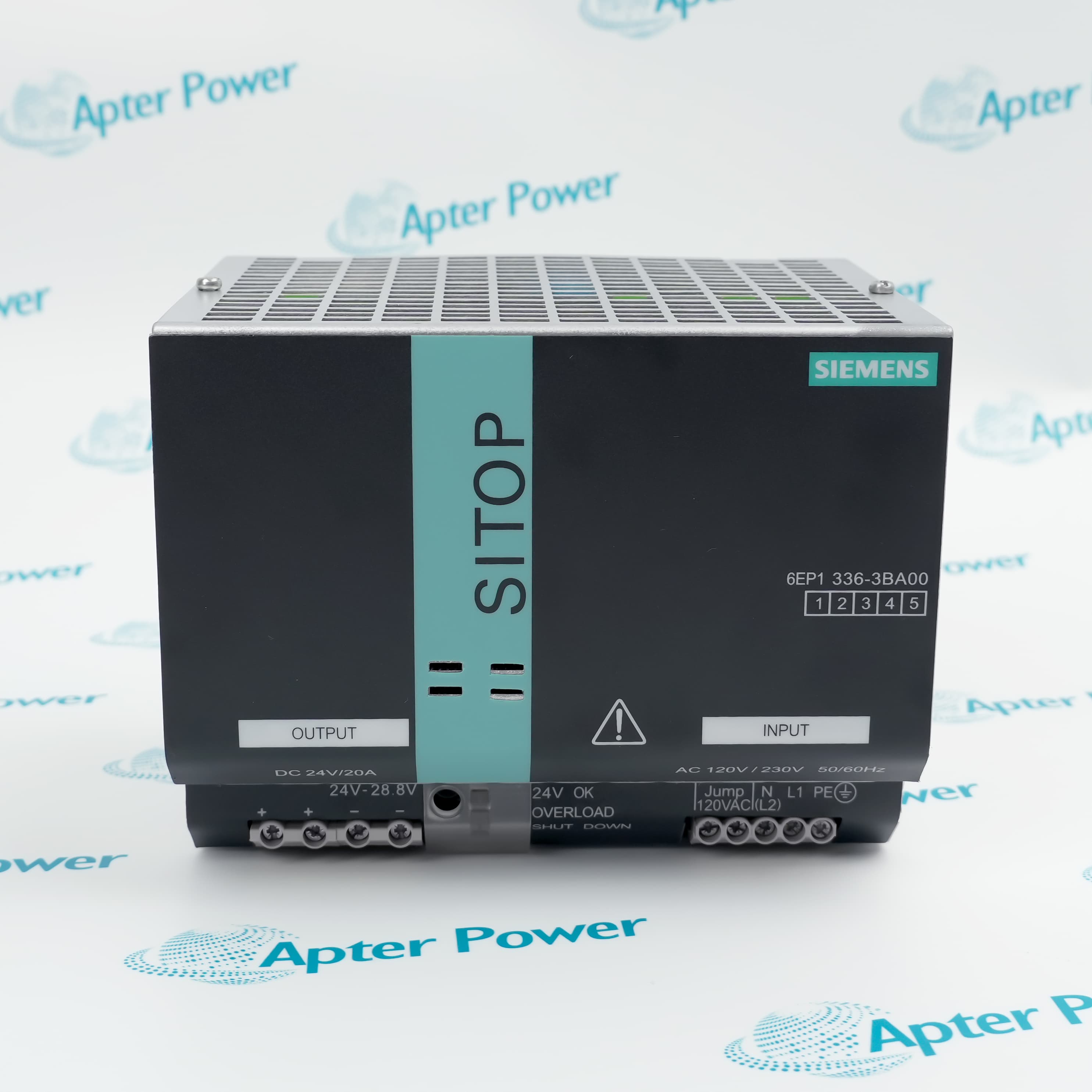
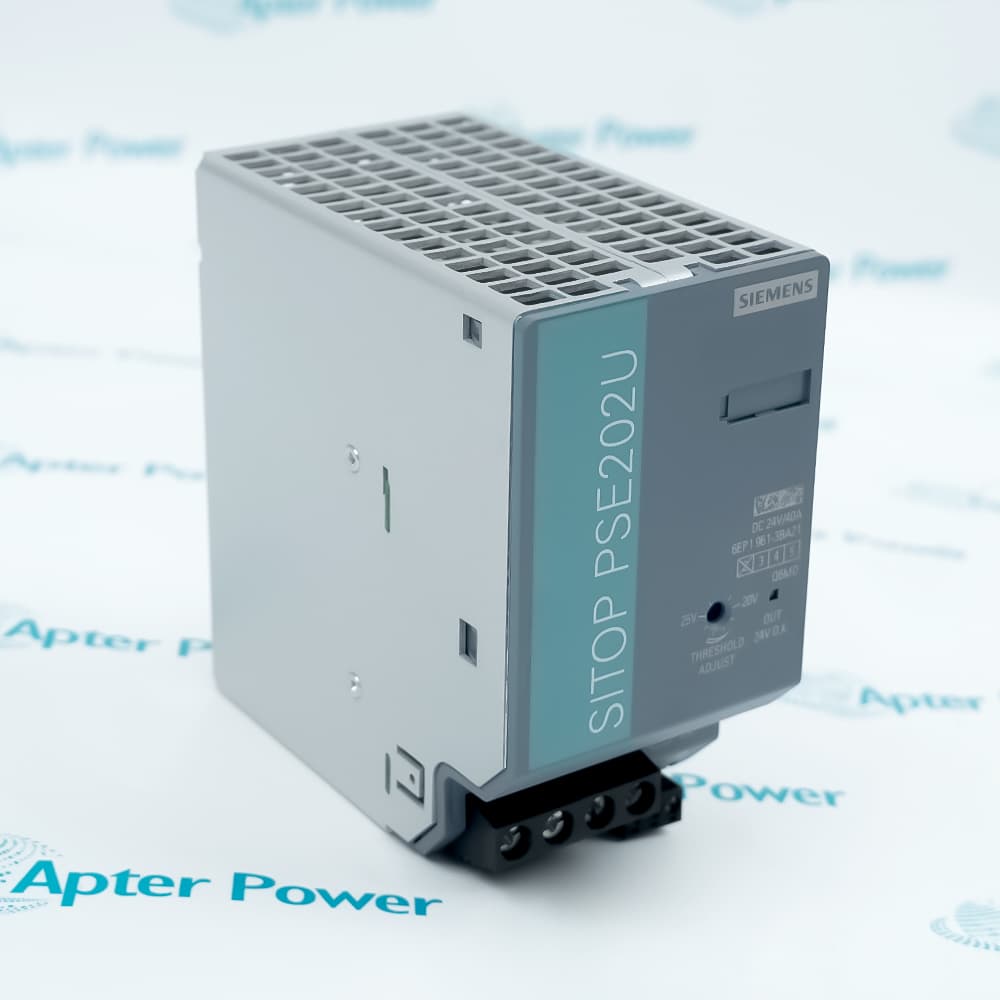
Features:
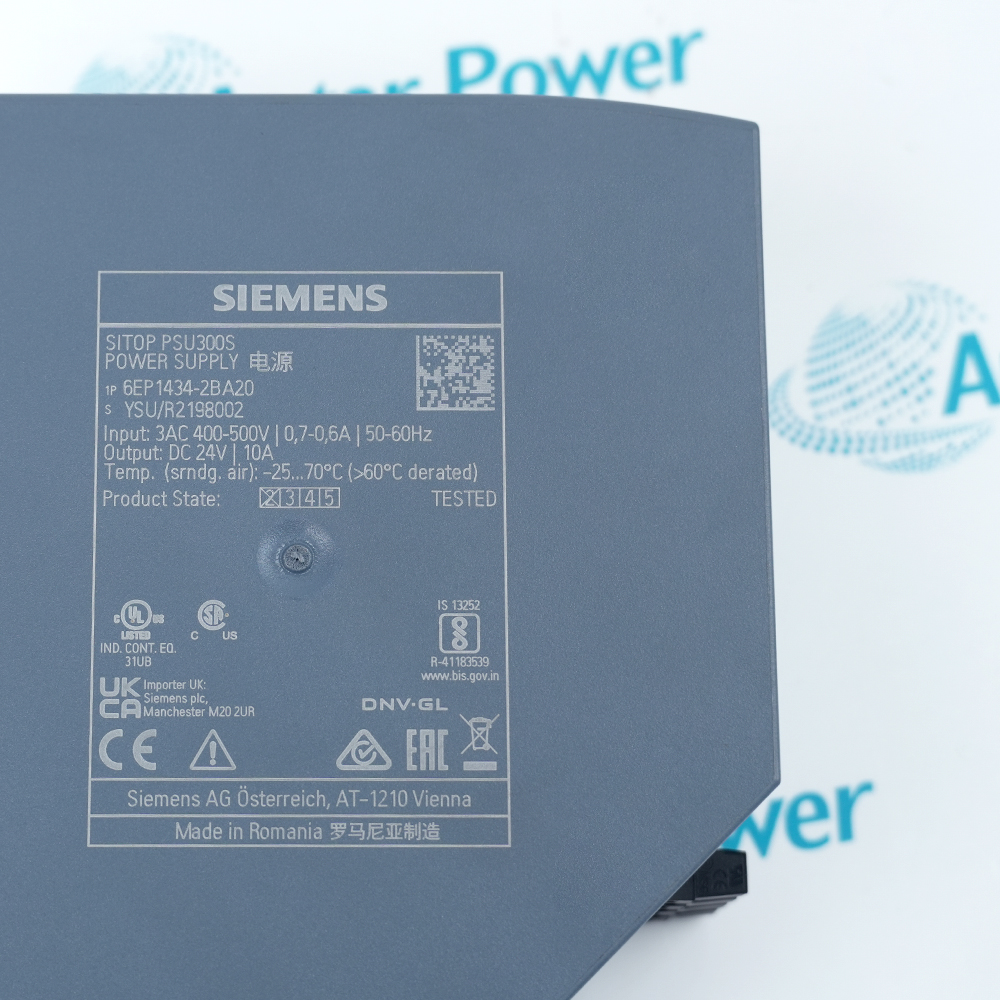
- Accepts the documented 400–500 V AC three-phase supply range.
- Provides a regulated 24 V DC output rated at 10 A and 240 W.
- Mounts on a standard DIN rail within an industrial control enclosure.
This order code identifies the 10 A PSU300S configuration rather than another current class in the SITOP family. The input, output and mechanical details must therefore be checked against the complete article number.
Its role is to establish a stable control-voltage bus for automation equipment that cannot be supplied directly from the three-phase feeder. The unit is suitable for machines and process panels with a centralized 24 V distribution scheme.
Before installation, calculate continuous demand and simultaneous inrush, then coordinate upstream protection with the conductor rating. Leave the prescribed cooling space so heat from drives or contactors does not reduce the available power margin.
Availability is confirmed for the exact 6EP1434-2BA20 article at quotation time.
Verified resources for Siemens 6EP1434-2BA20:
Important Notice: Other accessories, manuals, cables, calibration data, software, etc. are not included with this equipment unless listed in the above stock item description. All prices are shown in USD.
- Create a regulated DC bus for controller racks and remote interface stations.
- Power cabinet relays, sensors and signaling circuits from a three-phase plant feed.
- Standardize 24 V auxiliary distribution in machinery with a documented 240 W demand.
- The 240 W rating corresponds to the full 24 V DC output at the specified 10 A load.
- A centralized supply avoids multiple small AC/DC converters scattered through the enclosure.
- Load planning should preserve reserve capacity for simultaneous switching events.
- Coordinate the three-phase branch device with the supply input and local electrical code.
- Protect downstream distribution branches according to their conductor and connected-load limits.
- A bonded protective-earth path must be present before the mains terminals are made live.
- Use the specified rail orientation so natural convection passes through the housing correctly.
- Keep ventilation openings clear of wire duct, covers and adjacent heat-producing equipment.
- Terminate the 24 V distribution only after polarity and cable sizing have been checked.